



There are no products in the cart
Oct 04, 2025
Post by Alice Bonita
Are you looking to refresh your look with delicate highlights or a trendy balayage, but wondering if it’s possible with your hair extensions? In this comprehensive guide from Great hair, we’ll dive deep into everything you need to know about the question: Can you highlight hair extensions? Let’s explore how to transform your extensions safely and professionally.
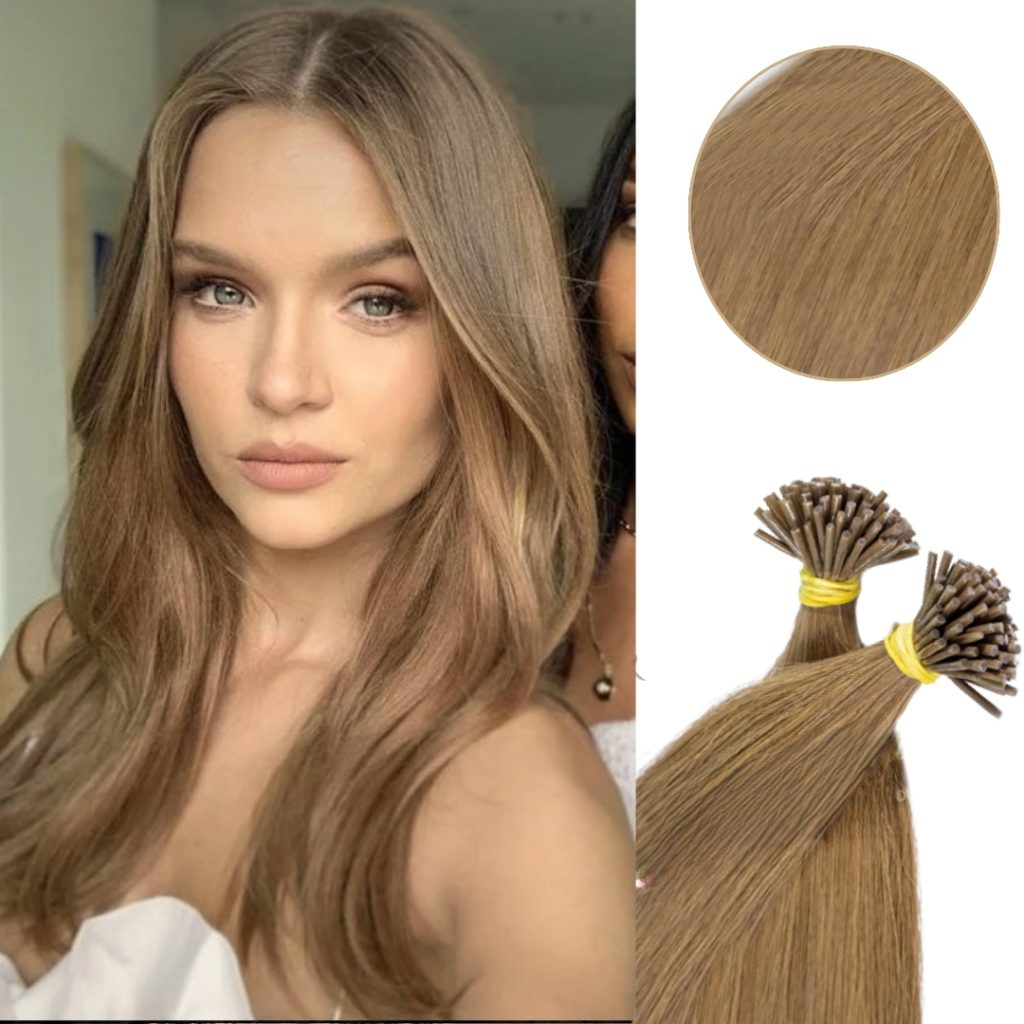
Can You Highlight Hair Extensions?
While extensions made from 100% human hair have a similar structure to your natural locks, they’ve gone through their own processing and no longer receive natural oils from the scalp. This means they’re more fragile and require special care when exposed to chemicals. Understanding the differences between extension types and their color compatibility is the key to achieving a flawless result without causing damage.
Highlight hair extensions are hair extensions that have been dyed with alternating light/dark strands or bold contrasting colors to create a beautiful multi-tone effect. This coloring technique adds dimension, depth, and vibrance to any hairstyle, making it a favorite choice for clients who want a striking yet sophisticated look.
Highlight hair extensions were once most popular in Europe, the US, and the Middle East. However, they are now highly in demand among African customers as well, proving their universal appeal across different markets and fashion preferences.
Hand-tied wefts are the pinnacle of craftsmanship, made from the highest quality 100% human hair. They often come in natural tones, balayage, or with rooted colors for a seamless blend. One of the biggest advantages is that you can easily touch up your natural roots without removing the wefts.
However, if you intend to color your entire head of hair (including the extensions), we recommend only staying within the same color family or going darker. Can you highlight hair extensions on dark hair when they’re hand-tied? We strongly advise against it. Attempting to lighten or bleach hand-tied wefts can damage the delicate stitching and severely harm the pre-processed hair structure. The safest option is to remove the extensions, color your natural hair to the desired shade, and then have them reinstalled.
Tape-in extensions are an incredibly popular choice thanks to their versatility. You can freely mix and match different color packs to create thousands of personalized color combinations. While wearing tape-ins, you can carefully perform a root retouch. However, it is crucial to never let hair dye or bleach come into direct contact with the adhesive tabs. The chemicals can weaken the bond, causing the extensions to loosen or slip. If you want a complete color change, the best advice is to have a professional remove the tape-ins, color your hair, and then re-apply them with new tape.
Fusion extensions, also known as K-tips, use small keratin bonds that are attached to the base of your natural hair. This type is also made from 100% real human hair and is available in up to 85 different colors. Like hand-tied wefts, you can easily touch up your roots while the extensions are in. If you want to color both your natural hair and the extensions, stick to the golden rule: stay in the same tone or go darker. Lightening fusion extensions is never recommended, as the bleaching process will make the pre-colored strands dry, weak, and prone to breakage.
This is the easiest type of extension to manage when it comes to color. You have complete control. You can simply remove them before heading to the salon to highlight or color your natural hair, protecting them from any unnecessary chemical exposure. If you decide on a total hair color transformation, the simplest solution is to buy a new set of clip-ins to match your new shade. However, if you truly love your old set, they can still be custom-colored separately.
Whether you love wavy, curly, or bone straight, highlight hair extensions can be customized to match your preferred texture while keeping the multi-tone color vibrant and visible.
This is an extremely important question, and our answer is always a firm and definitive: ABSOLUTELY NOT. You should never attempt to highlight, dye, or use any chemical process on synthetic hair extensions. Synthetic hair is made from plastic or polymer fibers that have been colored and heat-styled in a factory. Their structure is completely different from human hair. When exposed to dye or bleach, synthetic fibers will not absorb the color. Instead, they are likely to melt, warp, or be ruined completely.
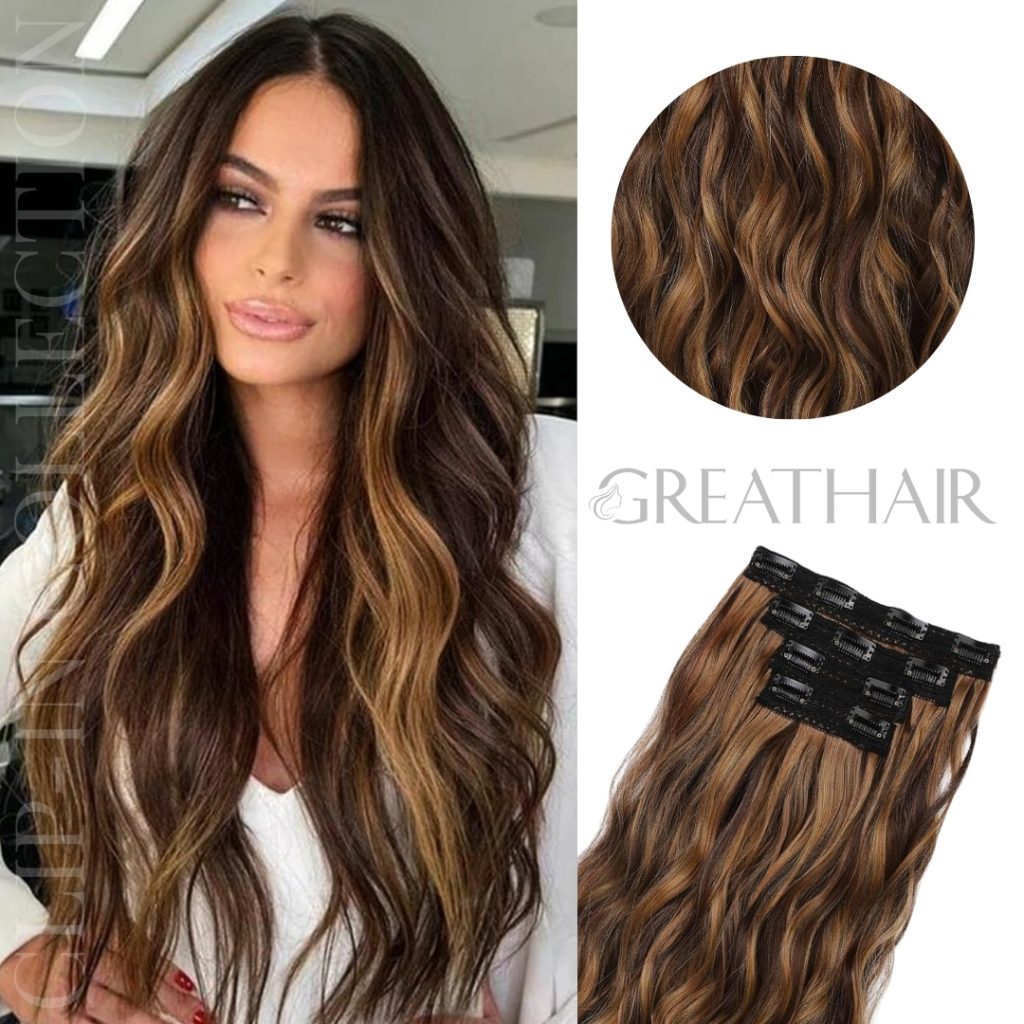
Chocolate Brown with Golden Highlights Wavy Clip-In Hair Extensions
Here’s a pro tip that not everyone knows. Instead of buying dark extensions and trying to bleach them to a lighter shade, do the opposite. Purchase extensions that are a shade or two lighter than your desired outcome. It is always easier, safer, and far less damaging to deposit color and go darker (tone-down) than it is to lift color (tone-up). Bleaching dark extensions is not only difficult to get right but also severely dries out and destroys the hair.
There’s a common misconception that you should color hair when it’s perfectly clean. The opposite is actually true. Washing your hair immediately before coloring can make the strands too “slick,” preventing the color molecules from adhering effectively. The ideal time to wash your hair is 24 to 48 hours before you plan to color it. A small amount of natural oil on the hair shaft provides a slight protective barrier and helps the color to process more evenly and last longer.
No matter how confident you are, a strand test is a non-negotiable insurance policy. It helps you avoid potential disasters with the entire set. Choose a small, inconspicuous strand (from the nape of the neck or an inner layer) to test the color. Mix a tiny amount of dye according to the directions, apply it to the strand, and let it process. After rinsing, wait 24 hours to see the final color in natural light. This step ensures you’ll be 100% happy with the result before committing.
When figuring out how to highlight hair extensions, your choice of dye is critical. Choose dyes specifically formulated for human hair that are gentle enough for extensions. Some permanent dye formulas contain high levels of ammonia and peroxide that can be too harsh, weakening or damaging the already-fragile extension hair. We always recommend using semi-permanent or demi-permanent dyes. These cause less damage by depositing color gently onto the hair’s cuticle rather than permanently altering its structure.
After coloring, proper aftercare will determine the longevity of your color. Invest in sulfate-free shampoos and conditioners. Sulfates, particularly Sodium Lauryl Sulfate (SLS), are harsh detergents that strip the hair of its natural oils, leaving it dry and causing color to fade quickly. Using sulfate-free products will help preserve your color’s vibrancy, maintain moisture, and extend the life of both your color and your extensions.
While we said “slightly dirty” hair holds color better, this doesn’t mean you should apply dye to hair that’s caked in hairspray, gel, oils, or silicone-based products. This product “build-up” creates a barrier that prevents the dye from penetrating the hair shaft evenly, leading to a splotchy, uneven result. Make sure your hair is free of styling products before you begin to create a perfect canvas for your new color.
This technique involves coloring certain sections or strands of hair a few shades lighter than the base color. The main goal is to brighten the overall look and add soft dimension and vibrancy. An important note is to avoid choosing a highlight color that contrasts too dramatically with the base color. This can create an unnatural and dated “zebra stripe” effect.
How-to: Use a color brush to carefully apply dye from near the roots down the hair shaft. Section the hair into thin layers with clips to ensure even application. Always follow the processing time on the dye box to avoid over-lightening.
Balayage is a French word that means “to sweep,” which is exactly what this technique entails. It’s a “freehand painting” technique applied directly to the surface of the hair without using foils. The color transitions softly and gradually from the mid-lengths to the ends, creating a natural, sun-kissed effect as if you’ve just returned from a summer beach holiday. Balayage is especially great for long or medium-length hair and looks stunning on gentle waves.
How-to at home: Part the hair into four sections. Using a brush or your gloved hands, “sweep” the dye randomly from the mid-lengths to the ends, concentrating more color on the ends. Avoid applying dye too close to the roots if you want to maintain a natural, dark base. This technique requires a skilled hand to create a seamless blend.
This is the most traditional and precise highlighting technique. Foiling uses sheets of aluminum foil to wrap each section of hair being colored, completely isolating it from the rest of the hair. This prevents the color from bleeding and gives you precise control over the placement, thickness, and brightness of each highlight. It’s the ideal choice when you want crisp, well-defined highlights.
How-to: Cut and prepare your foils in advance. Use the tail of a comb to pick up thin strands of hair. Place a foil sheet directly under the strand, apply the dye evenly, and fold the foil. After about 20 minutes, check a foil to see if the desired color has been reached.
Slicing is a variation of foiling, but instead of weaving out fine strands, you take a thin “slice” of hair (about 1/6 to 1/8 of an inch) to color. This technique creates a bolder, more noticeable effect with higher contrast than traditional highlights. It’s perfect if you want distinct ribbons of color that make a strong statement.
Frosting is a freehand technique focused on lightening just the ends of the hair. It’s often used on shorter hairstyles like bobs or pixies, creating a soft contrast between the darker roots and lighter tips. This is a retro technique that is making a comeback, offering a look that is both edgy and a little rebellious.
Pintura is a highlighting technique born specifically for curly hair. Instead of coloring an entire strand, the colorist “paints” individual curls where light would naturally hit them. This accentuates the curl pattern, creating beautiful light reflection and incredible dimension. Unlike balayage, pintura often starts closer to the roots and focuses on making each individual curl pop.
As the name suggests, baby lights are super-fine, delicate highlights that are typically only 1-2 shades lighter than the base color. They are subtly placed around the hairline and on the crown to mimic the soft, natural highlights a child’s hair gets from playing in the sun. The result is an extremely natural, subtle look that gently brightens the overall appearance of the hair.
If baby lights are all about subtlety, chunking is about being bold. This technique uses large, thick panels of highlights that have a high contrast with the base color. It’s not meant to be a seamless blend like balayage but rather a strong fashion statement. This is the perfect choice for those who love the bold, edgy styles of the ’90s and early 2000s.
Ombre is one trend that never goes out of style. It features a distinct transition from dark roots to progressively lighter ends. The effect is easily recognizable and creates a dramatic look. Ombre is very suitable for hair extensions because it doesn’t require color processing near the roots or bonds, helping to protect them.
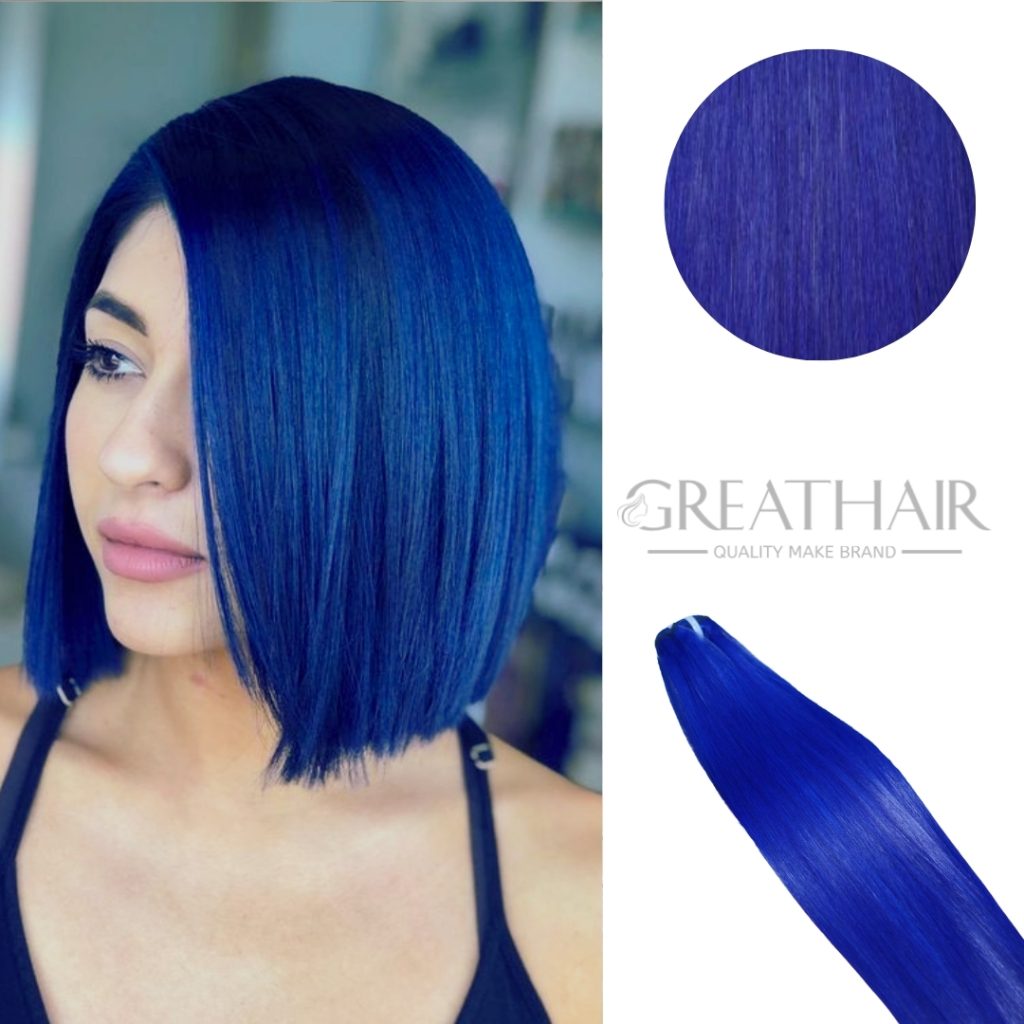
Blue Color Straight Weft Hair Extensions

We Will Contact You Shortly


Address: 8 Ngo 20/45 D. Phu Minh, Minh Khai, Bac Tu Liem, Ha Noi, Viet Nam
Phone: (+84)813282399

There are no products in the cart