



There are no products in the cart
Oct 03, 2025
Post by Alice Bonita
Many people want longer, fuller hair but feel nervous about extensions. That fear is fair. Some extension methods can pull on the scalp, stress natural hair, or cause breakage when they are too tight or poorly applied.
So, do halo extensions damage your hair? In most cases, halo extensions are one of the gentler options because they do not need glue, heat, tape, or sewing. But they are not risk-free. If the halo is too heavy, too tight, placed incorrectly, or worn while sleeping, exercising, or swimming, it can still cause discomfort, tangling, or breakage.
Halo extensions usually do not damage your hair when they are lightweight, properly fitted, and removed at the end of the day. However, halo extensions can cause hair breakage, scalp pressure, or discomfort if the weft is too heavy, the wire or clips are too tight, or you wear them during sleep, exercise, or swimming.
Halo hair extensions are temporary extensions designed to add length and volume without being attached strand by strand to your natural hair.
A typical halo has three main parts: a weft of hair, an invisible wire, and sometimes a few small clips for extra security. Traditional halo hair extensions mainly sit on the head using the clear wire. Some hybrid halo extensions include small clips, but the main weight should still be supported by the wire, not by pulling on small sections of natural hair.
To wear them, you place the wire around the crown area, usually slightly behind the hairline, then pull your natural hair over the wire to hide it. When fitted well, the halo blends into your hair and can be removed in minutes.
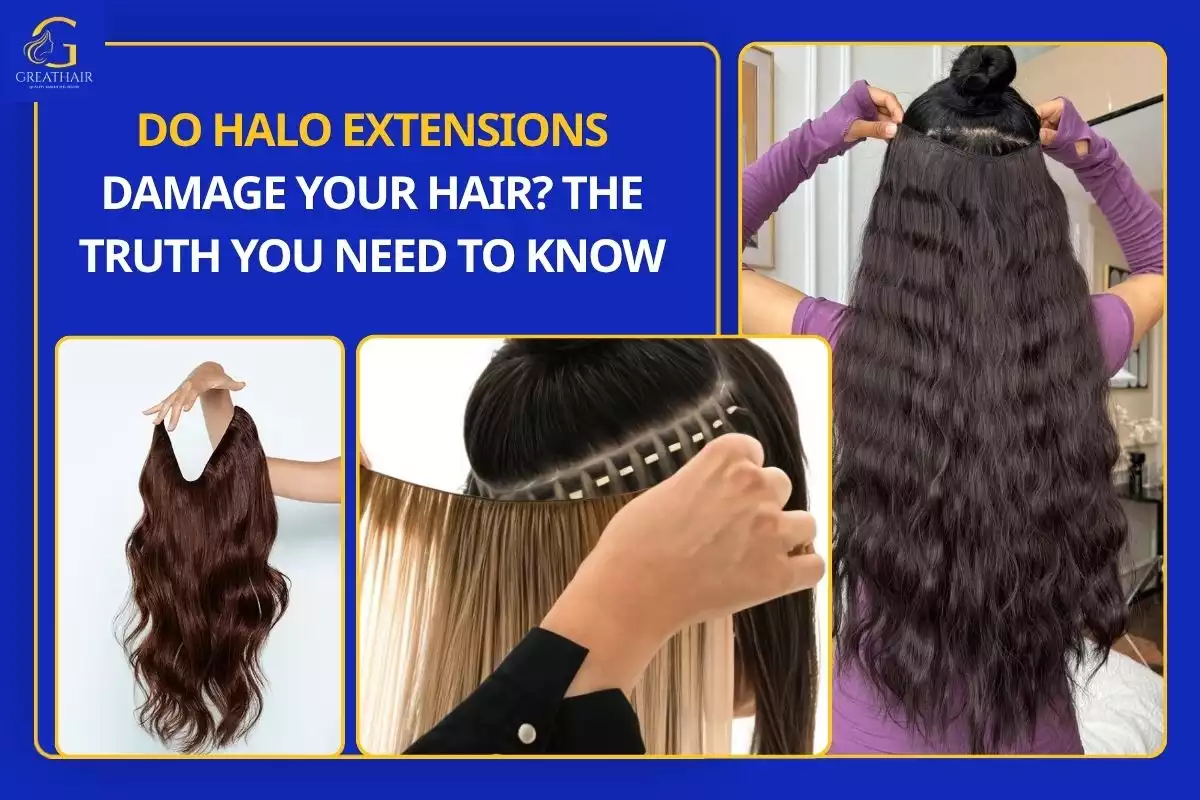
Halo extensions are not bonded with keratin, glued to the scalp, taped close to the roots, or sewn into braids. This matters because tight or poorly maintained extensions can pull on the hair and may contribute to breakage or traction-related hair loss over time. Dermatology guidance from the American Academy of Dermatology warns that extensions and weaves can damage natural hair if proper care is not taken.
A well-fitted halo spreads weight across the head through the invisible wire. That is different from clip-ins, where several small clips hold the weight in specific areas.
This does not mean there is no pressure at all. A heavy halo can still feel uncomfortable. But when the weight, length, and density match your natural hair, the tension is usually lower than methods that pull from the roots.
Halo extensions are temporary. You can take them off before sleeping, washing your hair, exercising, or swimming. That gives your scalp and natural hair a break.
This is one reason many people prefer halo extensions over semi-permanent methods like tape-ins, sew-ins, or keratin bonds. With temporary wear, you have more control over when your hair is under stress.
Halo hair extensions damage is more likely when the product is wrong for your hair or when the halo is worn carelessly.
The weft is too heavy for your natural hair.
If your natural hair is thin, fragile, or shedding, a thick and heavy halo may feel too much. The extra weight can create pressure and make blending harder.
The wire or clips are too tight.
A halo should feel secure, not painful. The AAD notes that pain, scalp stinging, crusting, or tight pulling can be warning signs that a hairstyle may contribute to hair loss.
The halo is placed in the wrong position.
If it sits too far forward, it may show. If it sits too low or too tight, it may pull at the sides or back of the head. Placement matters.
You sleep, exercise, or swim while wearing it.
Sleeping in halo extensions can cause tangling and friction. Exercise and swimming can loosen the wire, create sweat buildup, and make the hair harder to detangle later.
You brush or remove it too roughly.
Pulling the halo out quickly can tug your natural hair. Always support the weft, detangle gently, and remove it slowly.
You choose poor-quality synthetic or mixed hair.
Synthetic or mixed hair can tangle faster and may need more brushing. More brushing often means more friction on your natural hair.
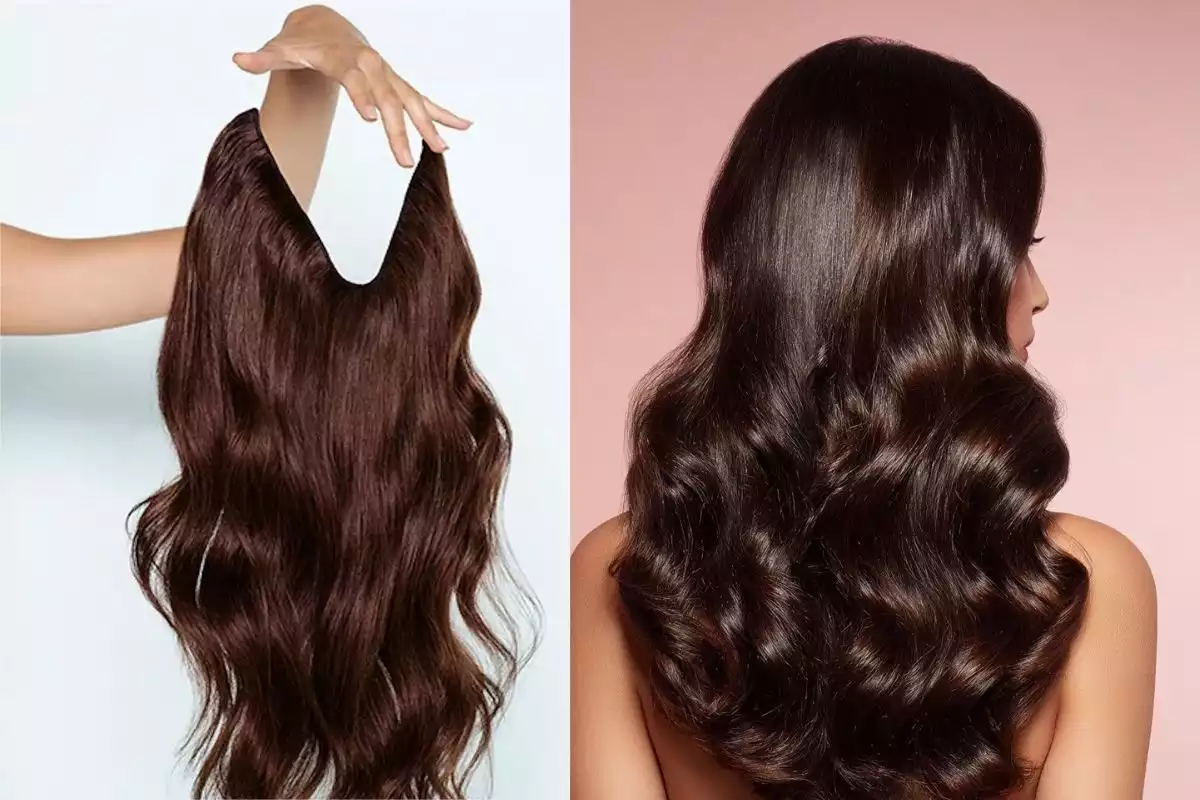
Halo extensions can be safe for thin or fine hair, but only when you choose the right type. The safest choice is usually lightweight human hair halo extensions with natural density, a comfortable base, and an adjustable wire.
For halo extensions for thin hair, avoid going too long, too thick, or too heavy. A subtle volume boost often looks better and feels more comfortable than a very dense weft.
Be more careful if your hair is extremely sparse, actively shedding, chemically damaged, or if your scalp is sensitive. In those cases, ask a stylist before wearing any extension method. Repeated tension from hairstyles and extensions is linked with traction alopecia, a form of hair loss caused by continuous pulling on the roots.
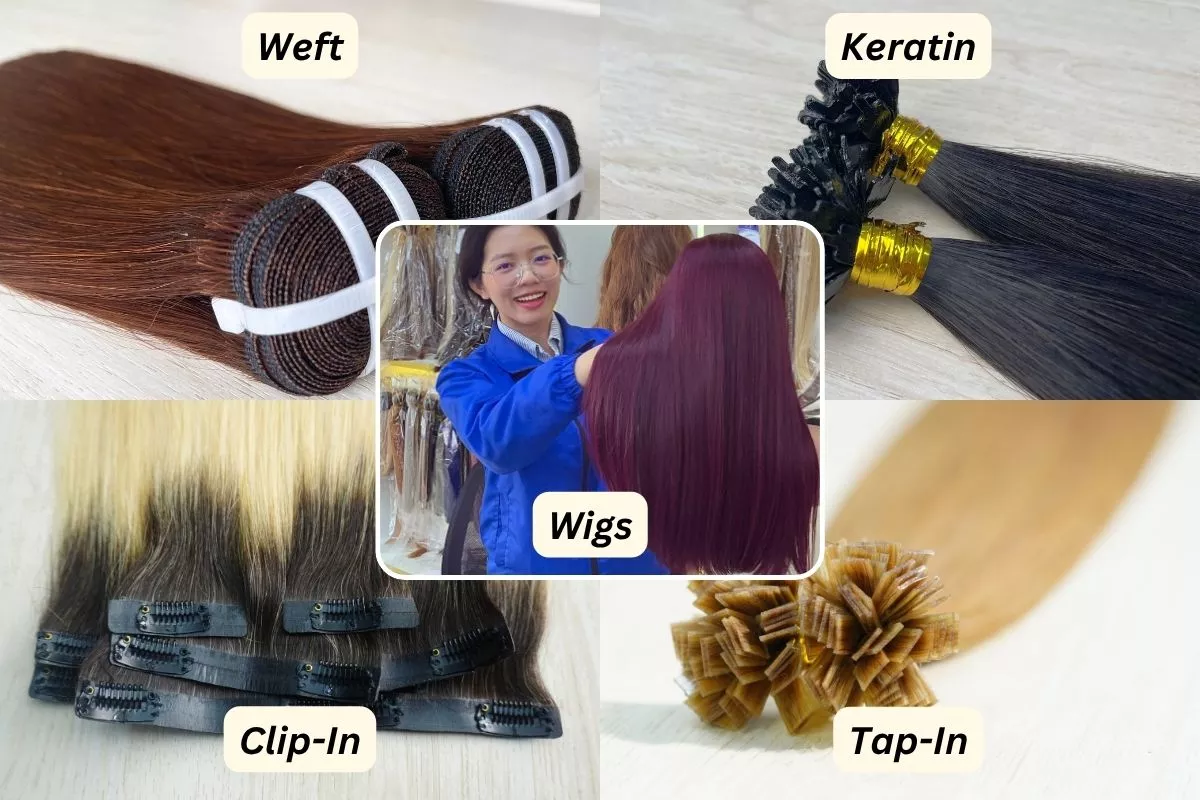
| Method | How It Attaches | Damage Risk | Best For |
|---|---|---|---|
| Halo extensions | Invisible wire, sometimes small support clips | Low to medium if fitted correctly | Temporary length and volume |
| Clip-in extensions | Small clips attached to natural hair | Medium if clips pull or are worn too often | Occasional styling |
| Tape-in extensions | Adhesive tapes near the roots | Medium if installed or removed poorly | Semi-permanent wear |
| Keratin bond extensions | Heat or bond attachment | Medium to high if hair is weak or removal is rough | Long-term professional installs |
| Sew-in/weft extensions | Sewn onto braided natural hair | Medium to high if braids are tight | Thick, strong hair textures |
Use this simple checklist before and after wearing halo extensions:
The best halo hair extensions should feel comfortable, blend naturally, and require less daily fighting with tangles.
Look for these details:
Human hair halo extensions are usually easier to style and blend than synthetic options. They can be curled, straightened, toned, and washed more naturally, depending on the hair quality and processing.
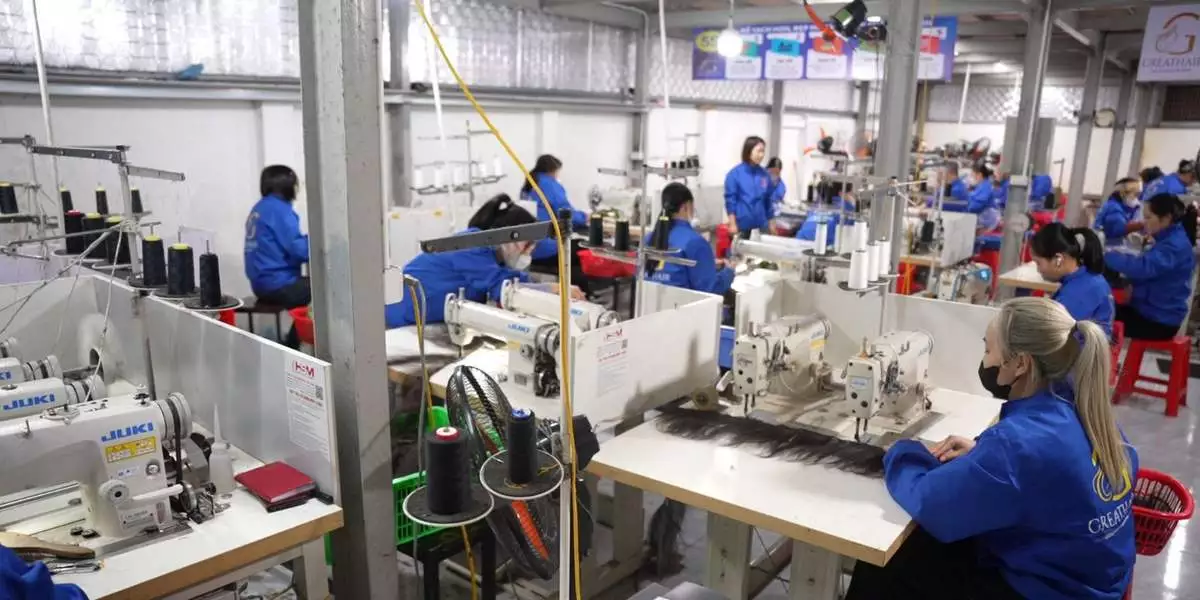
If you are a salon owner, reseller, or wholesale buyer, Vietnamese human hair extensions can be a strong option because the hair is known for a smooth feel, natural dark tones, and good durability when sourced and processed carefully. Great Hair Vietnam supplies 100% Vietnamese human hair extensions and can support custom requests for color, length, texture, and density for salons, resellers, and wholesale buyers.
Halo extensions are a good choice if you want temporary length or volume without glue, heat, tape, or sewing. For many people, they are gentler than semi-permanent extension methods because they can be removed at the end of the day.
But the fit must be right. Choose a lightweight halo, adjust the wire properly, remove it before sleep, and brush it gently. If your hair is very weak, thinning heavily, or your scalp feels sensitive, speak with a stylist before trying any extensions.
For buyers looking for human hair halo extensions, Great Hair Vietnam can help with hair quality, color matching, length selection, and custom production using Vietnamese human hair.
Halo extensions do not usually damage thin hair if they are lightweight, fitted correctly, and not worn too tightly. The risk increases when the weft is too heavy, the wire presses too hard, or clips pull on fragile strands. For thin hair, choose natural density and avoid overly long halos.
No, you should not sleep with halo extensions. Sleeping in them can cause tangling, friction, and pulling while you move. It can also bend the wire or loosen the shape of the weft. Remove your halo before bed and store it flat or on a hanger.
Halo extensions can be gentler than clip-ins for some people because the main weight is supported by the wire instead of multiple clips attached to natural hair. However, clip-ins may feel more secure for certain styles. The better option depends on your hair thickness, styling needs, and comfort.
Most people can wear halo extensions for several hours in a day if they feel comfortable and secure. Remove them if you feel pressure, soreness, or pulling. Halo extensions are best for daytime wear, events, photos, or workdays, not for sleeping, intense exercise, or swimming.
Yes, halo extensions can cause hair breakage if they are too heavy, too tight, removed roughly, or brushed aggressively. Breakage is more likely on weak, dry, bleached, or very fine hair. To reduce risk, choose a lightweight halo and detangle gently before and after wearing.
Human hair halo extensions are usually better for a natural look, smoother blending, and heat styling. Synthetic hair can be cheaper, but it may tangle faster and look less natural over time. If you want longer wear, easier styling, and better movement, human hair halo extensions are usually the stronger choice.

We Will Contact You Shortly



Address: 8 Ngo 20/45 D. Phu Minh, Minh Khai, Bac Tu Liem, Ha Noi, Viet Nam
Phone: (+84)813282399

There are no products in the cart