



There are no products in the cart
Apr 08, 2026
Post by Alice Bonita
If you want to know How To Make Clip In Hair Extensions look natural, the real answer is simple: choose a set that matches your hair’s overall tone and texture, place the wefts where they stay hidden, and style your natural hair together with the extensions instead of treating them like two separate layers. Flat seamless wefts, enough density for your haircut, and a little customization make the biggest difference.
The rest is technique. Good clip-ins should disappear into your own hair, not sit on top of it. That means proper sectioning, secure but comfortable clipping, and a blending method that suits your hair type, whether your hair is blunt, fine, curly, coily, or somewhere in between. If the install feels painful, it is too tight.
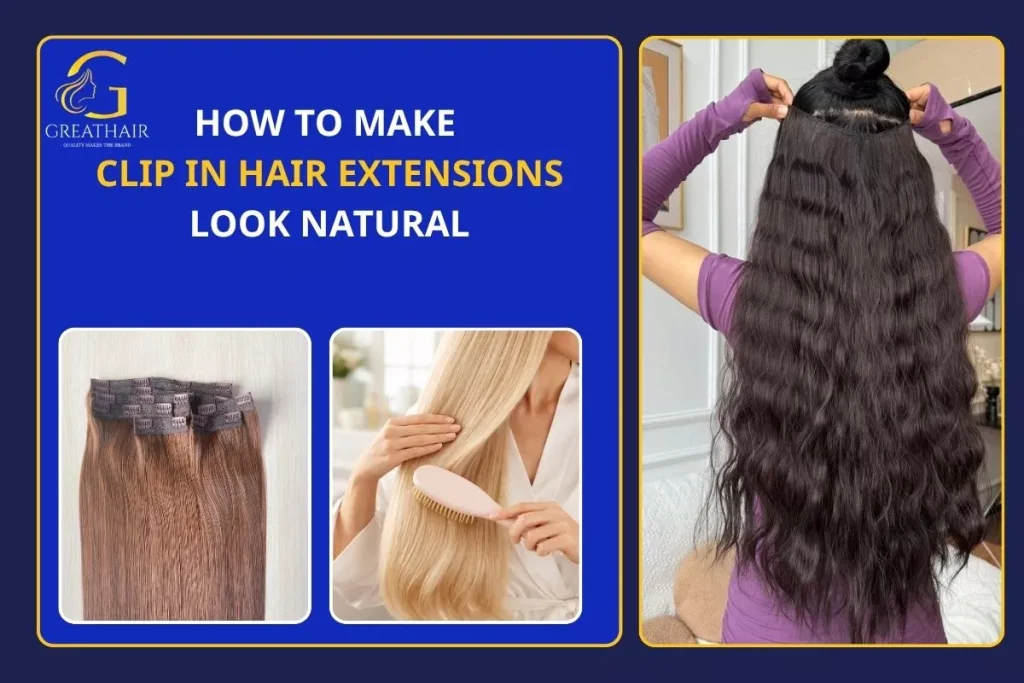
Natural-looking clip-ins come down to four things: match, placement, density, and finish. The match is about color, undertone, and texture. Placement is about hiding the wefts under enough natural hair. Density is about using enough hair to make the transition believable. Finish is what happens after installation, when you brush, wave, or trim everything so it reads as one hairstyle instead of two separate layers.
This is why some clip-ins look flawless in five minutes while others look obvious even when the color seems close. A decent shade match alone is not enough if the wefts are bulky, the set is too light for a blunt haircut, or the ends of your natural hair are sitting visibly under the extensions.
When people ask How To Make Clip In Hair Extensions look natural, they usually focus on the install. In practice, the install matters, but the result is decided just as much by what you buy and how well it matches your real hair.
The best install cannot rescue the wrong set. Before you touch a comb, make sure the extensions are realistic for your hair type and haircut.
Get this part right, and the actual application becomes much easier.
Preparation is what stops a quick install from turning into a visible one. Your hair and the extensions both need to be detangled, organized, and ready to blend before the first clip goes in.
A clean setup makes the final blend look more effortless, even if the actual process only takes a few minutes.
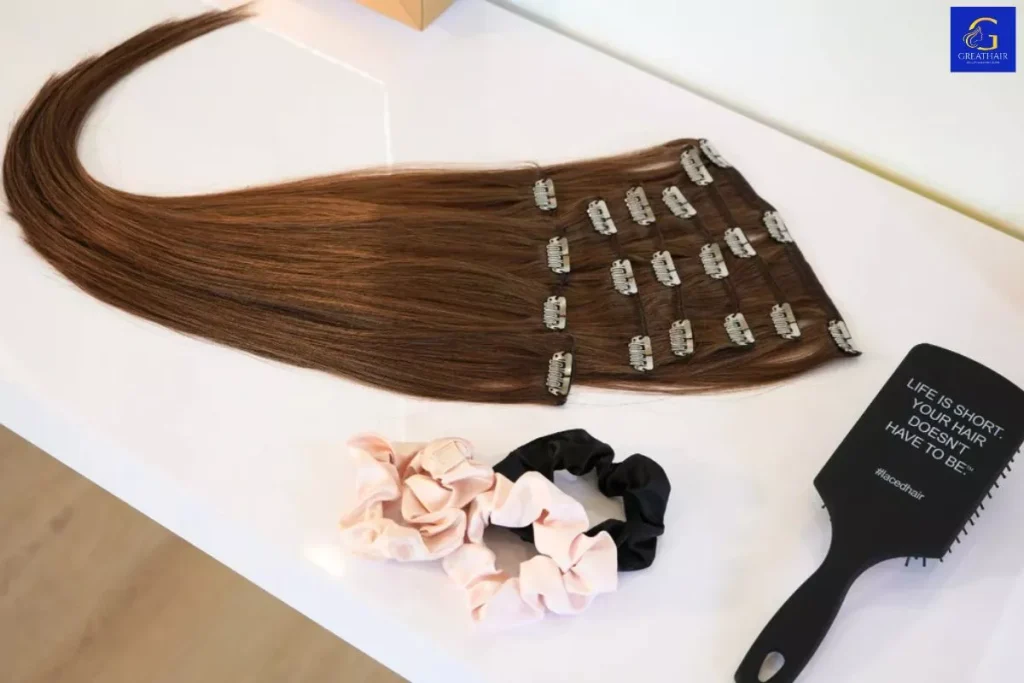
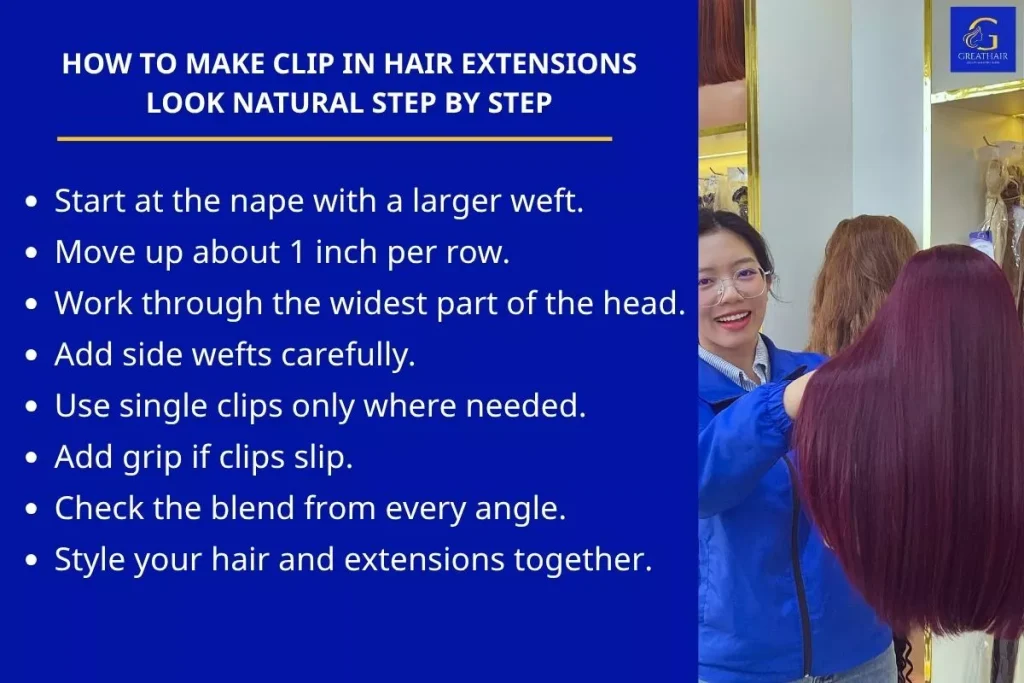
The most reliable DIY method is to build the shape from the nape upward, keep the sides discreet, and only add extra pieces where they improve the blend. Think of this as a layering job, not a race.
The goal is not to use every piece just because it came in the box. The goal is to create a shape that reads as your hair, only better.
Some hair types need more than a basic install. The good news is that the fix is usually technique, not magic.
Short or blunt hair
Short hair gives away clip-ins at the bottom first. If your ends are blunt, braid and pin the lowest layer against your head before clipping the first rows over it. This hides the short underlayer, softens the shape, and lets the extensions become the visible base of the style. Stacking wefts can also add enough fullness to make the transition less obvious.
For this hair type, waves are your friend. Straight extensions under a blunt line usually expose the join, while soft bends help your real ends disappear into the rest of the hair.
Fine or thin hair
Fine hair needs flatter construction and smarter distribution, not maximum volume. Seamless clip-ins are often the better choice because they are designed to lay flat, and smaller pieces can target the crown, temple, or nape without creating lumps.
Less is usually more here. Too many bulky wefts make the top layer separate from the hair underneath, which is exactly what makes extensions visible.
Textured, curly, or coily hair
Textured hair looks best with clip-ins that match the pattern you actually wear. Brands now offer options from blowout-like yaki textures to curly and coily patterns, which makes blending easier and more believable than trying to force a straight set into a textured style.
If you wear your hair in a stretched state, match that. If you wear curls, match curls. The closer the extension texture is to your own finish, the less styling work you need afterward.
Natural-looking extensions do not stay natural-looking by accident. The finish depends on how lightly you style them and how sensibly you maintain them between wears.
When clip-ins stay soft, smooth, and close to your real texture, they are far easier to blend the next time you wear them.
Most bad clip-in installs are not caused by bad hair. They are caused by a few predictable mistakes that make otherwise decent extensions look obvious.
Avoid these six mistakes, and your clip-ins will already look better before you buy a new set or learn any advanced styling trick.
Can clip-in hair extensions look natural on short hair?
Yes, but short hair usually needs more density and better concealment. Braiding and pinning the bottom layer, then styling your real hair together with the extensions, makes the blend much more believable.
Are seamless clip-ins better for fine hair?
Often, yes. Seamless clip-ins are designed to lay flatter against the head, which usually makes them easier to hide in fine to medium hair.
Should I choose human hair or synthetic clip-ins?
If your priority is the most natural finish, human Remy hair is usually the better option because it moves more like real hair and can be styled more flexibly.
Do I need to cut or trim clip-ins to make them look real?
Sometimes, yes. If your haircut is blunt, layered, or unusually shaped, a light trim or minor customization can help the extensions blend much better.
How often should I wash clip-in hair extensions?
Wash them when there is noticeable buildup or when they feel sticky, heavy, or hard to style. For many human-hair clip-ins, that works out to roughly every 30 wears or about once a month.
Can clip-ins damage your natural hair?
They can if they are worn too tightly or with repeated tension. If the clips hurt, feel painful, or cause headaches, loosen or remove them.
Why do my clip-ins show at the sides?
Usually because the side pieces are too close to the hairline, the wrong texture or density was chosen, or there is not enough natural hair covering the wefts.
How To Make Clip In Hair Extensions look natural is less about one secret trick and more about getting the fundamentals right. Match the color and texture well, choose enough density for your haircut, place the wefts where they stay hidden, and style your real hair with the extensions as one. Once those pieces are in place, clip-ins stop looking like an add-on and start looking like your own hair on a very good day.
>>Read More: Best Wholesale Clip In Human Hair Extensions Suppliers
If you want to save time and still own a quality clip-in hair extension set from real human hair, soft and durable, explore Greathair’s premium clip-in hair extension collection. We offer a wide range of colors, lengths, and 100% human hair to give you a new style in just a few simple steps.
Chat with us:

We Will Contact You Shortly



Address: 8 Ngo 20/45 D. Phu Minh, Minh Khai, Bac Tu Liem, Ha Noi, Viet Nam
Phone: (+84)813282399

There are no products in the cart