



There are no products in the cart
Apr 01, 2026
Post by Alice Bonita
To measure head size for a wig, take three core measurements with a soft tape measure: circumference, ear to ear, and front to back. Then compare those numbers with the brand’s wig size chart and choose the size indicated by your largest measurement.
For most buyers, the mistake is not the measuring itself. It is assuming “average” will fit without checking the brand chart. Wig sizing is similar across the market, but it still varies slightly by brand, and adjustable straps help refine the fit rather than replace the correct cap size.
If you are measuring over your natural hair, keep it as flat as possible. A slicked-down or close-to-scalp measurement gives a more accurate wig fitting, especially when you are ordering online.

Getting the size right affects comfort, security, and how natural the wig looks. A cap that is too tight can create pressure and headaches, while a cap that is too loose can shift, lift at the nape, or feel unstable during the day.
This matters even more if you are buying your first wig, shopping online, or comparing brands across the US and EU. US retailers often present charts in inches, while UK and EU retailers commonly show centimeters as well, so reading the chart correctly is part of getting the fit right.
Before you measure, keep the setup simple:
That is all you need for a useful, reliable wig measurement at home.
For most ready-to-wear wigs, three measurements do the real work. The goal is not to guess your size from memory but to measure the head shape the cap has to sit on, then match that to the brand chart.
Use this method when you are buying a full wig, comparing cap sizes, or trying to confirm whether you need petite, average, or large.
Once you have the numbers, compare them with the size chart for the exact brand you are considering. If the measurements point to different sizes, use the largest measurement as your deciding number.
A wig size chart is a guide, not a universal law. Most brands use similar ranges, but exact measurements can shift slightly, which is why the safest move is always to compare your numbers against the chart on the product or brand page.
As a practical reference, these are the ranges most shoppers will see:
Some brands also offer bridge sizes such as petite/average and average/large. For example, Wigs.com highlights petite/average around 21.5 inches and average/large around 22.5 inches, while Jon Renau’s published measuring standards also include those in-between categories.
If you have searched for “average cap size” or “average head size for women,” the useful takeaway is this: many adult shoppers do land in the average range, but that should never replace measuring your own head. Simply Wigs says its average range is 54 to 57 cm and notes that around 90% of its customers fall there, which is helpful as a reference point, not as a shortcut.
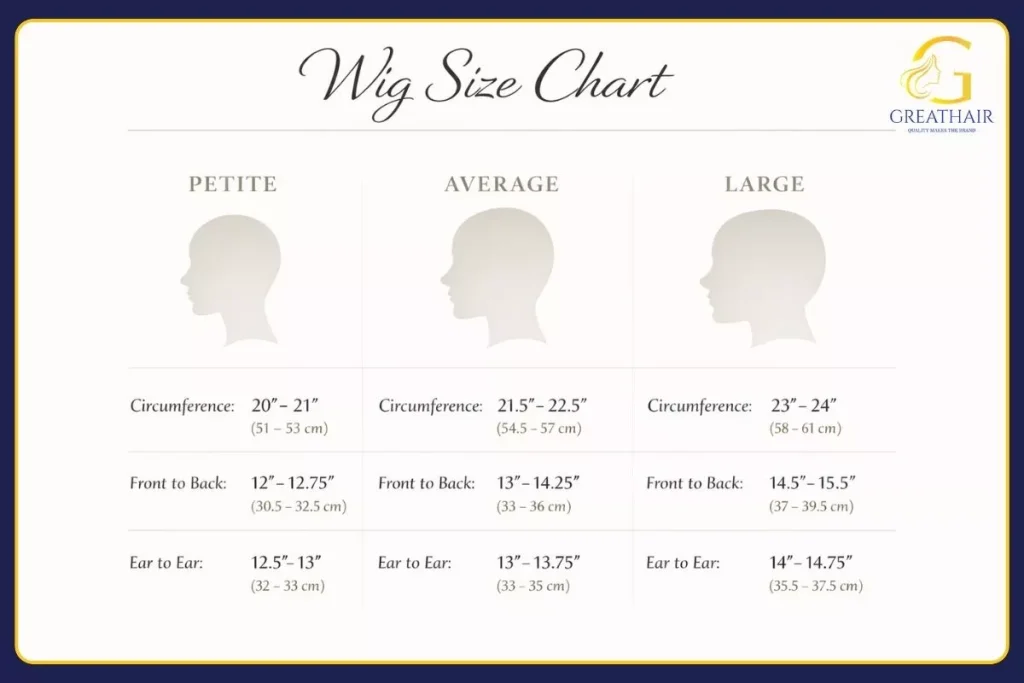
If you are between sizes, do not guess and do not round to whatever sounds most common. The better rule is to start with the size indicated by your largest measurement, then use the cap’s built-in adjustability for small refinements.
This is where many shoppers get confused, because one measurement may read petite while another reads average. That is normal, especially if your head shape is longer front to back or fuller around the circumference.
Use this decision process:
If you are shopping across US and EU stores, this step matters even more. The measuring method is the same, but the chart presentation and size naming can vary slightly, so the safest comparison is inches-to-inches or centimeters-to-centimeters against each brand’s own guide.
A good wig fit should feel secure without feeling tight. You should not need to keep readjusting it, and it should not pinch, slide, or sit awkwardly over the ears.
After putting the wig on, check the fit in a mirror before deciding whether the size is right. Fit problems often show up in pressure points, ear tab placement, or movement at the nape.
Signs your wig fit is right:
Signs the size is off:
If you want extra hold, a wig grip band or liner can improve comfort and stability. That is especially useful for sensitive scalps or very smooth hair, but it works best when the cap size is already close to correct.
Most wig sizing problems start with small shortcuts. The measuring process is simple, but it only works when you do it the same way the size chart expects.
Avoid those errors, and wig fitting becomes much more predictable. Nearly every reliable measuring guide points back to the same basics: flatten the hair, take consistent measurements, compare them to the brand chart, and let the largest measurement decide.
New to wigs? Start with our complete beginner guide: What Is a Wig? A Complete Beginner Guide from a Hair Factory Owner.
Do I need all three measurements, or is circumference enough?
Circumference is the starting point, but most ready-to-wear wig guides also use ear-to-ear and front-to-back. If those measurements point to different sizes, use the largest one.
What is the average cap size for wigs?
A common average range is about 21.25 to 22.5 inches, or 54 to 57 cm, but the exact range depends on the brand. That is why a brand-specific wig size chart matters more than a generic average.
How do I measure my head for a wig if I have little or no hair?
Use the same measuring points and place the tape where your natural front hairline and nape would normally be. Wigs.com also provides a simple hand-placement method to estimate the front hairline if it is not obvious.
Should I measure my head with hair down or flat?
Measure with hair wet, slicked down, or as close to the scalp as possible. That gives the most realistic wig cap size for actual wear.
What if I am between wig cap sizes?
Start with the size indicated by your largest measurement, then use the wig’s adjustable tabs or straps for small corrections. Do not choose a smaller cap just because it sounds more secure.
Can adjustable straps fix the wrong wig size?
They help fine-tune the fit, but they are not a substitute for the correct cap size. If the wig is significantly too tight or too loose, you will still notice fit problems.
Are wig sizes the same in the US and EU?
The measuring method is essentially the same, but charts can be presented differently and brand ranges can vary slightly. US stores often emphasize inches, while UK and EU retailers commonly show centimeters as well.
Knowing how to measure head size for a wig removes most of the guesswork from buying online. Take the three core measurements, compare them with the exact wig size chart for the brand, and let the largest measurement guide your choice for a fit that feels secure, comfortable, and natural.
If you want beautiful, soft hair and a reliable supplier, GreatHair is the place to start.


We Will Contact You Shortly



Address: 8 Ngo 20/45 D. Phu Minh, Minh Khai, Bac Tu Liem, Ha Noi, Viet Nam
Phone: (+84)813282399

There are no products in the cart