



There are no products in the cart
Jan 17, 2026
Post by Alice Bonita
Remy hair vs virgin hair is not just a naming issue it directly affects how hair looks, feels, performs, and how long it lasts. Simply put: Remy hair refers to cuticle alignment, virgin hair refers to chemical history, and “100% human hair” only describes the source. At Great Hair, these distinctions are defined clearly from sourcing to finished bundles.
In the hair extension market, terms like Remy hair, Virgin hair, and 100% human hair are often used interchangeably. This is where problems begin. Many salons and distributors assume these labels mean the same thing, only to face tangling, shedding, or inconsistent quality later.
As a factory-direct hair manufacturer, Great Hair works with Remy, Virgin, and Raw hair every day. From our experience, understanding the real difference between these hair types is one of the most important steps to choosing the right product and avoiding costly mistakes.
If you’re new to hair extensions, this overview may be helpful before going deeper:
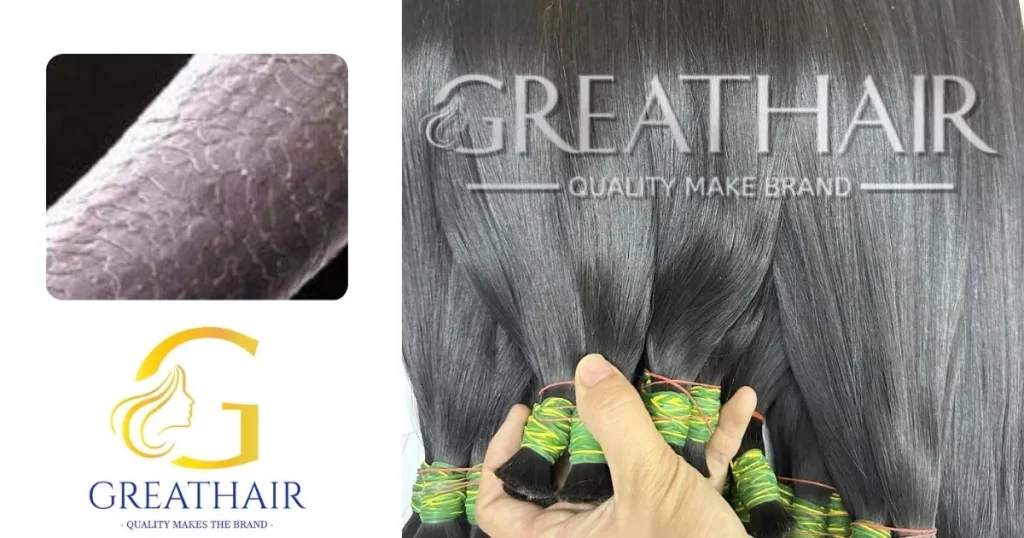
In professional hair manufacturing, Remy hair refers specifically to cuticle alignment, not color, texture, or processing level. Remy hair is 100% human hair collected and maintained so that all cuticles run in the same direction, from root to tip. This structural detail plays a critical role in how hair performs during daily wear.
When cuticles are aligned:
From a factory perspective, cuticle alignment is the single most important factor affecting long-term performance, especially after multiple washes.
Remy hair 100 Human hair
Human hair cuticles function like microscopic scales. When all cuticles face the same direction, strands glide smoothly against each other. When cuticles are mixed or reversed a common issue in non-Remy hair friction increases. The result is hair that may look acceptable at first but begins to tangle, shed, and dry out after a few washes. This is why Remy hair is considered a structural quality standard, not simply a marketing label.
Remy human hair must meet two non-negotiable conditions:
Many products sold as “100% human hair” meet only the first condition. In mass-market production, cuticle alignment is often damaged during collection, mixing, or aggressive processing. Some suppliers attempt to correct this later using silicone coatings or heavy finishing a temporary solution that wears off quickly.
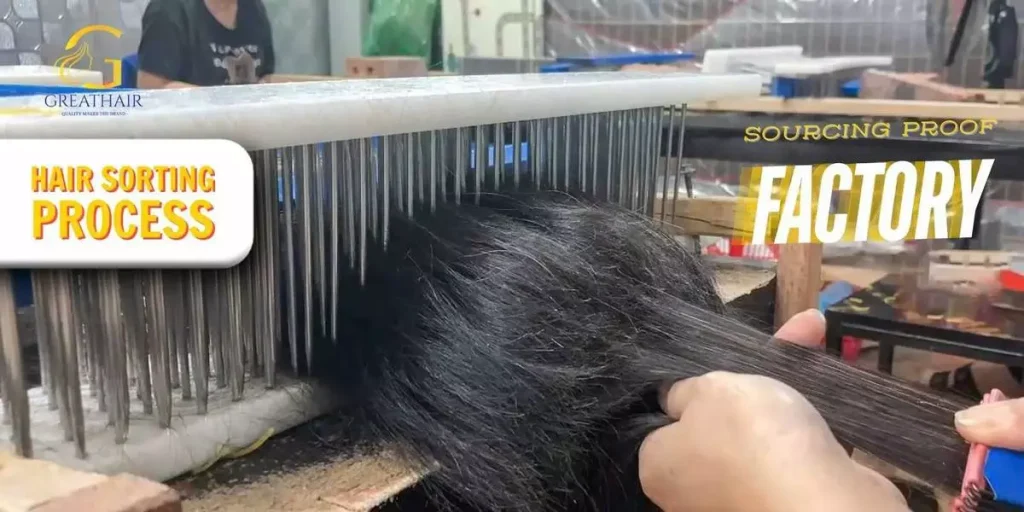
At Great Hair Vietnam Factory, Remy hair is identified and sorted at the sourcing stage, before any processing begins. Cuticle alignment is preserved through controlled collection and manual sorting, not artificially recreated after damage occurs.
👉 Remy vs human hair: Human hair describes origin. Remy hair describes structure and structure determines performance.
| Criteria | Genuine Remy Hair | |
| Cuticle Direction | All cuticles run in the same direction (root to tip), naturally preserved | Cuticles are mixed, reversed, or removed and later coated |
| Tangling Over Time | Remains smooth after washing and daily wear | Starts tangling and matting after a few washes |
| Surface Feel | Soft, natural glide without heavy coating | Feels overly slick at first due to silicone, then dries out |
| Wash & Styling Durability | Maintains quality through multiple washes and heat styling | Quality drops quickly once coating wears off |
| Actual Wear Lifespan | Long-term use (months with proper care) | Short-term use, often disposable-quality |
Fake Remy hair often looks good only at the first touch. That’s because many factories apply silicone or acid treatments to mask cuticle damage. Once washed, the truth shows up: friction, dryness, tangling, and shedding.
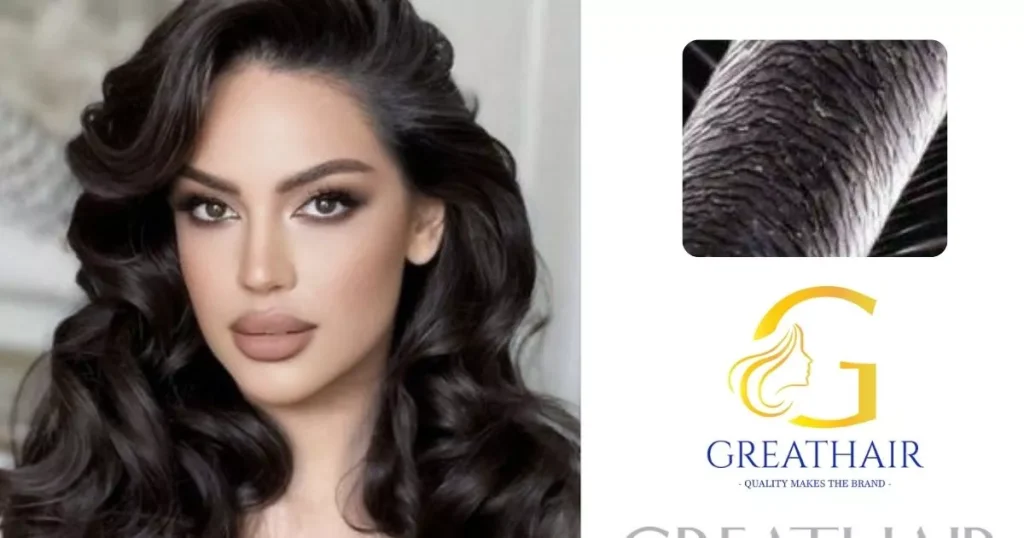
In professional hair manufacturing, virgin hair is defined by chemical history, not by how the hair looks or feels at first touch.
Virgin hair is human hair that has never been exposed to chemical alteration at any point in its lifecycle. This includes color treatments, bleaching, relaxing, or chemical texture modification. Because the hair’s internal structure and cuticle layer remain untouched, true virgin hair naturally retains full cuticle alignment. For this reason, all genuine virgin hair is inherently Remy hair though the reverse is not always true.
This distinction matters because chemical exposure, even at low levels, permanently changes how hair reacts over time, especially during coloring and long-term wear.
virgin hair 100 Human hair
Yes. Virgin Remy hair represents the highest controllable quality tier within human hair manufacturing. What separates it from standard Remy hair is not origin, but predictability.
With both cuticle alignment and zero chemical history preserved, virgin Remy hair maintains consistent elasticity, strength, and moisture balance. This stability is what allows the hair to behave reliably during advanced salon services, particularly bleaching and multi-step coloring.
From a production perspective, virgin hair is valued not because it is “prettier,” but because it responds in a controlled, repeatable way under stress.
Hair that has never been chemically altered retains its original cortex structure. As a result, virgin hair lifts more evenly during bleaching, absorbs color more consistently, and recovers better after processing.
This is why professional colorists and high-end salons favor virgin hair for clients who plan repeated color changes or long-term installations. Over six to twelve months of proper wear, the difference becomes increasingly noticeable, especially when compared to chemically processed Remy hair that may look similar at the start but degrades faster.
| Aspect | True Virgin Hair | “Fake Virgin” Hair |
| Bleach response | Even, predictable | Uneven, patchy |
| Elasticity after coloring | Retains strength | Weakens quickly |
| Lifespan | 8–12 months (proper care) | 2–4 months |
| Texture stability | Consistent | Degrades after washes |
In practice, Remy hair prioritizes structural alignment, while virgin hair prioritizes chemical purity. When both are present, hair performance remains stable over extended use. When either is compromised, issues tend to surface gradually rather than immediately.
This is why virgin hair is typically reserved for applications where consistency, durability, and customization matter more than short-term appearance.
| Criteria | Remy Hair | Virgin Hair |
| Hair source | Human hair | Human hair |
| Cuticle alignment | Yes | Yes |
| Chemical processing | Light or moderate | None |
| Color flexibility | Good | Excellent |
| Durability | High | Very high |
| Price level |
Mid–High | High |
👉 Remy vs virgin hair in real use:
At Great Hair, both options are clearly classified so buyers know exactly what they are paying for.
100% Human hair
In the hair industry, “100% human hair” is often presented as a guarantee of quality. In reality, this label only describes the origin of the material, not how the hair will perform after installation, washing, or long-term use.
Human hair simply means the hair comes from a person. It does not indicate how the hair was collected, whether cuticles were preserved, or how much processing the hair has undergone before reaching the final product. As a result, products labeled “100% human hair” can vary dramatically in quality.
In practice, this category can include properly aligned Remy hair, non-Remy hair with mixed cuticles, or hair that has had its cuticles stripped entirely and later coated to appear smooth. These different structures may look similar at first glance, especially when new, but they behave very differently over time.
When cuticles are misaligned or damaged, problems usually do not appear immediately. Freshly processed hair is often treated with silicone or finishing agents that create a smooth, shiny surface. This gives the impression of good quality during the first wear or initial wash.
After two to three washes, however, those surface coatings begin to fade. At that point, the true condition of the hair becomes clear. Misaligned cuticles increase friction between strands, causing tangling and matting during washing and brushing. At the same time, damaged cuticles allow moisture to escape more easily, which leads to dryness, rough texture, and reduced elasticity.
As friction and moisture loss continue, the hair shaft weakens. Shedding increases, breakage becomes more noticeable, and the hair no longer responds well to conditioning or styling. Even though the hair is still technically “human hair,” its usable lifespan is short.
This is why “100% human hair” on its own is not a quality guarantee. Without information about cuticle alignment, processing history, and sourcing control, the label tells buyers very little about how the hair will perform beyond the first few washes.
>> Read More: Human Hair vs Synthetic Hair Extensions
Remy Hair vs Virgin Hair vs 100% Human Hair What’s the Difference?
Raw hair is rarer and more expensive. Virgin hair offers a better balance between purity and usability for most salons and distributors.
To explore how these hair grades are used across different extension types, see:
👉 https://greathair.com.vn/different-types-of-hair-extensions/
“Over the past 17+ years supplying salons and distributors across the US, Europe, and Asia, Great Hair has seen that most hair complaints are not about price but about misunderstanding hair grades. Hair can be human, but without aligned cuticles, performance drops fast. That’s why classification at the sourcing stage matters more than labeling at the end.”
Great Hair Vietnam Factory
This is why Great Hair controls sourcing, sorting, and processing in-house so Remy and Virgin classifications remain consistent across every order.
From a manufacturer’s perspective:
👉 Choosing the right hair type reduces returns, complaints, and long-term cost.
What is Remy hair?
Remy hair is human hair with cuticles aligned in one direction, reducing tangling and extending lifespan.
Is Virgin hair better than Remy hair?
Virgin hair is a higher grade because it has no chemical history, but it also costs more.
Is 100% human hair always Remy hair?
No. Human hair can be Remy or non-Remy depending on processing.
How long does Remy hair last?
With proper care, Remy hair typically lasts 4–8 months.
Should I choose raw hair or virgin hair?
Raw hair is the most natural and expensive; virgin hair is more practical for most salons.
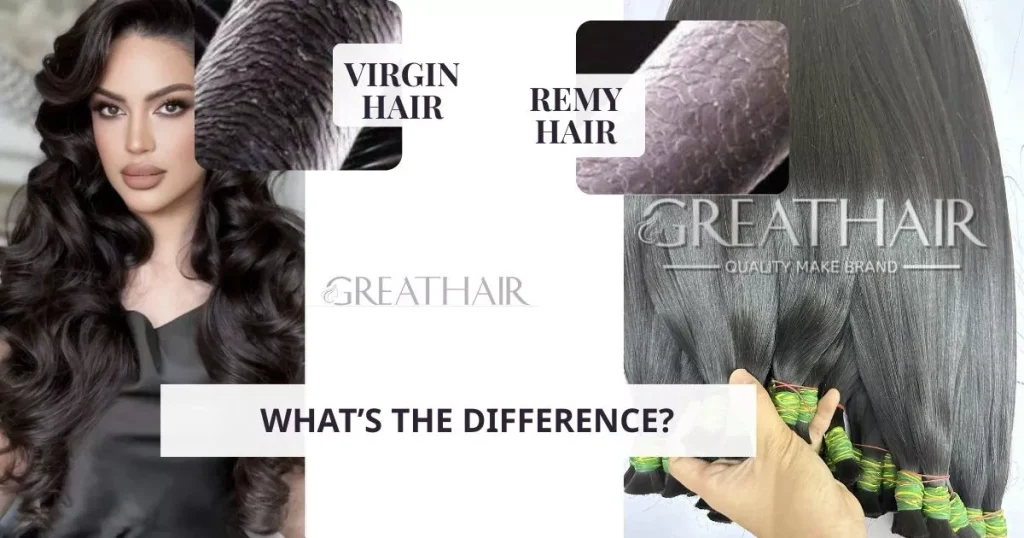
Remy hair vs virgin hair vs 100% human hair are not equal categories. Remy defines structure, virgin defines processing history, and human hair defines origin. To avoid confusion and ensure consistent quality, work with a manufacturer like Great Hair that classifies hair honestly from source to finished bundles.
>>Read More: Buying Hair Extensions
Great Hair supplies Remy, Virgin, and Raw human hair with transparent sourcing, stable capacity, and customization for salons and distributors worldwide.

We Will Contact You Shortly


Address: 8 Ngo 20/45 D. Phu Minh, Minh Khai, Bac Tu Liem, Ha Noi, Viet Nam
Phone: (+84)813282399

There are no products in the cart