



There are no products in the cart
Apr 03, 2026
Post by Alice Bonita
Perfect hair extension care is not about doing more. It is about doing the few right things consistently: wash only when needed, brush gently from the ends up, keep conditioner and oil away from tapes and bonds, and reduce friction when you sleep or swim. Extensions last longer when you protect the attachment points as carefully as you protect the lengths.
The routine also changes by method. Clip-ins and halo extensions should usually be removed before bed, while tape-ins, keratin bonds, and sewn-in methods need cleaner roots, more careful drying, and regular maintenance. Human hair extensions can usually be heat styled with protection, while synthetic fibers need fiber-specific care and should only be heat styled if they are labeled heat-friendly.
Done right, hair extension care is not complicated. It is simply a system that keeps the hair hydrated, the attachments secure, and daily wear from turning into dryness, tangling, matting, or early shedding.
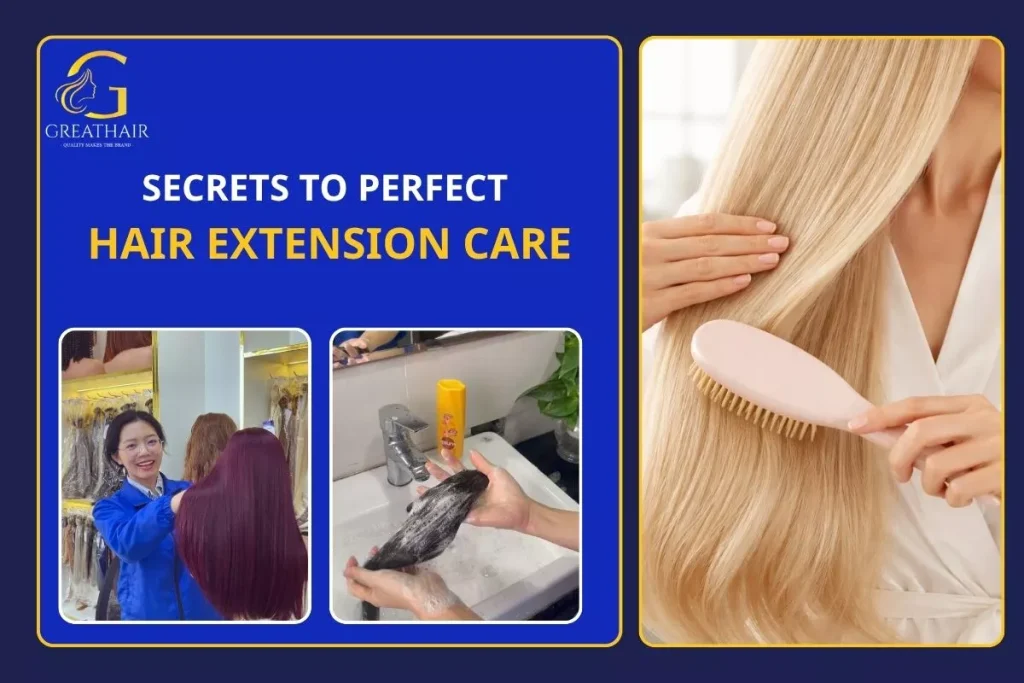
Secrets to Perfect Hair Extension Care
Good hair extension care means treating extensions like fibers that need protection, not like hair that can endlessly recover from heat, friction, and buildup. Most extensions do not receive scalp oils the way your natural hair does, which is why over-washing, rough brushing, and unnecessary heat make them dry out faster. At the same time, the root area or attachment point needs to stay clean and lightweight so tapes, bonds, and wefts do not weaken or tangle together.
If you are wondering whether hair extensions are hard to take care of, the honest answer is no, but some methods ask more of you than others. Removable methods such as clip-ins and halos are lower maintenance because you can take them out before sleeping, washing, and swimming, while semi-permanent methods trade convenience at styling time for stricter aftercare between salon visits.
The simplest way to think about hair extension maintenance is this: protect the lengths from dryness, protect the attachments from slippage, and protect your own hair from excess tension. If the install feels painful, causes headaches, or feels too tight, that is not normal, and it can contribute to traction alopecia over time.
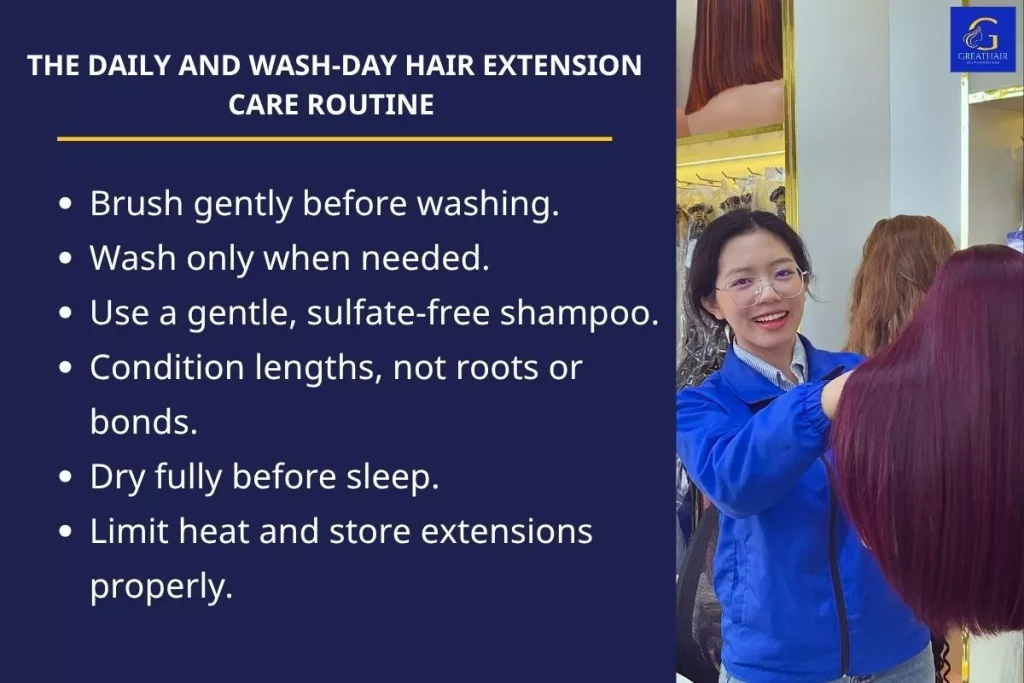
The best hair extension care routine is boring in the best possible way. You repeat a handful of habits: gentle detangling, selective washing, careful conditioning, complete drying, low-friction sleep, and sensible heat styling. That is what keeps extensions soft and wearable instead of dry, sticky, or matted.
That is the full aftercare routine in practice. Most extension problems are not caused by one dramatic mistake; they come from small habits repeated every day.
Not all extensions want the same routine. The core principles stay the same, but removable pieces, adhesive methods, human hair, Remy hair, sewn-in installs, and synthetic fibers each have a few non-negotiables. When people say their extensions are “high maintenance,” it is often because they are using the right care on the wrong method.
Clip-in hair extension care is the most flexible because the hair comes out when you are done wearing it. That is why clip-ins and halos are usually the easiest methods to keep looking good: you remove them before sleep, showering, and swimming, wash them only when there is product buildup, then dry and store them properly.
Because removable sets do not absorb scalp oils, they generally do not need the same washing frequency as your natural hair. Human hair clip-ins are often washed only after repeated wears or noticeable buildup, and many brands recommend air drying them fully before storage.
Tape-in hair extension care is mostly about protecting the adhesive. That means waiting after installation before washing, using a gentler shampoo, keeping conditioner and oils off the tape tabs, and making sure the roots dry properly after washing. If tape-ins start slipping, the cause is often a product-placement problem, an aftercare problem, or a timing issue with maintenance.
Most tape-in systems need move-up appointments every 4 to 8 weeks depending on growth and care, though the hair itself may be reusable much longer if the condition stays good. That is why tape-ins can feel low effort day to day but still depend heavily on regular salon upkeep.
>>Read More: How To Take Care Of Tape In Hair Extensions
Weave hair extension care puts more emphasis on scalp cleansing and appointment-based maintenance. Because the install stays in place, buildup can collect more easily, and some care guides suggest regular stylist visits for shampooing or check-ins, especially for sewn-in methods.
This method can work beautifully for people who want longer wear, but it is less forgiving if you skip scalp care or leave a dense install unattended for too long. Clean scalp, careful drying, and professional maintenance matter more here than with removable extensions.
How to care for human hair extensions depends partly on quality. Remy hair is valued because the cuticles stay aligned in one direction, which helps the hair feel smoother and reduces tangling and matting compared with lower-quality, non-Remy hair. That does not mean Remy hair is indestructible, but it does mean good hair quality gives you a better starting point.
Human hair extensions usually respond best to gentle cleansing, moisture-focused care, and controlled heat with protectant. The goal is not to baby them excessively; it is to avoid stripping them, because once human hair extensions become repeatedly dry, they do not repair themselves the way marketing often suggests.
How to care for synthetic hair extensions is a different game. Synthetic fiber usually needs products designed for synthetic hairpieces or very gentle care, and heat should only be used if the fiber is specifically labeled heat-friendly. Some heat-friendly fibers can hold a new style after heat setting, but that is not the same as saying all synthetic hair behaves like human hair.
Synthetic extensions also benefit from less manipulation overall. They tend to look best when you preserve the original style, detangle carefully, and avoid treating them with the same wash-and-restyle routine you would use on Remy human hair.
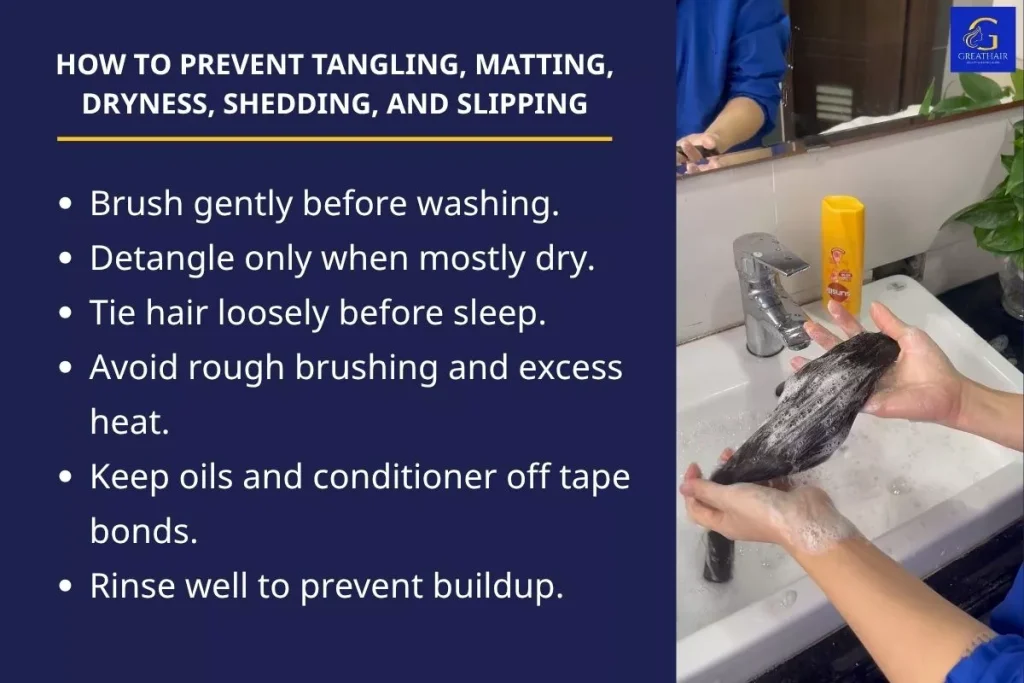
Most hair extension problems are predictable. Tangling, matting, shedding, dryness, root buildup, and tape slippage usually come from friction, overwashing, wet handling, product placement, or missed maintenance. The fix is rarely a miracle product. It is usually a correction in technique.
The common thread is simple: most damage starts small. When you catch friction, buildup, or dryness early, extensions stay manageable for much longer.
Hair extension lifespan depends less on hope and more on method, hair quality, maintenance, and how hard you are on the hair. Common brand benchmarks put clip-ins in the range of roughly 3 to 12 months depending on wear and care, tape-ins at about 4 to 8 weeks per wear before a move-up with the hair often reusable for 6 to 12 months, and pre-bonded or keratin methods at around 4 to 6 months with proper maintenance. These are useful planning ranges, not guarantees.
In practice, the biggest lifespan variables are wash frequency, heat styling, swimming, storage, how often you brush correctly, and whether you keep up with appointments. Repeated chlorine or saltwater exposure, excessive sauna or steam use, and skipping maintenance all tend to shorten wear.
That is why the best way to maintain hair extensions is not to chase the longest number on the box. It is to keep the hair in good enough condition that it still looks worth wearing at month three, month six, or the next move-up appointment.
Most hair extension damage comes from ordinary habits that feel harmless in the moment. Sleeping in the wrong method, putting rich products too close to the roots, brushing roughly, or ignoring a too-tight install can quietly shorten the life of both the extensions and your natural hair.
Avoiding these basics does more for hair extension care than buying another styling product you do not actually need.
Are hair extensions hard to take care of?
Not usually. Removable methods such as clip-ins and halos are generally easier, while tape-ins, keratin bonds, and sew-ins need more consistent daily care and salon maintenance.
How often should you wash hair extensions?
Installed extensions are often washed about 1 to 2 times a week, sometimes more depending on scalp and lifestyle. Clip-ins are usually washed much less often, often only when there is visible buildup or after about 30 wears.
Can you sleep with hair extensions?
You can usually sleep with installed extensions if the hair is fully dry and loosely tied, but clip-ins and halos should be removed before bed.
Can you swim with hair extensions?
You can, but frequent chlorine or saltwater exposure tends to shorten lifespan. Clip-ins should generally not be worn in the water, and installed methods do better when the hair is tied up, protected, rinsed after swimming, and kept product-light at the roots.
Can you use oil on hair extensions?
Yes, but sparingly and usually only through the mid-lengths and ends of human hair extensions. Keep oils away from tapes, bonds, and roots because they can contribute to slippage or weaken the attachment area.
The secret to perfect hair extension care is not a secret at all. Wash only when needed, detangle gently, keep the attachment area clean and product-light, dry thoroughly, sleep with less friction, and match the routine to the extension type. When those basics stay consistent, extensions last longer, feel softer, and look better with far less effort.
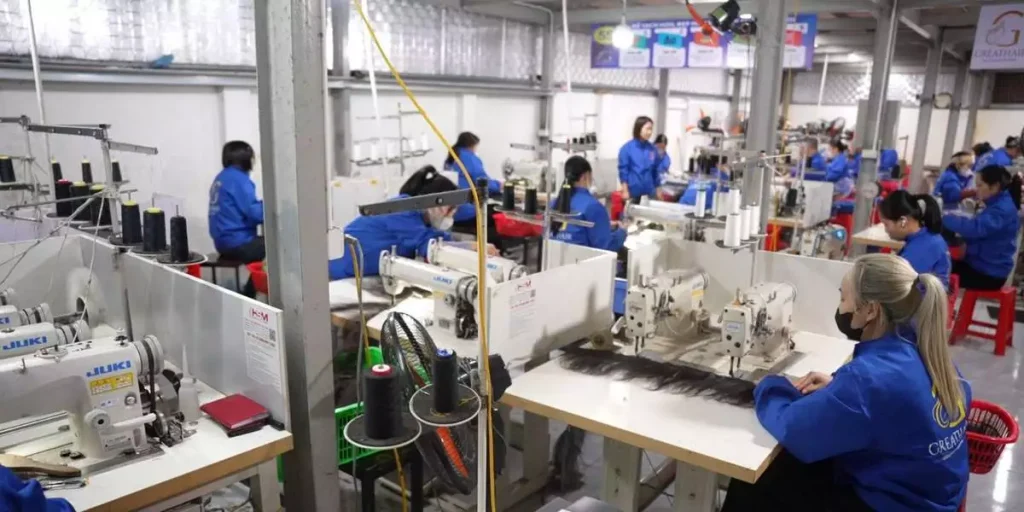
If you want beautiful, soft hair and a reliable supplier, GreatHair is the place to start.

We Will Contact You Shortly



Address: 8 Ngo 20/45 D. Phu Minh, Minh Khai, Bac Tu Liem, Ha Noi, Viet Nam
Phone: (+84)813282399

There are no products in the cart