



There are no products in the cart
Sep 10, 2025
Post by Alice Bonita
If you are comparing Vietnamese hair vs Indian hair, the most honest answer is this: neither is automatically better in every situation. Vietnamese hair is often preferred by buyers who want a sleeker, straighter, fuller-looking finish with less daily styling, while Indian hair is often chosen for its wider texture range, broader price spectrum, and strong value when the source is reliable. The real difference is not just the country label. It comes down to fiber characteristics, cuticle condition, chemical processing, and how transparent the seller is about sourcing.
That is why so many shoppers get confused. In the hair market, “Vietnamese hair” and “Indian hair” are often treated like fixed quality grades, but they are not. They are market labels that can include different sourcing channels, handling standards, and levels of processing. A premium Indian Remy bundle can easily outperform poorly handled hair sold as Vietnamese, while truly healthy Vietnamese hair can feel more luxurious than lower-tier Indian stock that has been heavily processed. In other words, origin matters, but handling matters more.
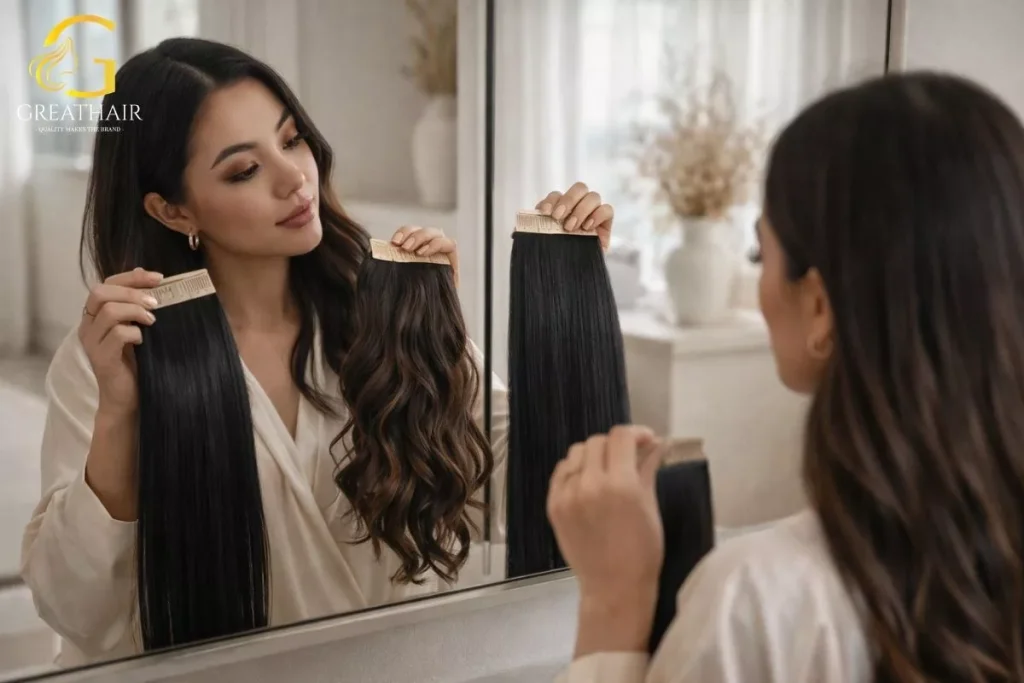
Hair commonly sold as Vietnamese hair is usually associated with sleek, dark, straight or lightly wavy textures. That reputation makes sense when placed against broader research on Asian hair. Reviews on Asian hair describe it as typically having a larger diameter, a thicker and more compact cuticle layer, and strong mechanical properties compared with other major hair groups. Those characteristics help explain why hair in this category is often valued for a smoother, denser, more polished visual finish.
For everyday wear, this usually means less effort to maintain a clean straight style. If your goal is a sleek install, a straight wig, or bundles that look neat without much heat styling, Vietnamese hair is often the direction shoppers lean toward. It tends to suit buyers who want hair that looks glossy, falls cleanly, and gives a more “luxury straight” appearance right away. That does not mean every bundle labeled Vietnamese will perform that way, but that is the visual expectation attached to this category.
Another reason Vietnamese hair often sits in the premium segment is predictability. When hair is minimally processed and the cuticles remain healthy, straighter fibers are usually easier to manage day to day. They are less dependent on heavy styling to keep a polished finish, which makes them appealing to buyers who want a refined look with lower maintenance. That benefit is strongest when the hair has not been aggressively colored or texture-altered before sale.
Indian hair remains one of the biggest forces in the global hair trade because the supply base is enormous and the category is extremely broad. According to World Bank WITS data, India exported about $187.9 million of unworked human hair in 2023 under HS code 050100, and more than $551.7 million in dressed or worked human hair products under HS code 670300. That scale helps explain why Indian hair appears across so many textures, grades, and price points in the extension market.
India also has one of the most visible formal auction channels in the hair industry. Public Tirumala Tirupati Devasthanams auction documents list clearly separated categories by length and type, including very long hair, medium lengths, shorter lengths, and loose or non-Remy hair. That matters because it shows, in plain terms, that “Indian hair” is not one single quality level. It includes premium lots and lower-grade lots, and buyers should never assume that the country name alone tells the full story.
This variety is exactly why Indian hair has such a strong following. It gives buyers more room to choose based on budget, texture preference, and styling goals. If you want movement, softness, and more variety in wave patterns, Indian hair can be a very attractive option. But that same variety also means quality consistency can swing more widely from one supplier to another. A good source can deliver beautiful results. A weak source can leave you with mixed, coated, or overprocessed hair that does not last.
When comparing Vietnamese hair and Indian hair, the biggest mistake is focusing only on origin. The long-term performance of hair extensions depends much more on cuticle condition, alignment, and chemical history. Human hair is protected by the cuticle, the outer layer of overlapping scales. When that layer stays intact, hair usually feels smoother, reflects light better, and resists tangling more effectively. When it is stripped, lifted, or damaged, the hair becomes rougher and less durable.
This is why healthy, minimally processed hair almost always outperforms hair that has been heavily altered. Research on excessively bleached hair shows separation and breakage of cuticle cells, loss of the cuticle layer, porous cortex structure, lower elasticity, and weaker tensile strength. Once dark hair has been pushed into light blonde or bright fashion shades, the question is no longer whether it started as Vietnamese or Indian hair. The real question becomes how much structural damage it has already taken on.
So if you are shopping for raw hair, virgin hair, bundles, or wigs, the smartest question is not simply “Where is it from?” It is “How was it handled?” Ask whether the hair has been colored, bleached, acid-treated, silicone-coated, or texture-processed. Those answers are more useful than a country label because they tell you what the hair is likely to do after washing, styling, and long-term wear. This is the kind of specific, decision-making information Google says makes comparison content more useful for readers.
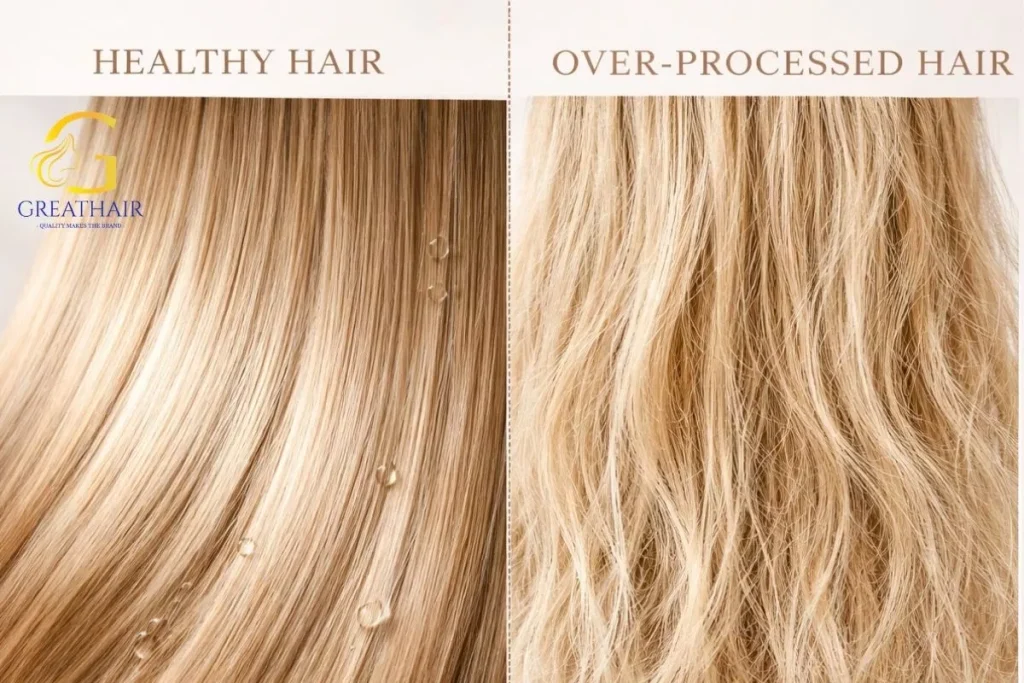
The biggest advantage of Vietnamese hair is how polished it can look with relatively little effort. It is often the better match for buyers who love straight or softly wavy styles and want hair that looks dense, smooth, and naturally glossy. Because broader Asian hair characteristics include a larger diameter and stronger cuticle structure, hair in this lane is often associated with a fuller and sleeker finish.
The downside is price and expectation management. Premium Vietnamese hair is often sold in the higher end of the market, especially when it is positioned as raw or minimally processed. And while it can be an excellent base for darker shades and sleek installs, it is not immune to bleach damage. If you lift naturally dark hair to ash blonde, platinum, or vivid fashion colors, you still face the same chemical stress that weakens the cuticle and cortex.
The biggest strength of Indian hair is flexibility. It covers a much wider range of textures and budgets, which makes it easier for shoppers to find something that matches both their style and their wallet. India’s large export footprint and its documented auction categories also help explain why the market includes everything from premium long lengths to looser, lower-grade material.
The downside is variability. Because Indian hair can come through multiple sourcing and grading routes, the quality can be less predictable if the seller is not transparent. Some buyers get excellent Indian hair with soft movement and strong value. Others end up with bundles that look good at first but decline quickly after washing. That gap is not really about India as a source. It is about whether the supplier is honest about grade, processing, and cuticle condition.
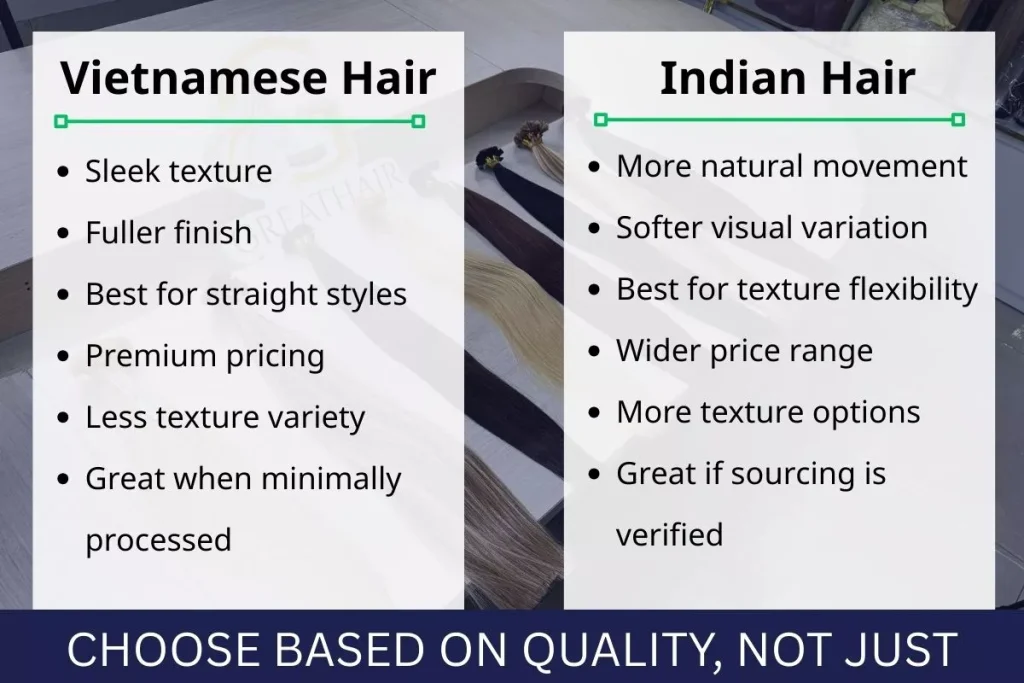
If your ideal look is sleek, straight, and high-gloss, Vietnamese hair will often feel like the more satisfying choice. It generally suits people who want a clean silhouette, a fuller-looking install, and hair that does not need much daily reshaping to stay elegant. Buyers who want that “luxury straight” finish usually gravitate here first.
If your priority is texture flexibility, Indian hair often gives you more room to play. It can be a better fit for shoppers who want softer movement, more wave variation, or more options across different budgets. In many cases, Indian hair is the category that offers the broadest shopping range rather than one fixed aesthetic.
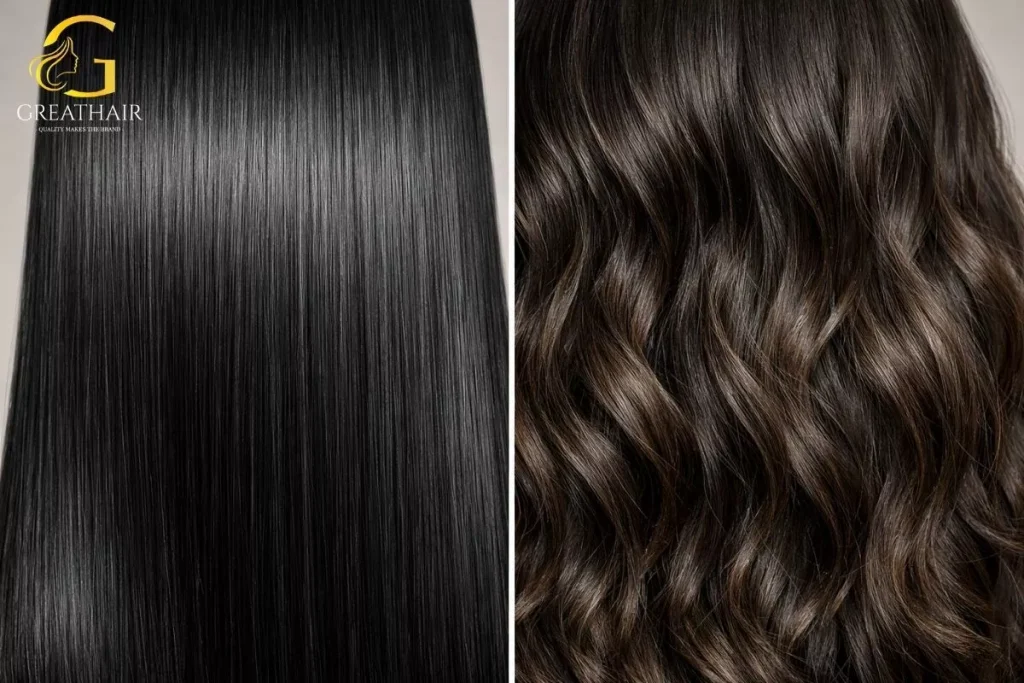
Neither Vietnamese hair nor Indian hair automatically lasts longer just because of origin. Longevity usually comes from three things: healthy cuticles, limited chemical processing, and careful maintenance after purchase. Hair that has not been aggressively bleached or stripped will generally hold up better over time, regardless of whether it is sold as Vietnamese or Indian.
This is why some buyers have amazing experiences with Indian hair and some do not, and the same is true for Vietnamese hair. The lifespan of the hair is mostly decided before it arrives in your hands. If the bundle has already been heavily processed, coated, or overhandled, no origin label will save it. If it is healthy and honestly represented, both categories can perform very well.
Choose Vietnamese hair if you want a sleeker, denser-looking finish and prefer straight or soft-wave styles that look polished with less daily effort. It is often the better fit for buyers who care most about a premium visual result and a smooth, refined texture.
Choose Indian hair if you want more variety in texture and price, or if you are buying from a supplier who can clearly explain the grade, sourcing route, and processing history. Indian hair can offer excellent value and beautiful movement when the seller is reliable.
If you want the smartest buying rule, use this one: do not buy the country label first. Buy the healthiest hair, the clearest sourcing story, and the least processed option that matches your styling goals. That approach is more useful to real shoppers and more aligned with the kind of comparison content Google says it wants to reward.
Vietnamese hair is usually the stronger choice for sleek, straight, fuller-looking installs. Indian hair is usually the stronger choice for texture range, flexibility, and value across a wider market. But the true winner is whichever one has better cuticle integrity, lighter processing, and more honest supplier information. In the end, the best comparison is not Vietnamese hair vs Indian hair in theory. It is premium, well-handled hair vs overprocessed, poorly described hair in practice.
Why choose Greathair as your hair supplier:
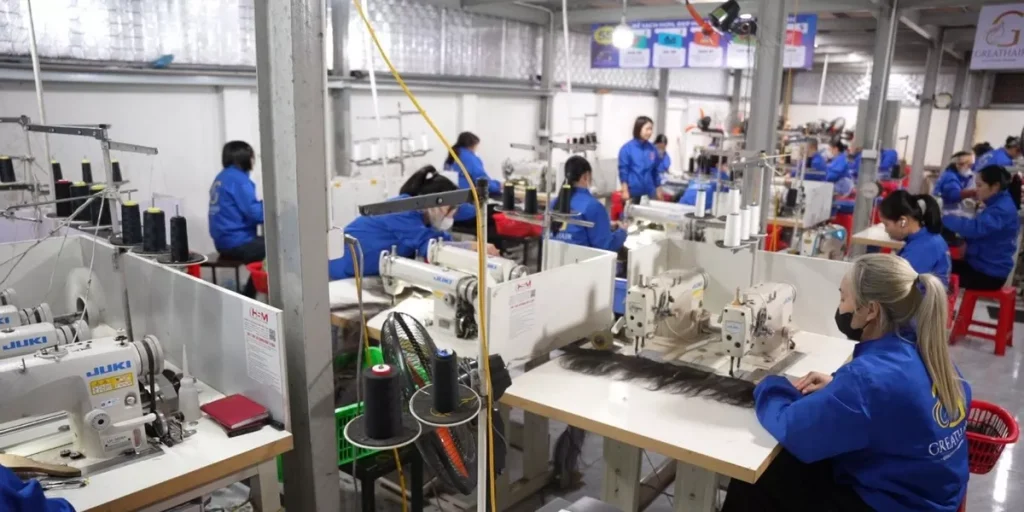
Direct Factory Supply: Greathair presents itself as a direct factory supplier with production based in Qingdao, China, which helps buyers source hair products more directly and at more competitive pricing.
Wide Product Range: The company offers a broad selection of human hair products, including tape-in extensions, keratin bond extensions, weft hair, clip-in extensions, silk toppers, wigs, and other hair solutions for different business needs.
Experienced Manufacturer: Greathair says it has more than 15 years of experience in the beauty industry and specializes in virgin cuticle hair, which makes it appealing to salons, wholesalers, and hair brands looking for an established supplier.
Quality-Focused Production: According to its official website, Greathair states that its products are salon- and client-tested, with quality assurance supported by research and development teams to maintain long-lasting extension quality.
Business-Friendly Support: Greathair highlights customer support in English and Russian, which can be useful for international buyers who need smoother communication during sourcing and ordering.
Flexible Sourcing for Growth: With a large catalog and factory-based setup, Greathair may be a practical option for businesses that want product variety, scalable supply, and support across multiple extension categories.
Contact GreatHair Today
Not automatically. Vietnamese hair is often preferred for sleek straight styles and a fuller visual finish, while Indian hair is often preferred for variety and value. The better option depends on processing quality and supplier transparency.
It can, but not because it is Indian by default. Tangling is more closely linked to cuticle damage, mixed-direction fibers, and heavy processing than to country of origin alone.
Neither one is “safe” from bleach damage. Research shows that excessive bleaching can damage the cuticle, increase porosity, and weaken the cortex, so the best candidate is simply the healthiest, least processed hair you can verify.
Because it spans a very large and varied market. Public auction documents and trade data both show that Indian hair moves through multiple categories and huge export volumes, which naturally creates a broader range of grades and price points.

We Will Contact You Shortly


Address: 8 Ngo 20/45 D. Phu Minh, Minh Khai, Bac Tu Liem, Ha Noi, Viet Nam
Phone: (+84)813282399

There are no products in the cart