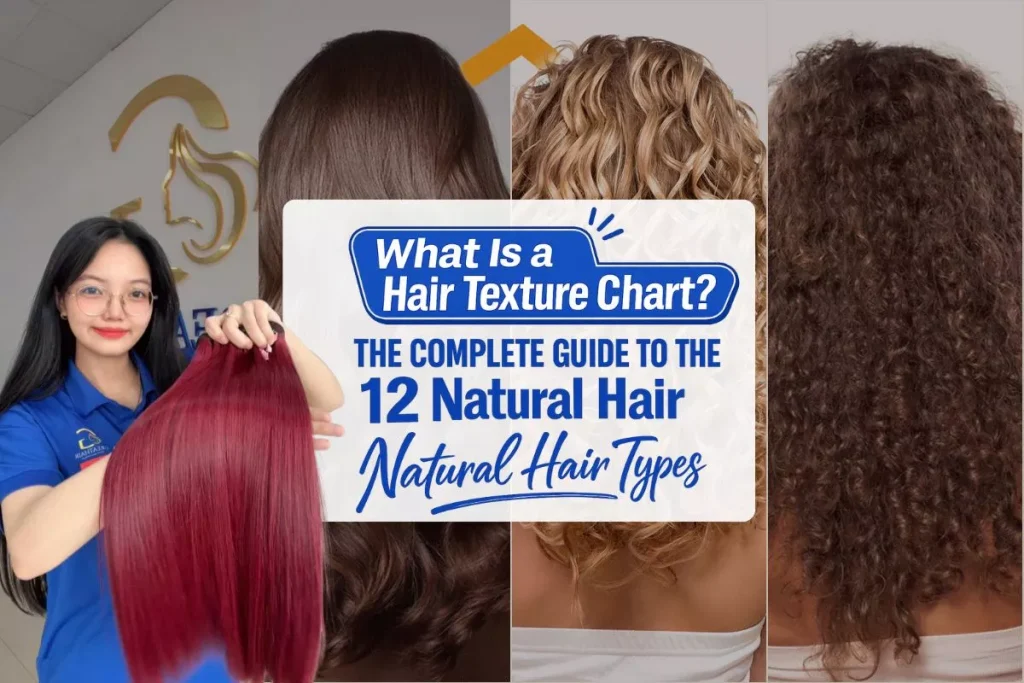
A hair texture chart classifies natural hair according to its curl pattern. The most widely used system, developed by celebrity hairstylist Andre Walker, divides hair into four main categories with three sub-levels each, creating 12 distinct types from 1A to 4C. This framework helps people understand why their hair behaves differently from others and how to care for it effectively.
What Hair Texture Actually Means ?
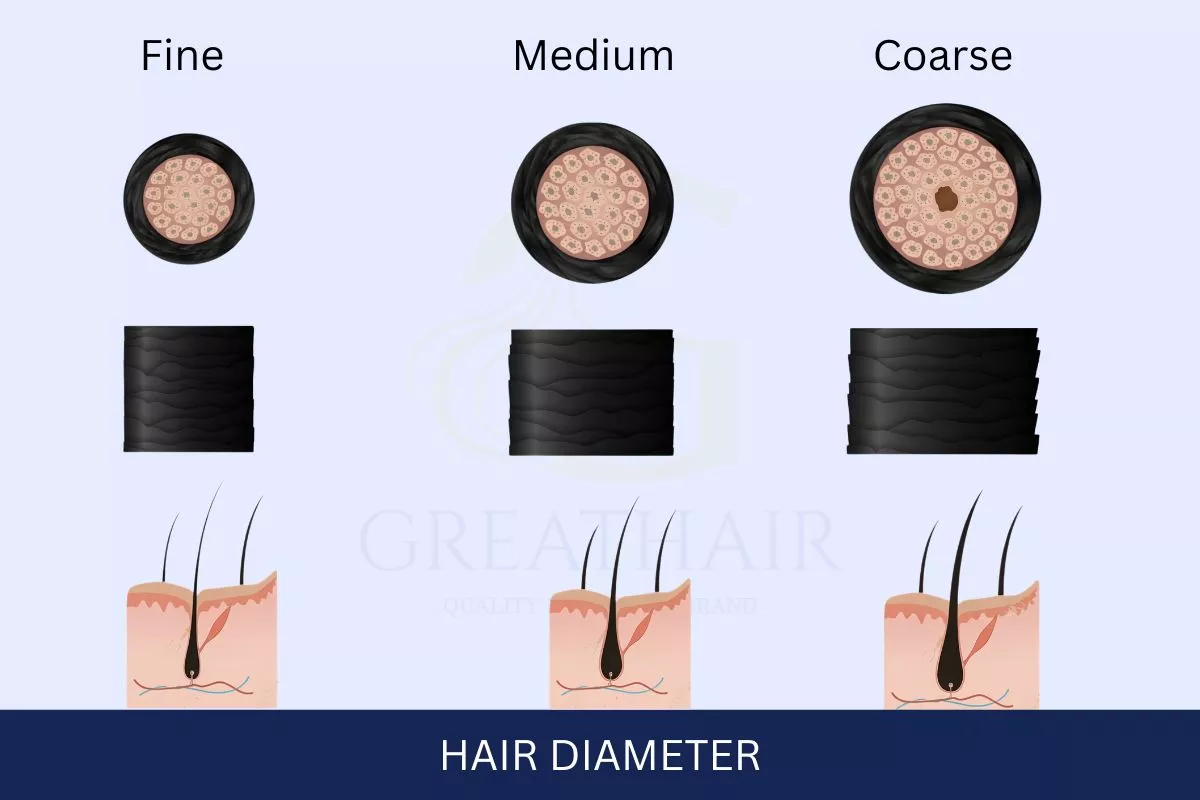
Hair texture in this context refers specifically to the shape and pattern of the hair strand. It differs from strand thickness (fine, medium, or coarse) and hair density (the number of strands per square inch). The chart focuses on curl pattern because this single factor influences moisture retention, styling options, shrinkage, and product performance more than any other visible trait.
The Andre Walker Hair Texture Chart
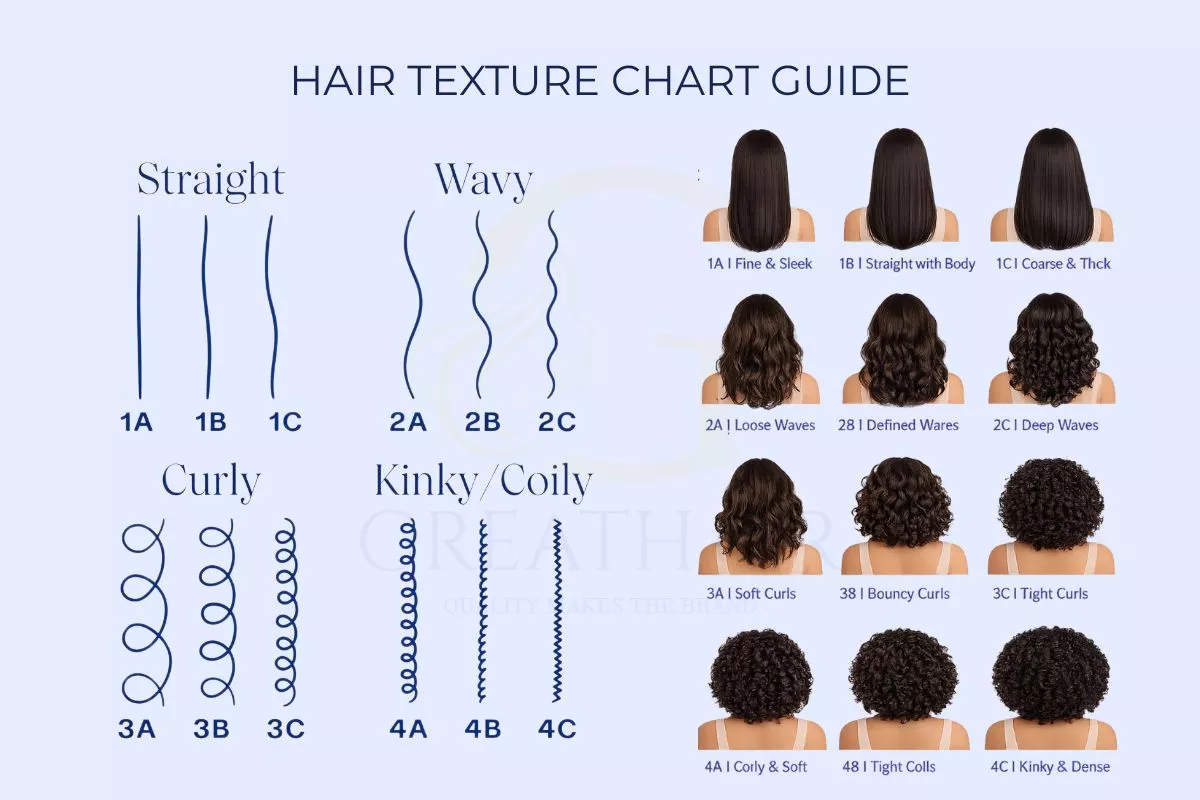
The system breaks hair into four primary groups:
- Type 1: Straight
- Type 2: Wavy
- Type 3: Curly
- Type 4: Coily (also called kinky)
Each group contains three subtypes labeled A, B, and C, where A represents the loosest pattern in that category and C represents the tightest.
| Type | Pattern | Shrinkage | Key Characteristics | Common Challenges |
|---|---|---|---|---|
| 1A | Pin-straight | 0% | Very fine, silky, reflects light well | Lacks volume, gets oily fast |
| 1B | Straight | 0–5% | Medium body, slight movement at ends | Can appear flat |
| 1C | Straight | 0–5% | Coarse, strong, resistant to curling | Difficult to add texture |
| 2A | Loose S-waves | 0–10% | Fine waves close to the head | Loses definition easily |
| 2B | Defined S-waves | 5–15% | More volume, slight frizz | Can frizz in humidity |
| 2C | Wide S-waves | 10–20% | Coarse, thick waves approaching curls | Resistant to styling |
| 3A | Large loose curls | 20–35% | Soft, springy ringlets | Loses definition without product |
| 3B | Tight ringlets | 30–45% | Springy, well-defined curls | High shrinkage |
| 3C | Corkscrew curls | 35–50% | Tight, dense curls | Prone to dryness and tangles |
| 4A | Defined coils | 50–65% | Tight S-shaped coils | Requires heavy moisture |
| 4B | Z-pattern coils | 65–75% | Sharp angles, less circular definition | Very high shrinkage |
| 4C | Tight coils | 75%+ | Densely packed, minimal visible pattern | Fragile, maximum shrinkage |
Type 1 – Straight Hair
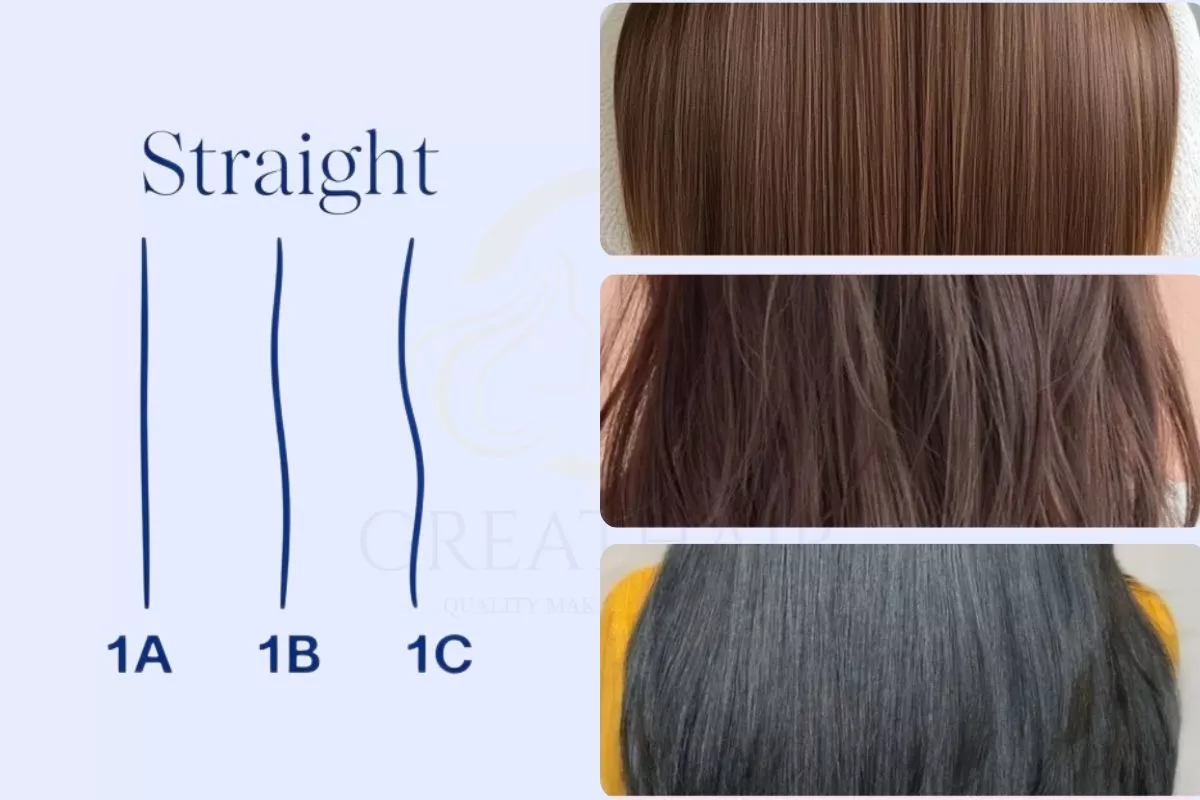
Straight hair has no natural bend. The subtypes differ mainly in thickness and body.
- 1A hair feels extremely soft and fine. It lies flat against the scalp and struggles to hold volume or curls.
- 1B hair carries more natural body and responds better to styling.
- 1C hair feels coarse and strong. It resists chemical treatments and heat styling.
Because sebum travels easily down straight strands, this hair type often appears shiny but can become oily at the roots.
Type 2 – Wavy Hair
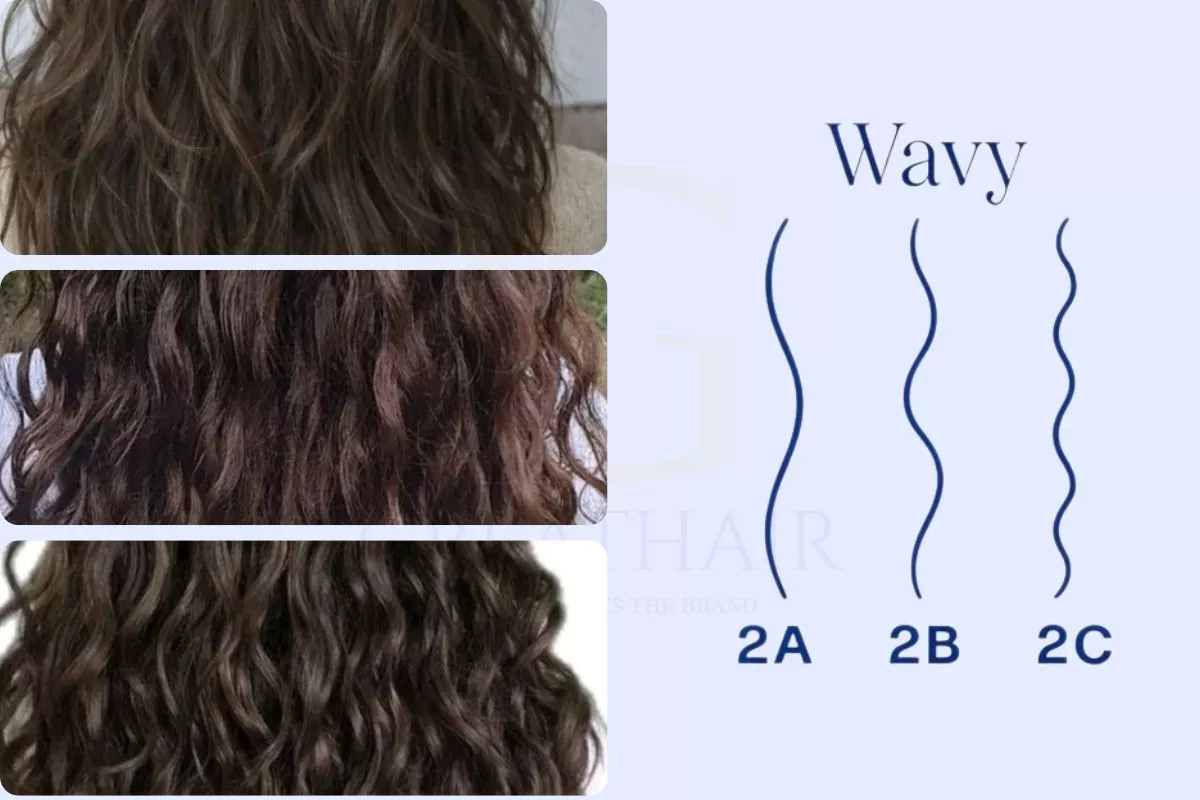
Wavy hair forms an S-shape. The pattern becomes more pronounced from 2A to 2C.
- 2A waves are loose and fine. They often fall flat without lightweight styling products.
- 2B waves show clearer definition and more volume but tend to frizz.
- 2C waves are the coarsest in this group. They sit closer to curly hair in behavior and require more moisture than finer waves.
Wavy hair offers versatility. It can be worn straight or enhanced into more defined waves with the right technique.
Type 3 – Curly Hair
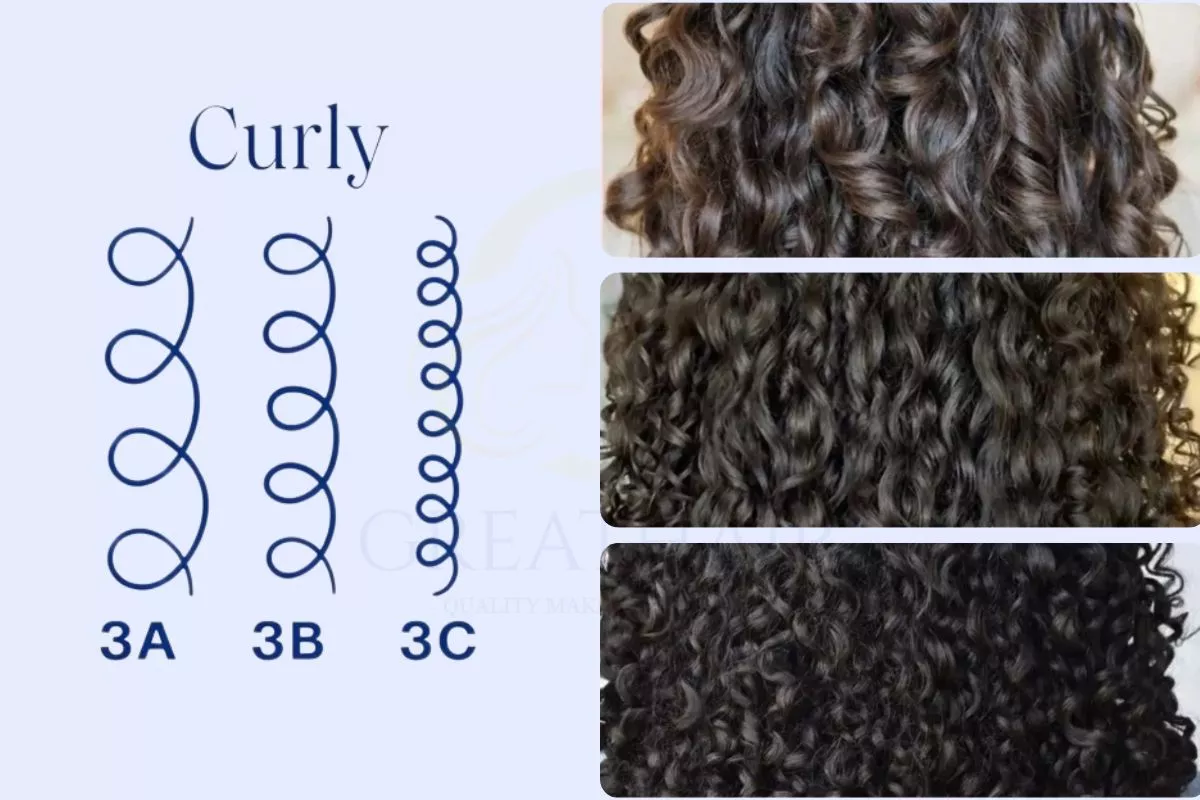
Curly hair forms closed ringlets or spirals. Volume increases and definition becomes tighter as the subtype moves from 3A to 3C.
- 3A curls are large and soft, roughly the diameter of a thick marker. They still reflect light and feel relatively smooth.
- 3B curls form tighter, springy ringlets about the size of a marker. Shrinkage becomes more noticeable.
- 3C curls are small corkscrews, often the diameter of a pencil. This subtype holds significant volume but requires consistent moisture to prevent dryness.
Type 3 hair generally benefits from curl creams and gels that enhance definition without weighing the hair down.
Type 4 – Coily Hair
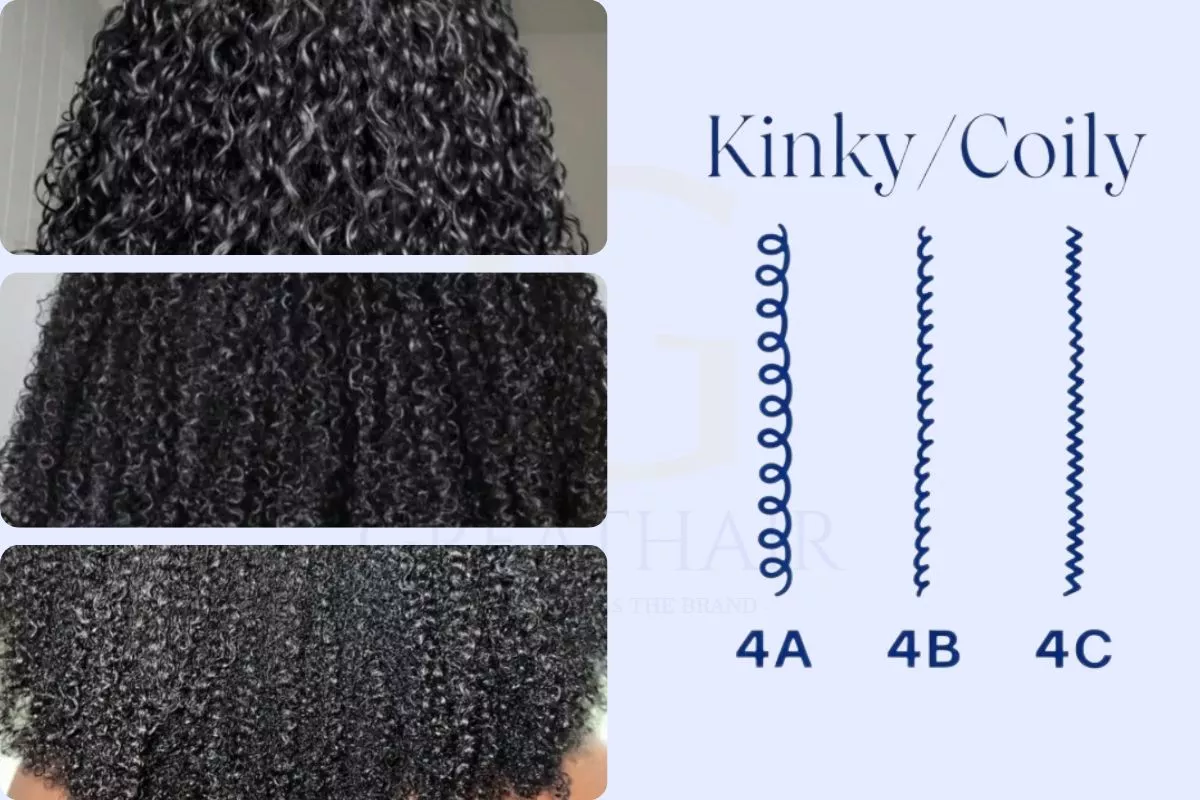
Coily hair features the tightest patterns and highest shrinkage. This group is common among women of African descent and often needs the most specialized care.
- 4A hair shows visible S-shaped coils, usually the width of a crochet needle. It still maintains some natural definition when dry.
- 4B hair shifts to a sharper Z-pattern with distinct angles. Shrinkage reaches 65–75 percent, and the hair feels softer but more fragile.
- 4C hair has the densest packing of coils. The pattern is often only visible up close. This subtype experiences the most shrinkage and requires gentle handling to avoid breakage.
Why Hair Develops Different Textures
The shape of the hair follicle determines curl pattern. Round follicles produce straight hair, while oval or flattened follicles create waves, curls, or coils. The distribution of cortical cells inside the hair strand and the strength of disulfide bonds also influence how tightly the strand bends.
How to Identify Your Hair Texture
Follow these steps on a wash day:
- Cleanse and condition the hair, then rinse thoroughly.
- Remove excess water with a microfiber towel or T-shirt. Avoid brushing.
- Allow the hair to air dry completely without any styling products.
- Observe the pattern that forms. Compare it against the descriptions and shrinkage ranges above.
- Measure shrinkage by comparing stretched wet length to dry length.
Hair can display more than one pattern on the same head. Most people identify the dominant pattern that appears across the majority of their hair.
Why the Hair Texture Chart Matters
Understanding your texture allows better product selection and styling methods. It also improves communication with stylists and helps when choosing extensions or wigs. Matching the curl pattern of extensions to natural hair creates a seamless blend and reduces styling tension.
For salons and brands working with textured hair clients, accurate texture identification leads to more effective recommendations and higher client satisfaction. Manufacturers use this knowledge to develop or source hair that aligns with specific market needs across different regions.
Outro
A hair texture chart provides a practical framework for understanding natural hair diversity. By recognizing the distinct characteristics of each type from 1A to 4C, individuals can make informed decisions about care, styling, and extensions that support healthier hair over time.
Find the Right Texture for Your Extensions and Wigs
Understanding your natural hair texture is the key to choosing extensions and wigs that blend seamlessly. Greathair’s Hair Texture Chart helps salon owners, wholesalers, and stylists identify the most suitable curl patterns for their clients. Our collection covers straight, wavy, curly, and coily textures, allowing you to match or complement any natural hair type with precision.
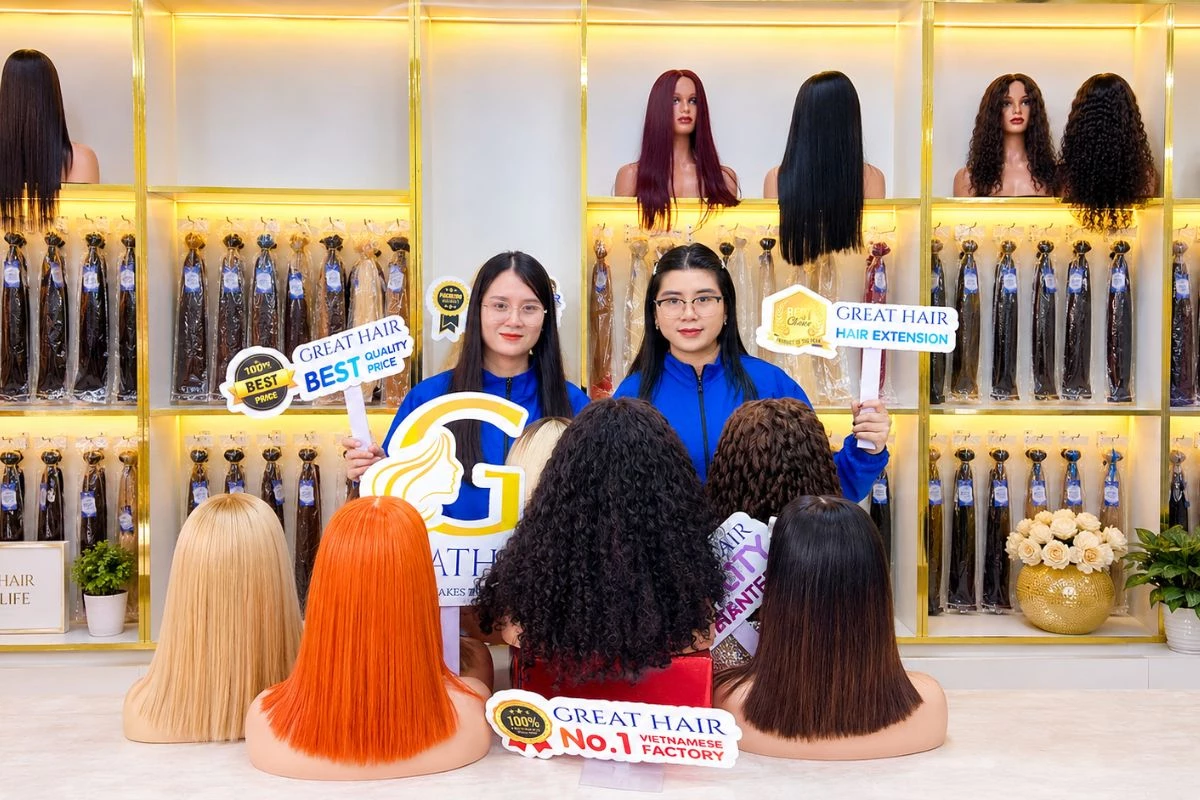
As a leading Vietnamese human hair manufacturer with Manufacturing Vietnamese human hair since 2008 of experience, Greathair produces premium extensions and wigs trusted by professionals worldwide. Here is what sets us apart:
- 100% Vietnamese Human Hair: Sourced from single donors for consistent texture, color, and quality. Our hair features an intact cuticle layer, allowing superior dye absorption and long-lasting results compared to many other origins.
- Cuticle-Aligned Technology: All cuticles are aligned in the same direction, significantly reducing tangling and matting for a natural look and feel during daily wear.
- Ethical & Transparent Sourcing: We work directly with trusted collectors in Vietnamese villages, ensuring fair compensation and full traceability throughout the supply chain.
- Factory-Direct Advantage: By eliminating middlemen, we offer competitive wholesale pricing while maintaining strict quality standards.
- Advanced Manufacturing: Our modern production facility in Nam Dinh Province is equipped with state-of-the-art technology and operated by a skilled team committed to excellence.
- Global Reach & Reliability: We proudly supply clients across the US, UK, EU, Africa, and Asia with fast production and shipping timelines.
- Quality Assurance: Every product comes with a clear quality guarantee and dedicated after-sales support.
Greathair transforms high-quality Vietnamese human hair into premium extensions and wigs that meet the demands of today’s textured hair market. Whether you are looking for private label solutions or bulk wholesale orders, we provide products that combine natural appearance, durability, and ethical production.
Ready to expand your collection with the right textures? Contact Greathair today to receive wholesale pricing and free texture samples tailored to your market needs.
GREATHAIR – Premium Vietnamese Human Hair Manufacturer
- WhatsApp: (+84) 81 328 2399
- Email: [email protected]
- Facebook: greathair.manufacturer
- Instagram: great.hair.manufacturer
- Website: https://greathair.com.vn/
FAQs Related to Hair Texture Chart
What is the difference between hair texture and hair type?
Hair texture refers to the curl pattern of the strand, while hair type usually describes the same concept within the Andre Walker system. Some people also use “texture” to mean strand thickness, which is a separate characteristic.
Can hair have more than one texture?
Yes. Many people have a combination of patterns, often with tighter coils at the nape and looser patterns toward the crown. The dominant pattern determines the primary care approach.
How does hair texture affect shrinkage?
Tighter curl patterns experience greater shrinkage. Type 1 hair shows almost none, while Type 4C hair can shrink by 75 percent or more when it dries.
Is the Andre Walker system still relevant today?
The system remains the most widely recognized framework for identifying curl patterns. While it does not measure porosity or density, it continues to serve as a useful starting point for understanding hair behavior.
How should I match extensions to my natural hair texture?
Choose extensions that closely mirror your dominant curl pattern and coil size. This creates better blending and reduces the need for heavy manipulation or heat to make the hair match.