



There are no products in the cart
Apr 04, 2026
Post by Alice Bonita
The best way to sleep with hair extensions is simple: make sure your hair is completely dry, gently detangle it, secure it in a loose braid or soft ponytail, and sleep on silk or satin. If you wear clip-in or halo extensions, remove them before bed instead of trying to sleep in them.
That routine matters because hair extensions are more likely to tangle, pull, and dry out overnight when they are left loose, rubbed against rough fabric, or slept on while damp. A few minutes of prep before bed usually makes the difference between smooth, manageable hair in the morning and a knotty mess that is hard to brush out.
If this is your first night with a fresh install, a little tightness can be normal. Sharp pain, strong pulling, or discomfort when you lie down is not, and it may mean the extensions were installed too tightly.
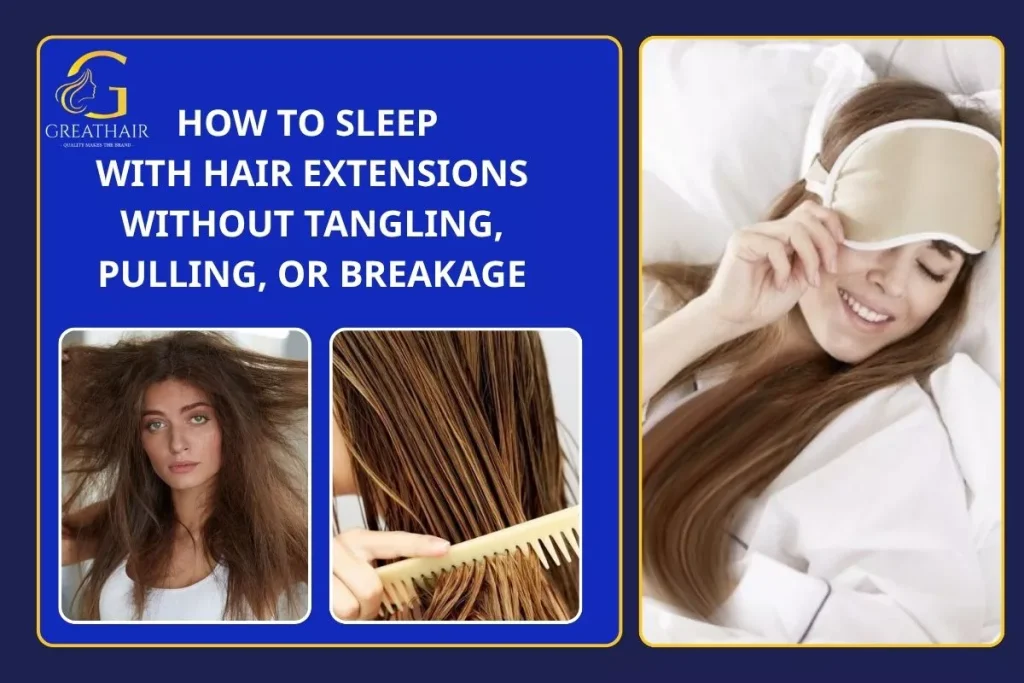
If you want the short version of how to sleep with hair extensions, this is it: protect the bonds, reduce friction, and stop the hair from moving too much while you sleep. Most overnight problems come from one of three things: damp hair, loose hair, or too much tension.
That is the routine most people can follow every night, regardless of length or texture, and it is usually enough to keep extensions smoother and easier to manage the next morning.
>>Read More: Secrets to Perfect Hair Extension Care
Not every extension method should be treated the same way at bedtime. The biggest distinction is whether your extensions are temporary and meant to come out daily, or professionally installed and designed to stay in for weeks.
Clip-ins and similar removable pieces should come out before you sleep. They are designed for daily wear, and leaving them in overnight can put unnecessary pressure on both the clips and your natural hair.
If you are too tired to do a full styling reset, remove them, lightly detangle them, and store them flat, in a bag, or on a hanger so they stay clean and smooth for the next use.
Installed extensions can stay in overnight, but they need protection. For these methods, the safest habit is to brush gently, keep the hair dry, put it into a loose braid or soft ponytail, and sleep on silk or satin.
If you wear tape-ins, pay extra attention near the root area so natural hair does not start matting around the tabs. If you wear hand-tied extensions, avoid putting conditioner directly on the wefts unless your stylist specifically recommends it.
>>Read More: How To Take Care Of Tape In Hair Extensions
Bonded methods also stay in overnight, but they do best with the same low-friction routine: dry hair, gentle detangling, loose containment, and no tight bedtime styles. Repeated tension is what you want to avoid, especially around the attachment points.
The rule is straightforward: removable extensions come out, installed extensions stay in but need protection. That one distinction prevents a lot of avoidable damage.
The first night often feels different, even when your extensions were installed correctly. Extra length, weight, and density can make your scalp feel unusually aware of the install, and some people describe it as a snug or “helmet” feeling for the first day or two.
What should not happen is sharp pain, strong tugging, or discomfort that makes it hard to move your head or lie down. If that happens, it is worth contacting your stylist instead of trying to “push through” it. Pain is usually a sign that something is too tight, not something you should ignore.
A practical adjustment on night one is to sleep with your braid especially loose and avoid piling all of your hair into a tight bun. Your goal is comfort without letting the hair spread everywhere.
You do not need a complicated bedtime setup, but the right accessories make the routine easier and more consistent. The best ones all do the same job: reduce friction and hold the hair in place gently.
These tools do not replace a good routine, but they make it much easier to keep extensions smooth and wearable for longer.
If there is one habit to stop immediately, it is going to bed with wet or even very damp extensions. Wet hair is more fragile, and once you combine that with tossing, turning, and pillow friction, the chance of tangling, matting, and breakage goes up fast.
Damp hair can also leave the scalp feeling irritated and make the install harder to manage by morning. For some wearers, especially with semi-permanent methods, moisture around the bonds or wefts can also shorten how fresh the install looks and feels.
When a night shower is non-negotiable, the safer approach is to blot gently with a towel, detangle carefully, and dry the hair thoroughly before bed. Low heat or cool airflow is usually a better choice than sleeping on moisture and hoping for the best.
Most extension damage happens through habits that seem harmless in the moment. The goal is not perfection; it is avoiding the few mistakes that repeatedly create friction, tension, and tangles.
Avoiding these basics usually matters more than buying more products. Most people get better results from a gentler routine, not a bigger routine.
Can you sleep with clip-in hair extensions?
No. Clip-in extensions should be removed before bed because they are made for temporary wear, not overnight pressure and movement.
Should you braid your hair before sleeping with extensions?
Yes, a loose braid is one of the safest options for installed extensions because it helps prevent tangling and pulling while you sleep.
Is a loose ponytail okay instead of a braid?
Yes. A soft, low ponytail secured with a gentle scrunchie can work well, especially if a braid feels bulky or uncomfortable. The key is keeping it loose.
Do you really need a silk or satin pillowcase?
It is not mandatory, but it helps. Smoother fabrics create less friction than cotton, which can reduce snagging, frizz, and overnight roughness.
Can you sleep with wet hair extensions if you are careful?
It is still not a good idea. Wet hair is more fragile, and sleeping on it increases the risk of tangles, breakage, and scalp irritation.
If you are wondering how to sleep with hair extensions without ruining them, the answer is usually less about products and more about technique. Dry the hair fully, detangle gently, secure it loosely, and reduce friction while you sleep. That routine protects both your extensions and your natural hair, and it makes mornings much easier.
If you want beautiful, soft hair and a reliable supplier, GreatHair is the place to start.


We Will Contact You Shortly



Address: 8 Ngo 20/45 D. Phu Minh, Minh Khai, Bac Tu Liem, Ha Noi, Viet Nam
Phone: (+84)813282399

There are no products in the cart