
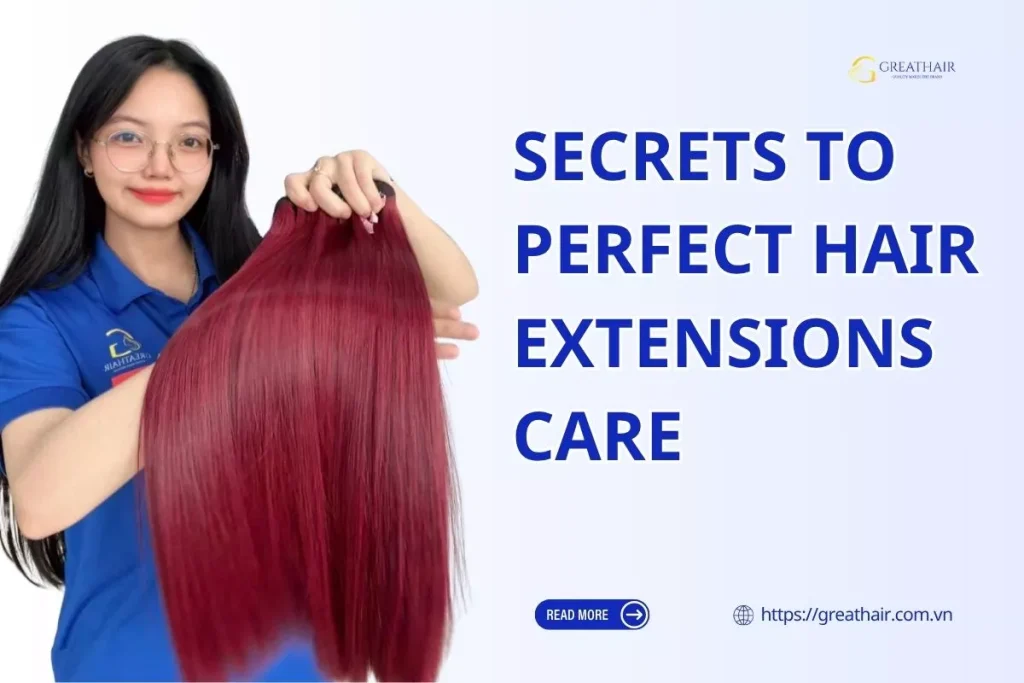
The secret to perfect human hair extension care is treating the hair like living strands that no longer receive natural scalp oils: use only sulfate-free products, wash far less often than your own hair, detangle from the ends upward every single day, keep heat low with protectant, dry the attachment points completely, and sleep on silk or satin. Follow this and quality Vietnamese human hair extensions stay soft, tangle-free, and beautiful for one to three years or longer instead of drying out, matting, or slipping within months. The rest of this guide shows you exactly how to do it for every method and every textured-hair client.
Why Care for Human Hair Extensions the Right Way?
Human hair extensions have no living roots, so they cannot produce sebum the way natural hair does. Without consistent moisture replacement and gentle handling, the cuticle lifts, the strands tangle, and the ends turn dry and brittle far faster than your own hair. For women of color whose natural hair is already more fragile and prone to dryness, poor extension care multiplies breakage risk on both the install and the natural hair underneath. Proper care protects the client’s investment, keeps the blend seamless, and lets salons reuse the same high-quality Vietnamese hair for multiple clients.
With years of experience producing and supporting salon partners at GreatHair, we see the same pattern: extensions that receive daily detangling, weekly moisture, and protected sleep routinely outlast those that are washed daily or slept on wet by six to twelve months. One Atlanta salon owner who switched her entire stock to our raw Vietnamese wefts reported that her clients’ installs now average 14–16 months of wear with only one mid-point maintenance, simply because the team taught every client the same care protocol we share here.
Preparing Before You Care for Hair Extensions
Gather the right tools and products before water or heat ever touches the hair so every step stays gentle and effective. Start with a loop brush or wide-tooth comb designed for extensions, a microfiber towel or soft cotton T-shirt, sulfate-free shampoo and conditioner formulated for color-treated or dry hair, a leave-in conditioner, a heat protectant spray, and a silk or satin pillowcase or bonnet. Keep heavy oils and silicone-heavy products away from any attachment points.
- Detangle completely while the hair is dry, starting at the ends and working upward in small sections while supporting the base.
- Check for any existing matting near bonds, tapes, or wefts and gently loosen with fingers first.
- Decide whether the extensions stay in or come out: clip-ins and some wefts can be removed for washing; tape-ins, keratin, and sewn-in wefts stay on the head.
- Set water temperature to lukewarm only never hot.
This short preparation prevents the most common damage that happens the moment water hits tangled hair.
How to Wash Human Hair Extensions Correctly
Wash only when the hair feels product-heavy or looks dull usually every 7–14 days for installed methods and every 10–20 wears for clip-ins. Over-washing is the fastest way to strip the moisture the extensions cannot replace on their own.
✅ Detangle completely while the hair is still dry
Use a loop brush or wide-tooth comb and always start at the ends, working upward in small sections. Support the base of the extension with your free hand so no tension reaches the bonds, tapes, or weft. Wet, tangled hair is the fastest way to create permanent knots and pull-out.
✅ Wet the hair upright under lukewarm water
Never flip your head upside down. Let the water flow from roots to ends in a straight line. Hot water opens the cuticle too aggressively and can weaken adhesives; cold water does not cleanse as effectively. Lukewarm is the sweet spot that cleans without damage.
✅ Apply sulfate-free shampoo only to the scalp and roots
Pour a small amount into your palm, dilute slightly with water, then massage with the pads of your fingers in gentle downward strokes. Avoid circular scrubbing around any attachment points. Focus on removing oil and product from the scalp this is where buildup actually happens. The lengths of the extensions rarely need heavy shampooing.
✅ Rinse thoroughly until the water runs completely clear
Any leftover shampoo residue will dry the hair and attract more dirt. Take your time here; rushing this step is one of the most common reasons extensions feel stiff the next day.
✅ Condition only from mid-lengths to ends
Apply a rich, moisturizing conditioner or weekly deep mask, keeping it at least 3–4 cm away from tapes, keratin bonds, or the top of the weft. Leave it on for 3–5 minutes (15–20 minutes for a mask). This is the moment the extensions finally receive the moisture they cannot produce themselves. For textured clients, this step is non-negotiable dry ends on coily or curly blends create the most visible frizz and tangling.
✅ Final cool rinse and gentle water removal
Finish with a cool rinse to help close the cuticle and lock in shine. Then squeeze excess water with a microfiber towel or soft cotton T-shirt. Never wring, twist, or rub. The hair is at its weakest when wet; mechanical force at this stage causes the majority of mid-shaft breakage.
Extra Tips That Make a Real Difference for Textured Hair Clients
- After swimming in chlorine or salt water, rinse the extensions with fresh water as soon as possible and follow with a gentle sulfate-free cleanse within a few hours. Chemicals left sitting on the hair accelerate dryness faster than almost anything else.
- If your client has a dry or flaky scalp under the install, use a clarifying shampoo only on the scalp lines once every 3–4 washes, then immediately follow with a deep moisture mask on the lengths.
- Never apply dry shampoo or heavy styling products directly onto the attachment points these create the sticky buildup that loosens tapes and beads.
- Teach every client to feel the hair rather than follow a calendar. When the extensions start to feel coated or look dull, it is time to wash. When they still feel soft and light, leave them alone.
Follow this exact process and the Vietnamese human hair you install will stay supple, blend seamlessly, and reward both the salon and the client with the longevity they paid for.
How to Dry Hair Extensions After Washing
Air-dry whenever possible; if time is short, use low heat only after the hair is already mostly dry. Wet extensions are at their weakest, and residual moisture at the bonds or wefts is the leading cause of slippage, odor, and mildew.
- Blot gently with a microfiber towel or soft T-shirt never rub.
- Finger-detangle or use a wide-tooth comb while damp, again starting at the ends.
- Lay clip-ins flat on a clean towel or hang them. For installed hair, point a blow dryer on cool or low heat downward along the rows or tapes until the base is 100 % dry.
- Apply a light leave-in only to mid-lengths and ends once the hair is mostly dry.
Never go to bed with damp extensions. That single habit alone accounts for a large percentage of early tangling complaints we hear from salon partners.
How to Style Human Hair Extensions from Real Hair
Style with the lowest effective heat and always protect the hair first. Vietnamese raw and virgin hair holds curl and color beautifully when the cuticle stays intact.
- Always spray a heat protectant before any tool.
- Keep flat irons and curling wands at or below 180 °C / 350 °F and limit passes.
- For textured clients, favor heatless methods flexi-rods, braids, or twist-outs on both the natural hair and the extensions whenever possible.
- Secure styles loosely; tight ponytails or high buns create traction that stresses both the install and the client’s edges.
- Finish with a lightweight oil or serum on the ends only.
A stylist in Houston who works primarily with type 4 clients told us she now pre-styles GreatHair wefts with steam and rollers instead of high heat; the hair keeps its bounce for weeks and her clients report far less dryness at the ends.
How to Store Human Hair Extensions Properly
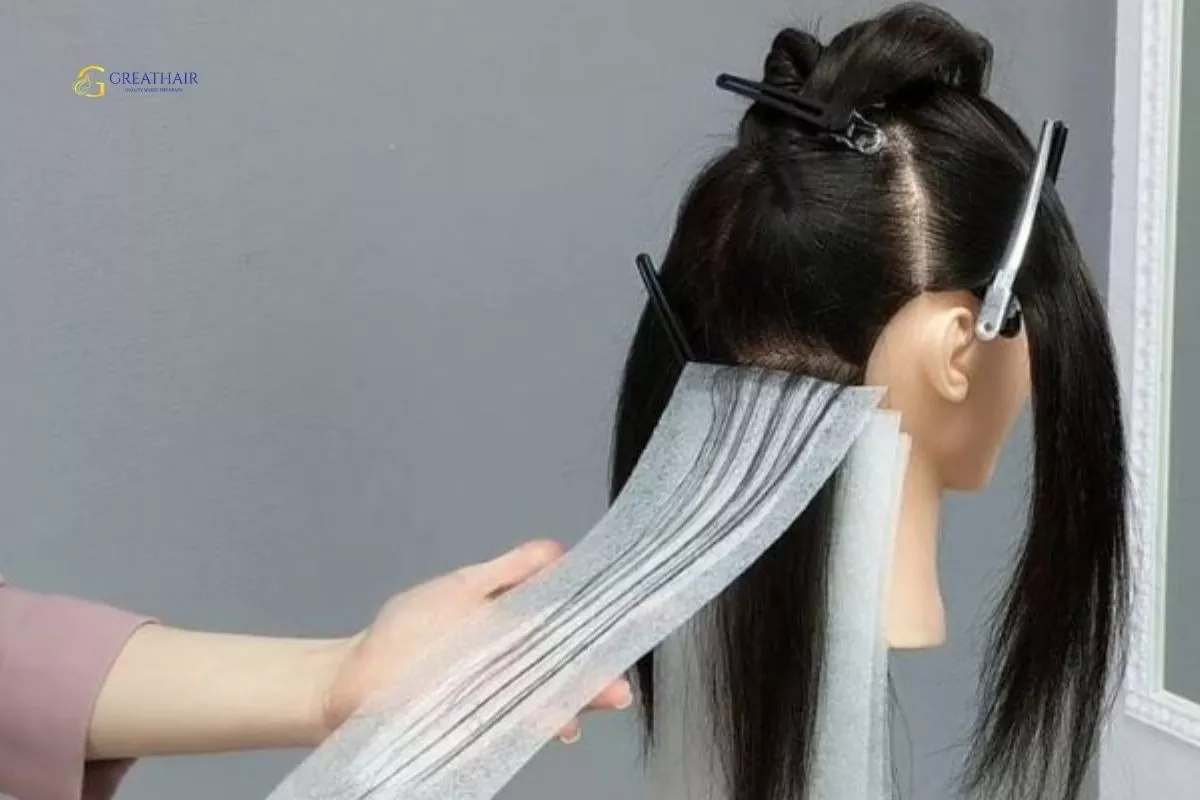
Store clean, completely dry, and detangled so the next wear feels as good as the first. Folding, crushing, or leaving the hair damp invites permanent kinks and mildew.
- Brush gently one final time.
- For clip-ins and removable wefts: hang on an extension hanger or lay flat in a breathable silk or satin bag.
- Keep away from direct sunlight, humidity, and heat sources.
- Never store in a plastic bag while still damp.
Proper storage is why many of our salon partners can rotate the same Vietnamese bundles across multiple clients for more than a year.
Special Care Notes For Hair Extensions
Different attachment methods demand different daily habits. Matching care to the specific install is the single biggest factor that decides whether the hair stays soft and secure for the full recommended wear time or starts slipping, matting, or drying out weeks early. With years of experience supplying salons that work primarily with textured hair clients, GreatHair has seen the same patterns repeatedly: the salons that teach method-specific rules keep the same Vietnamese hair looking premium for 12–18 months, while those that treat every extension the same lose clients to early replacement.
Here is the clear breakdown for the four most common methods.
| Method | Daily Focus | Washing Rules | Product Restrictions | Drying Priority | Sleep & Storage | Biggest Risk if Ignored |
|---|---|---|---|---|---|---|
| Tape-In | Support the tabs while brushing; never pull downward on the adhesive | Wash 2–3 times per week max; keep head upright | No oils, heavy conditioners, or silicone serums within 2–3 cm of the tape | Fully dry the tape area with cool air before bed | Loose low braid or silk bonnet; never sleep damp | Adhesive softens
→ slippage within days |
| Clip-In | Check clips for bent metal; remove before any high-friction activity | Every 10–20 wears or when buildup shows | Avoid heavy products directly on the weft and clips | Air-dry completely off the head | Store hanging or flat in a breathable silk bag | Clips dig into natural hair or weft sheds from repeated stress |
| Keratin / Fusion | Hold the bond while detangling; brush only up to the bond, not over it | Wait 48 hours after install; then 2–3 times per week | Keep oils and thick masks away from the keratin tip | Dry the bond completely; residual moisture weakens the seal | Silk pillowcase + loose style; never wet to bed | Bonds become brittle or slide
→ shedding and re-tipping needed |
| Weft (Sewn-in / Hand-tied) | Support the weft row while brushing; never tug the stitches | Focus shampoo on scalp lines; condition only mid-lengths to ends | Light leave-ins only on lengths; no heavy oils at the sew line | Point cool air along the entire row until 100 % dry | Loose braid or satin bonnet; avoid tight styles that pull the weft | Moisture trapped under the weft
→ odor, mildew, or track slippage |
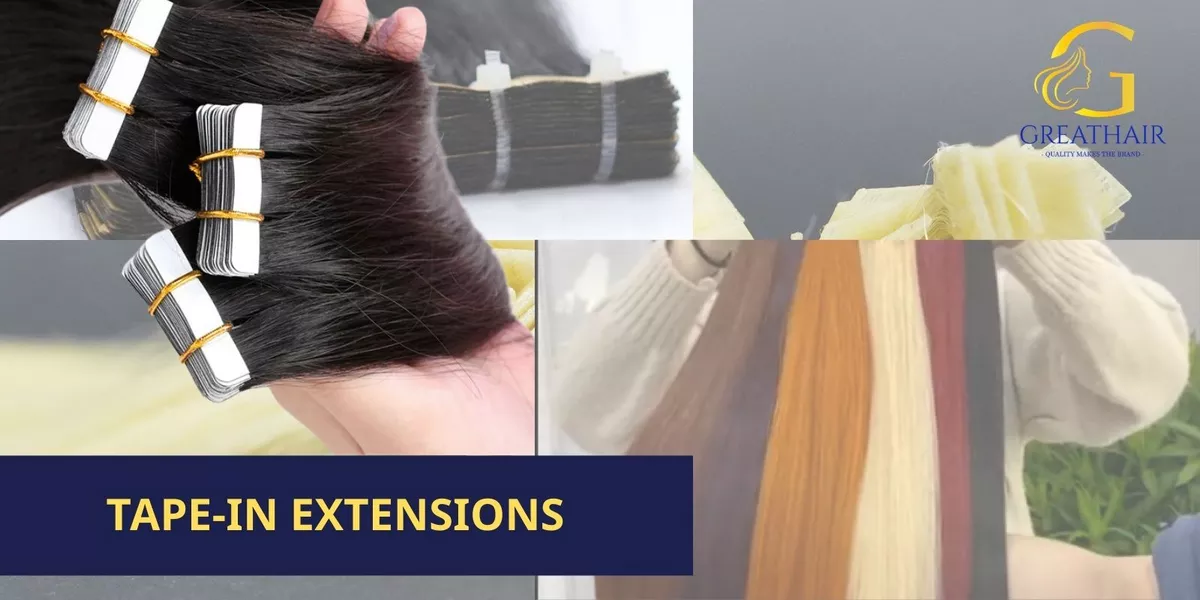
Tape-In Extensions
The adhesive is the weak point. Any oil, serum, or rich mask that reaches the tabs breaks the bond within a few washes. Always dry the sandwich area completely after washing damp tape is the number-one reason clients return early for re-taping. When brushing, hold the hair just below the tape so tension never hits the adhesive directly.
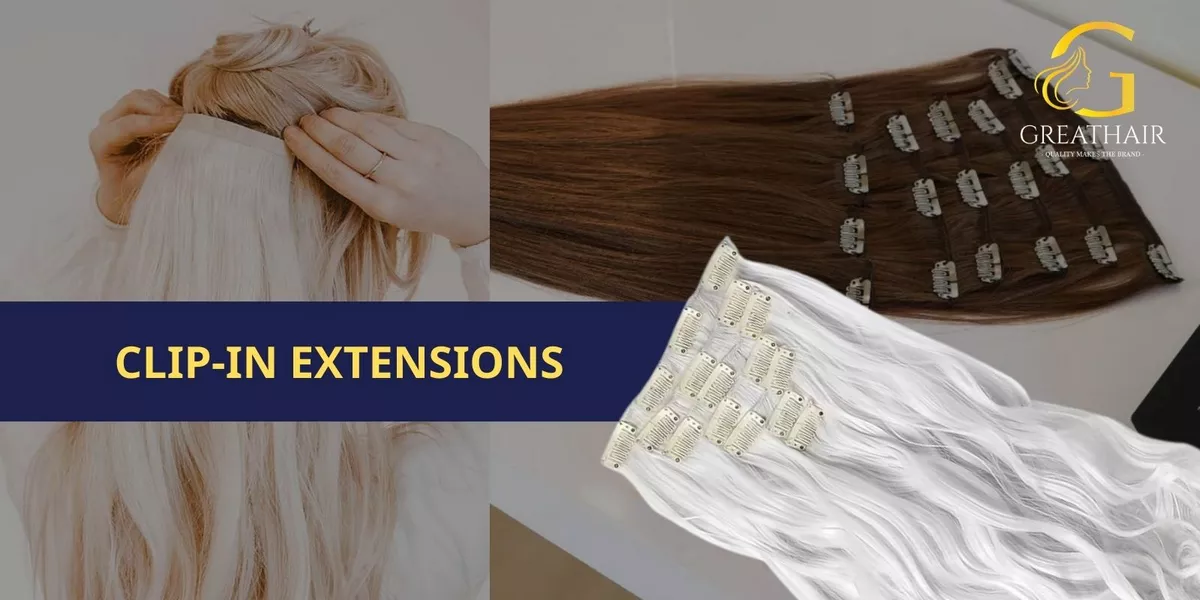
Clip-In Extensions
These are the most forgiving for removal but the easiest to damage through rough handling. Take them out before sleeping, swimming, or intense workouts. After washing, lay them flat or hang them until bone-dry before storing. Bent or loose clips dig into the natural hair and create breakage points that clients feel long after the extensions are removed.
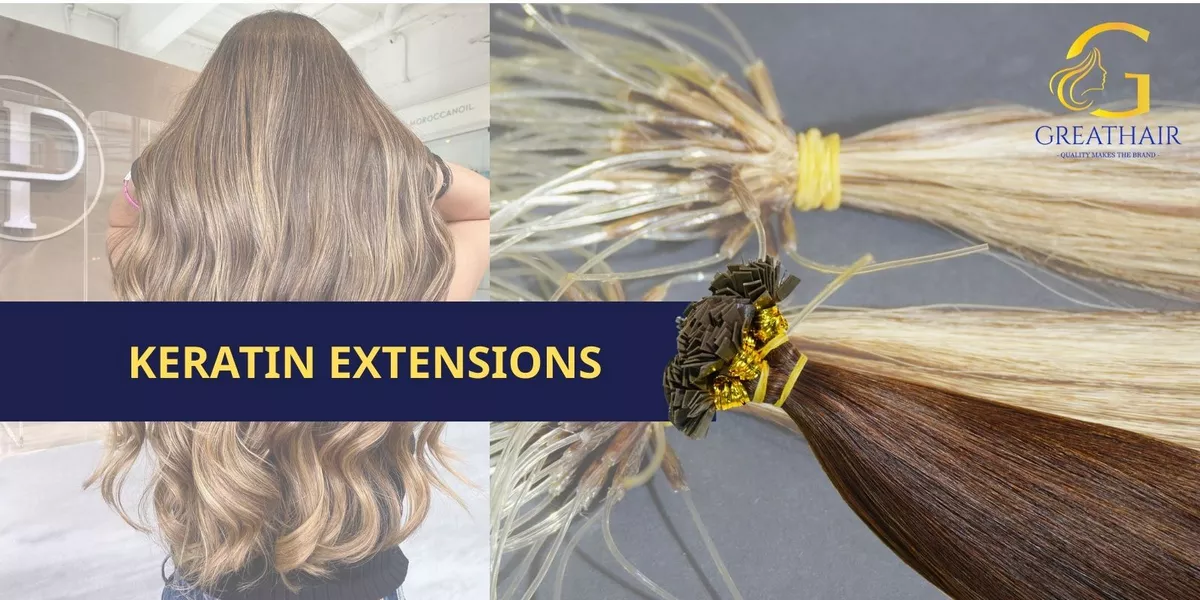
Keratin / Fusion Bonds
The keratin tip needs time to fully set and then needs protection from moisture and oils. The first 48 hours after installation are non-negotiable no washing, no heavy products. When you do wash, treat the bond like a delicate joint: support it with one hand while you gently cleanse around it. Over time, repeated high heat or product buildup can make the bond brittle, so keep tools below 180 °C and oils strictly on the mid-lengths and ends.
Weft Extensions (Sewn-in or Hand-tied)
The sewn track itself can trap water and product. After every wash, take the extra minute to blow cool air along the entire row until you can feel no dampness under the weft. This single step prevents the musty smell and track loosening that frustrate so many clients with textured hair. When brushing, always support the weft with your free hand so the stitches never take the full force of the stroke.
Teach these method-specific rules at the install appointment and most of the common complaints slippage, early dryness, and matting disappear. The same high-quality Vietnamese hair will then deliver the longevity both the salon and the client paid for.
Important Notes When Caring for Human Hair Extensions
A few universal rules prevent the majority of problems we see across thousands of salon partners:
- ✓ Never sleep with wet hair.
- ✓ Switch to silk or satin pillowcases and bonnets cotton creates constant friction that roughens the cuticle.
- ✓ After swimming, rinse immediately with fresh water and follow with a gentle sulfate-free cleanse within a few hours.
- ✓ Limit clarifying shampoos to occasional use only; follow every clarifying wash with a deep moisture mask.
- ✓ Schedule professional maintenance every 6–8 weeks for installed methods so the hair can be moved up as the natural hair grows.
- ✓ Teach every client the same simple routine so results stay consistent from one appointment to the next.
Where to Buy Quality Vietnamese Hair
Salon owners, distributors, and private-label brands looking for consistent, factory-direct Vietnamese human hair can source directly from GreatHair. We have operated our own 5,000 m² factory in Vietnam since 2008, with full control from ethically sourced raw hair through 100 % individual bundle inspection. Our virgin, raw donor, and baby-thin lines are produced specifically for professional use and ship worldwide to salons and wholesalers who need reliable quality, flexible OEM options, and transparent production. Contact the GreatHair team for wholesale pricing, custom textures, and private-label support so your clients receive hair that rewards proper care with years of beauty.
Seven reasons wholesale buyers choose GreatHair for cap and capless wig sourcing:
-
100% Vietnamese Human Hair: Sourced from Vietnamese donors to ensure consistent texture, natural softness, strength, and quality across every unit.
-
Intact Cuticle Technology: All hair features properly aligned cuticles that remain intact, minimizing tangling and matting for the full lifespan of the wig.
-
Ethical Sourcing: Direct relationships with local communities provide fair compensation to donors and full transparency throughout the supply chain.
-
Factory-Direct Pricing: Own manufacturing means wholesale rates significantly below typical market prices with no middleman markups.
-
Proven Track Record Since 2008: Over 15 years of manufacturing expertise, a 5,000 m² modern factory, and more than 200 skilled workers dedicated to consistent production.
-
Global Distribution: Reliable shipping to the US, UK, Europe, Africa, Asia, and beyond, with estimated 3–7 day delivery on ready-stock orders.
-
Strict Quality Guarantee: Multi-stage quality control with 4+ checkpoints and 100% individual inspection on every order to ensure no shedding, tangling, or defects.
About GreatHair Vietnam transforms authentic Vietnamese hair into premium wigs and extensions trusted by beauty professionals and brands worldwide. Our commitment is clear: deliver manufacturing excellence, ethical practices, and long-term customer success under the slogan “Quality Makes The Brand.”
Ready to order quality cap wigs or capless wigs at wholesale prices? Contact our sales team:
- WhatsApp: https://wa.me/+84813282399
- Website: greathair.com.vn
- Quick links: linktr.ee/service.greathair
FAQ About Hair Extension Care
How often should I wash human hair extensions?
Wash installed extensions every 7–14 days or when they feel product-heavy; clip-ins every 10–20 wears. Less is almost always better.
Can I use regular shampoo on human hair extensions?
No. Only sulfate-free formulas. Regular shampoos strip the moisture the extensions cannot replace.
Why do my extensions tangle so easily?
Friction from cotton pillowcases, sleeping wet, or brushing from the roots down are the usual causes. Switch to silk and always detangle ends-first.
Is it safe to heat-style Vietnamese human hair extensions?
Yes, when you use a heat protectant and keep tools at or below 180 °C / 350 °F. Heatless methods are even better for longevity.
How long can quality Vietnamese human hair extensions last with proper care?
With the routine in this guide, raw and virgin Vietnamese hair routinely lasts 1–3 years or more, depending on the method and how often it is worn and styled.