



There are no products in the cart
Oct 19, 2025
Post by Alice Bonita
Tape-in extensions stay beautiful longest when you keep the adhesive dry at first, wash gently, avoid oils and conditioner near the tape tabs, dry the roots completely, and reduce friction while sleeping. Those habits matter more than buying a long product list.
If you want the short version of how to take care of tape in hair extensions, it is this: wait at least 48 hours before washing, brush daily with the right technique, keep heavy products away from the bonds, and book maintenance before the tapes grow out too far. Done consistently, that routine helps tape-ins look cleaner, last longer, and feel more comfortable.
Tape-ins do not usually fail because of one dramatic mistake. They fail because of repeated small habits such as washing too soon, rubbing shampoo into the tabs, sleeping with damp hair, daily high-friction styling, or letting them go too long before a move-up appointment.
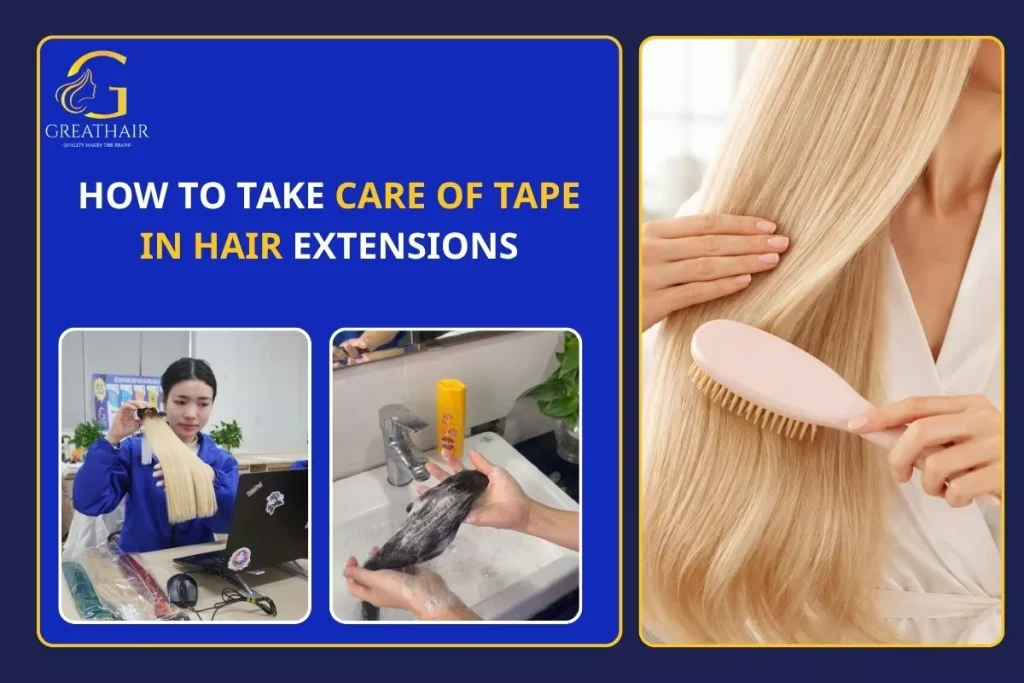
Tape-in care is really adhesive care. The hair itself can usually be treated much like human hair, but the tape tabs are the fragile point: they are more likely to loosen when exposed to moisture, oils, residue, friction, and repeated stress. That is why most tape-in problems show up first at the bonds, not in the hair lengths.
This is also why good aftercare is not only about appearance. Proper maintenance helps prevent slipping, matting near the roots, visible tabs, and unnecessary tension on your natural hair. When tape-ins are applied well and maintained well, they are meant to be comfortable and discreet between appointments.
>>Read More: Secrets to Perfect Hair Extension Care
The first two days are the most important part of the entire wear cycle. Most professional aftercare guidance recommends waiting at least 48 hours before shampooing so the adhesive has time to set properly. Washing too soon is one of the fastest ways to shorten wear time.
During that same window, keep the attachment area as dry and undisturbed as possible. That means no washing, no sauna or steam room, no soaking swims, and ideally no high-sweat workouts that leave the roots damp for long periods.
It is also smart to skip tight ponytails, aggressive brushing, and constant touching at the tabs right after installation. Fresh tape-ins need a little settling time; the less pulling and bending they get early on, the better they usually hold.
The right wash routine is gentle, upright, and product-aware. A practical target for many wearers is about two to three shampoos a week rather than daily washing, since more frequent washing can shorten how long tape-ins stay looking fresh and secure.
Before you wash, detangle lightly so knots do not tighten once the hair gets wet. When you shampoo, keep your head upright instead of flipping it over, because upside-down washing creates more tangling and drag around the bonds.
A simple wash routine looks like this:
The main principle is easy to remember: cleanse the scalp, condition the lengths, and protect the tabs from moisture-heavy products. That one distinction prevents a lot of slippage.
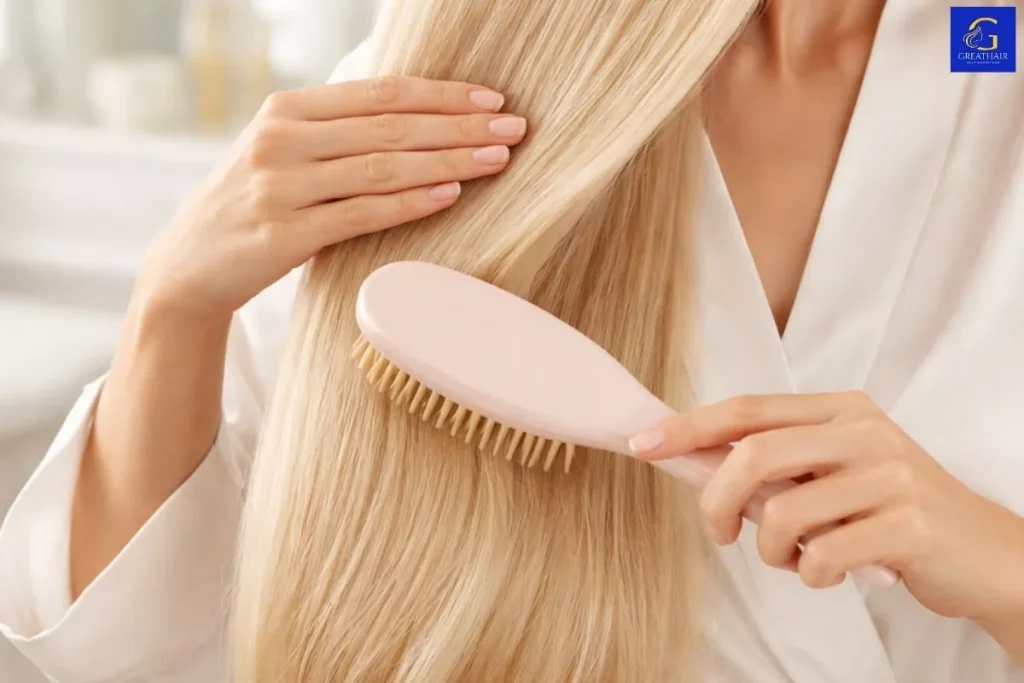
Daily brushing is not optional with tape-ins. It is how you stop small tangles from turning into matting at the root, especially where your natural hair and the extension hair meet.
Use an extension-friendly brush or another gentle brush near the bonds, work in sections, and start at the ends before moving upward. When you get close to the tabs, reduce tension and support the area with your hand if needed so you are not pulling directly on the roots. Backcombing near the tapes is a bad idea because it increases tangling and stress around the adhesive.
Drying matters just as much as brushing. After washing, blot with a towel instead of rubbing, then make sure the roots and attachment areas are fully dried. Great Lengths specifically advises drying the attachments thoroughly rather than leaving them to dry naturally, because hair and bonds are more vulnerable when wet.
Heat styling is usually possible, but placement matters. Use heat protectant on the hair lengths, keep styling tools away from the tape tabs, and avoid applying serums, pomades, or oily leave-ins near the adhesive because they can weaken the bond over time.
>> Read More: Best Brushes To Use On Hair Extensions
Night care should reduce friction and movement. The most widely repeated advice from both professional extension education and beauty experts is to wear the hair in a loose braid or loose ponytail for sleep and use a silk or satin pillowcase to cut down on rubbing.
Go to bed with the roots dry. Damp roots can encourage tangling and are harder on the tape area than most people realize, especially if the hair stays compressed against the pillow for hours.
Exercise is fine, but repeated moisture is not ideal. If you sweat heavily, dry the roots soon after and avoid making high-sweat sessions an excuse to leave the tape area damp for the rest of the day. This matters even more if you work out often enough that your roots stay moist on most days.
Swimming is possible, but it is not neutral. Great Lengths advises avoiding daily or frequently repeated exposure to seawater, chlorinated water, saunas, and steam rooms because they can affect lifespan. Allure’s expert guidance also recommends keeping hair braided or in a low bun while swimming and drying the bonded area as soon as possible after it gets wet.
One often-missed detail is skincare. Sunscreen, face lotion, and similar products near the hairline can transfer to the tape and make corner pieces slip, so wash or rinse your hands after applying skincare before touching your hair.
Most tape-ins need professional repositioning on a regular cycle, not only when they start looking bad. A good rule is to expect maintenance around six weeks, with many systems being re-taped or moved up at roughly six to eight weeks depending on your natural hair growth, washing frequency, and how well you maintain them.
Do not wait until the tabs are obviously hanging low. Once tape-ins grow out too far, they become more visible, more likely to tangle near the root, and less comfortable to wear.
Book a salon visit sooner if you notice any of these signs:
Tape-ins usually stay easier to manage when you move them up on schedule instead of trying to stretch every install as long as possible.
Most tape-in problems come from routine mistakes, not rare accidents. The goal is to keep moisture, residue, and friction away from the tabs while staying gentle with the hair every day.
If you avoid those six habits, you remove most of the common reasons tape-ins slip, tangle, or stop blending well.
How soon can I wash my hair after tape-in extensions?
Wait at least 48 hours after installation before shampooing so the adhesive can set properly.
How often should I wash tape-in hair extensions?
A gentle schedule of about two to three times a week works well for many people, and daily washing can shorten wear time.
Can I use conditioner on tape-in extensions?
Yes, but keep it on the mid-lengths and ends, not on the tape area or right at the roots.
Can I use oil on tape-in hair extensions?
Use oils very carefully and only on dry ends if needed. Avoid oil-based products near the adhesive because they can break down the bond.
How should I sleep with tape-in extensions?
Brush them first, secure them in a loose braid or ponytail, and sleep on a silk or satin pillowcase.
Knowing how to take care of tape in hair extensions comes down to a few repeatable habits: protect the adhesive in the first 48 hours, wash gently, keep rich products away from the tabs, dry the roots fully, reduce friction at night, and stay on top of maintenance. When those basics are done consistently, tape-ins usually last longer, look smoother, and feel much easier to wear.
If you want beautiful, soft hair and a reliable supplier, GreatHair is the place to start.

We Will Contact You Shortly



Address: 8 Ngo 20/45 D. Phu Minh, Minh Khai, Bac Tu Liem, Ha Noi, Viet Nam
Phone: (+84)813282399

There are no products in the cart