



There are no products in the cart
Feb 05, 2026
Post by Alice Bonita
Raw Vietnamese hair is popular because it usually performs better over time than low-grade processed hair. For serious buyers, that matters more than how the bundle looks on day one.
A lot of hair looks beautiful in photos. A lot of hair also feels soft when you first open the package. But salons, resellers, and wholesale buyers do not build their business on first impressions alone. They build it on hair that still performs after washing, bleaching, styling, reinstalling, and daily wear.
That is why raw Vietnamese hair keeps getting attention in the premium market.
But there is also a problem: not everything sold as raw Vietnamese hair is truly raw. Some hair is coated to feel silkier than it really is. Some hair is mixed from different sources. Some suppliers send a strong sample but weaker bulk production. So if you are buying for business, the real question is not just whether the hair is from Vietnam. The real question is whether the hair is honestly sourced, technically consistent, and reliable enough for repeat orders.
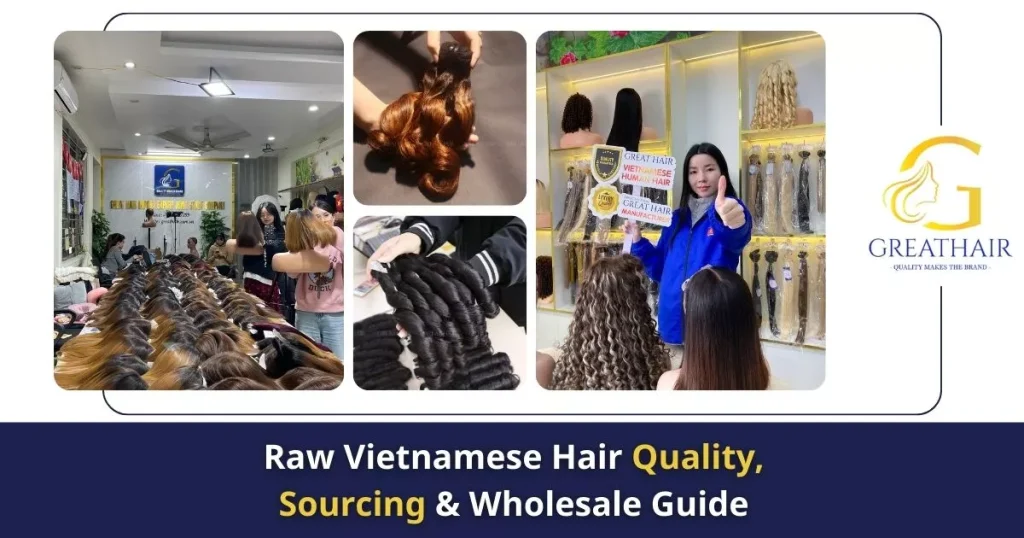
Raw Vietnamese hair should mean human hair collected from Vietnamese donors and sold without heavy chemical processing. In practical sourcing terms, it should not be acid-washed, silicone-coated, or chemically altered just to create a temporary smooth finish.
That distinction matters because a lot of confusion in this market starts with labels. “Raw,” “Remy,” “virgin,” and “premium” are often used loosely, even when the hair behind those labels is very different.
A buyer with experience learns quickly that origin alone does not prove quality. Hair may come from Vietnam and still fail the raw standard if it has already been heavily processed. That is why experienced buyers do not stop at the product name. They ask what has been done to the hair, how it was sorted, and whether the supplier can keep the same standard from sample to bulk.
Buyers should first understand what raw Vietnamese hair really means before comparing suppliers.
Raw Vietnamese hair is in demand because it solves problems that cheaper hair often creates later.
For salon owners, the main issue is service reliability. Hair that tangles easily, dries out after coloring, or loses density too quickly becomes a customer complaint. For resellers, the issue is repeat business. If buyers come back unhappy after two washes, the first sale was never really a win. For wholesale brands, the issue is even bigger: one inconsistent shipment can damage trust across an entire product line.
That is why buyers are willing to pay more for raw Vietnamese hair when the quality is real. They are not only paying for appearance. They are paying for better behavior during actual use.
This is the part many new buyers miss. Processed hair often sells well because it looks polished immediately. Raw hair earns its value later, when the hair still works after washing, heat styling, recoloring, and reinstalling.
Consistency, reuse potential, and better salon results help explain why raw hair from Vietnam is in such high demand.
Experienced buyers do not judge raw Vietnamese hair by shine alone.
In fact, extremely silky hair can be a warning sign. A lot of low-grade hair feels impressive at first because surface coatings are hiding weakness underneath. Once those coatings fade, the hair becomes dry, rough, or hard to manage. That is when the buyer discovers the real product quality.
Raw Vietnamese hair usually feels more natural. It may not have the exaggerated slippery finish some buyers expect from coated hair. But after proper washing and conditioning, genuinely good raw hair often becomes softer while still keeping its structure.
That difference matters in real business. Hair that improves with care is usually far more valuable than hair that declines after the first wash.
Raw Vietnamese hair is widely used for bundles, custom wigs, closures, and frontals because it usually offers a strong balance of density, durability, and workable texture.
For bundle buyers, fullness and end quality matter a lot. A bundle may look attractive from the top but still become thin toward the ends. Better raw hair usually holds its shape better through the full length, which makes installs look cleaner and more premium.
For wig makers, predictability matters just as much as softness. Hair that behaves consistently during bleaching, toning, knotting, styling, and long wear is much easier to work with than hair that changes from one batch to the next. This is one reason premium wig brands often prefer raw Vietnamese hair for custom units.
The value is not only in beauty. It is in control.
These terms are related, but they are not the same.
Raw Vietnamese hair should refer to hair that has not gone through heavy chemical processing. Remy hair usually means the cuticles are aligned in one direction, which is useful, but Remy hair can still be processed. Processed hair is the broader category and may be altered for texture, color, softness, or shine.
For buyers, the safest approach is simple: do not assume the label explains the full product.
Ask direct questions:
Is the hair raw or lightly processed?
Has it been coated?
Is the texture natural or steam-formed?
Is the origin single-source or mixed?
Can the supplier explain the spec clearly in writing?
A serious supplier should be able to answer those questions without hiding behind vague sales language.
Long-term performance is one reason why raw Vietnamese hair outperforms other hair sources for many premium buyers.
When buyers evaluate raw Vietnamese hair, there are a few signals that tell the truth faster than marketing photos.
The first is cuticle condition. Intact cuticles usually support smoother behavior, less tangling, and better long-term manageability. The second is end fullness. Weak ends reduce the value of the hair even if the top section looks strong. The third is texture consistency. If the bundle feels uneven from root to end or varies too much across units, the problem often grows after installation.
Wash behavior is one of the clearest tests. Good raw hair should not suddenly collapse after the first proper wash. It should not become harsh, lifeless, or impossible to comb through. If it does, the issue is usually not “maintenance.” The issue is that the original quality was misrepresented.
Color performance also matters for many businesses. If your salon or wig brand offers custom shades, you need hair that lifts more predictably under professional handling. Hair quality often reveals itself quickly during bleaching. What looked premium before processing may not stay premium after it.
Shine alone is not enough, because serious buyers care more about how Vietnamese hair quality is actually evaluated in real use.
Most bad orders happen before shipping, not after.
One common mistake is trusting the word “raw” without verification. Another is judging quality by first-touch softness alone. Another is falling in love with the sample and assuming the bulk order will automatically match it.
This is one of the biggest wholesale mistakes in the hair business.
A sample tells you about the product. Bulk consistency tells you about the supplier.
If a supplier cannot maintain texture, fullness, color behavior, and general finish from one order to the next, the problem is bigger than one shipment. It becomes a brand problem. It becomes a customer service problem. It becomes a margin problem.
Another mistake is confirming price before confirming the full spec. Buyers should always lock down the important details in writing: texture, color, length tolerance, weight, drawn method, lace type if applicable, and what “full ends” actually means for that order. Many disputes happen because the buyer and supplier were never talking about the exact same product.
If you are comparing multiple suppliers, this Vietnamese hair shopping guide for first-time buyers can help you avoid common mistakes.
Buyers trust suppliers more when the supplier behaves like a real production partner, not just a salesperson. That means being clear about what the sample proves and what it does not prove. It means confirming specs before payment. It means doing QC before shipping. It means being realistic about limitations instead of promising impossible perfection.
No serious supplier should promise zero shedding forever. No serious factory should tell buyers that every order will be identical without any tolerance at all. Real trust comes from transparency, not hype.
The right process is simple. Start with a sample or small test order. Check the wash behavior, texture consistency, and end fullness. If the first result is strong, move to a controlled bulk order, not a blind scale-up. Then compare the production with the approved sample. That is how experienced buyers reduce risk.
A cheap quote can become expensive very quickly if the hair creates complaints.
This is why professional buyers care so much about supplier consistency. A strong supplier is not just someone who has good photos or a polished catalog. A strong supplier is someone who can repeat quality, confirm specs clearly, inspect orders before dispatch, and respond properly if the bulk order does not match what was agreed.
That after-sales mindset matters more than many buyers realize. In hair wholesale, most problems do not end at delivery. They show up when the customer installs the hair, washes it, colors it, or wears it for several weeks. Suppliers who think beyond the invoice are usually the ones worth keeping.
For many premium buyers, yes.
Not because it is cheap, but because it can lower the hidden cost of poor quality. Those hidden costs include refunds, remakes, negative reviews, customer loss, wasted salon time, and product inconsistency across repeat orders.
The right question is not “How much does one bundle cost?” The better question is “How much usable value does this hair create over time?”
That is the real buying logic behind raw Vietnamese hair. It is not only about luxury positioning. It is about fewer surprises after the order is paid.
Many buyers still ask is Vietnamese hair actually good for long-term use, especially before moving from sample to bulk.
Raw Vietnamese hair is not valuable just because the label sounds premium. It becomes valuable when the sourcing is honest, the hair is truly raw, the specs are clear, and the supplier can deliver the same quality beyond the first sample.
That is what serious buyers should focus on.
Not surface shine. Not empty grade labels. Not the lowest offer in the inbox.
Just real quality, real consistency, and a supplier process that makes sense in the real world.
If you are buying raw Vietnamese hair for salon use, resale, or wholesale, start with verification. Check sample quality carefully. Confirm every spec in writing. Review QC before shipping. And work with suppliers who understand that long-term trust is part of the product too.
Many suppliers use sales language loosely, so buyers should know what Vietnamese hair grades really mean before trusting labels.
What is raw Vietnamese hair?
Raw Vietnamese hair is human hair collected from Vietnamese donors and sold without heavy chemical processing. It should not be acid-washed, silicone-coated, or altered just to create a temporary smooth finish.
Is all Vietnamese hair raw?
No. Vietnamese hair can be raw, lightly processed, or heavily processed. Buyers should never assume that “Vietnamese hair” automatically means “raw hair.”
Why is raw Vietnamese hair more expensive?
It usually costs more because better sourcing, sorting, and quality control require more work. For many buyers, the higher upfront price can still make sense if the hair performs better and lasts longer.
How can I tell if raw Vietnamese hair is real?
Start with a wash test, check the feel before and after washing, inspect end fullness, and see how the hair behaves during styling or coloring. Real quality shows up in performance, not just first-touch softness.
Is raw Vietnamese hair good for wigs and bundles?
Yes. Raw Vietnamese hair is widely used for premium bundles and custom wigs because it usually offers a good balance of density, durability, and manageable texture.
What is the biggest mistake buyers make?
The biggest mistake is trusting labels without verification. Many buyers approve a sample too quickly, do not confirm full specs in writing, or assume the bulk order will automatically match the sample.
Should I order bulk right away from a new supplier?
Usually no. A sample or small test order is safer. It helps you compare actual quality, communication, and consistency before scaling up.
What should I confirm before placing an order?
You should confirm texture, color, length tolerance, weight, drawn method, lace type if applicable, and whether the supplier can maintain the same quality from sample to bulk.

We Will Contact You Shortly


Address: 8 Ngo 20/45 D. Phu Minh, Minh Khai, Bac Tu Liem, Ha Noi, Viet Nam
Phone: (+84)813282399

There are no products in the cart