



There are no products in the cart
Aug 07, 2025
Post by Alice Bonita
Understanding Vietnamese hair grade is one of the first things buyers need to get right, but it is also one of the most misunderstood parts of the hair business.
A lot of suppliers talk about “premium quality” as if that phrase explains everything. It does not. In real buying decisions, grade is not just a label. It affects how full the ends look, how natural the hair falls, how much variation appears inside a bundle, and whether the final product matches the price you are paying.
That is why this topic matters to more than just first-time buyers. Salon owners, wig makers, resellers, and wholesale brands all need a clear way to judge what they are buying and how that quality will show up in real use.
Vietnamese hair has built a strong reputation in the market because it is commonly associated with density, strength, and a smooth natural texture that works especially well for premium wigs and extensions. Supplier and buyer guides consistently describe it as thick, durable, and well suited to sleek or lightly wavy styles when it is sourced honestly and handled correctly.
But even with that strong reputation, not all Vietnamese hair is the same. Some bundles are carefully sorted and beautifully full from top to end. Others look good in photos but lose their appeal once you inspect the taper, the texture consistency, or the way the hair behaves after washing. That is where understanding grade becomes useful. It gives buyers a more practical way to compare products beyond sales wording.
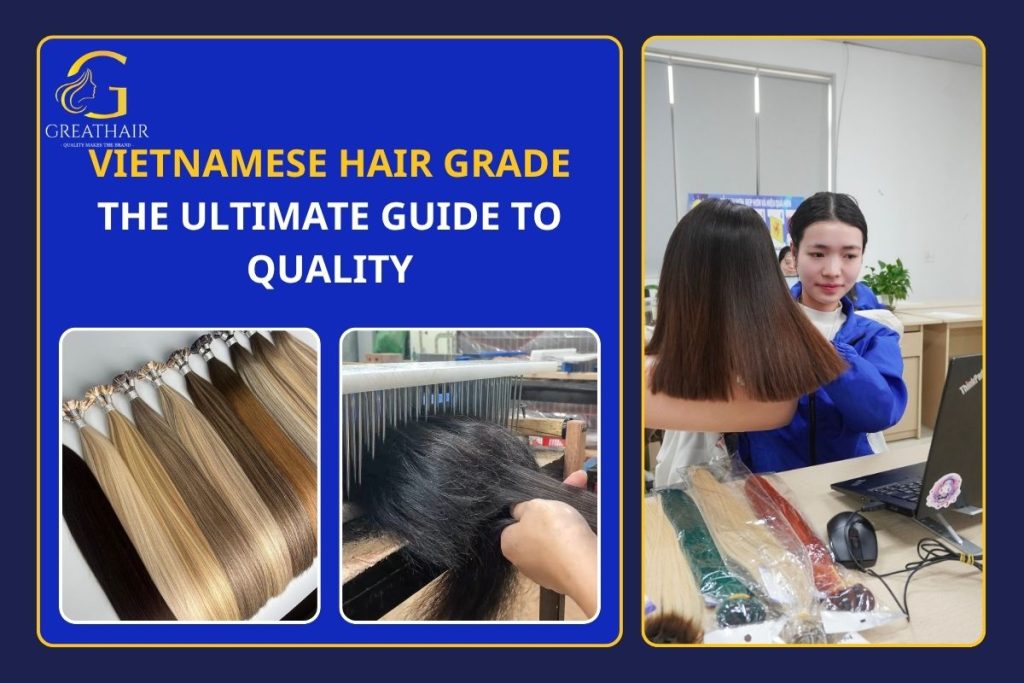
Vietnamese hair is often favored because it gives buyers a combination that is not always easy to find: natural density, a relatively calm straight-to-wavy texture, and the kind of structure that works well in premium extensions and wigs. Industry guides routinely position Vietnamese hair as strong, smooth, and long-wearing, especially when the cuticle is preserved and the hair has not been heavily processed.
That popularity is not just about appearance.
For professional buyers, Vietnamese hair is attractive because it tends to support the kinds of results they actually sell: polished straight styles, fuller bundles, cleaner silhouettes, and a product that can hold its value after the first install. Great Hair’s own density-focused articles frame Vietnamese hair’s natural fullness as a practical advantage because it can create stronger visual impact, cleaner blending, and a more stable styling foundation.
This is important because “beautiful hair” is not a useful buying standard on its own. Plenty of hair looks beautiful on day one. Quality becomes meaningful only when it still holds up after washing, styling, storage, and repeat wear.
In most real-world buying situations, Vietnamese hair is commonly sold in three core grade categories: single drawn, double drawn, and super double drawn. The reference article you shared follows that same flow, and many suppliers use similar classifications, although the exact definitions and thresholds can vary from vendor to vendor.
That last part matters more than many buyers realize.
There is no single, industry-wide authority that defines one universal grading scale for all suppliers. In other words, one seller’s “premium” grade or “10A” grade may not mean the same thing as another seller’s version of that label. Some supplier resources explicitly note that these grading systems are not standardized across the market.
So when buyers ask, “What is the best Vietnamese hair grade?” the right answer is not just a number or a marketing term. The better answer is to understand what the grade is actually describing.
In practice, most of the time it is describing fullness, taper, and sorting.
The most useful way to think about grade is this: higher grades are usually the result of more careful sorting and more consistent bundle construction.
Single drawn hair keeps more of the natural variation in strand length. That means the hair will taper more toward the ends, just like natural hair does. Double drawn hair is sorted more aggressively so more of the bundle sits close to the advertised length, which creates a noticeably fuller result. Super double drawn takes that even further, producing the thickest, most uniform finish and the least visible taper. Professional extension guides explain this difference in the same general way: single drawn retains natural variation, double drawn removes more shorter strands, and fuller ends come from the extra sorting work involved.
This is why grade affects price.
Buyers are not only paying for raw hair. They are paying for labor, sorting, and yield. The fuller the ends and the more uniform the bundle, the more work went into producing that result. That is also why a higher grade often feels more premium before you even install it.
But a useful article should say this clearly: higher grade does not automatically mean “better for everyone.” It means fuller, more uniform, and usually more expensive.
Single drawn Vietnamese hair is often the most natural-looking option because it keeps the natural variation of real hair growth. The top of the bundle feels strong, but the ends taper more softly instead of finishing in a blunt line.
For many buyers, that is not a flaw. It is exactly the point.
If you are selling natural-looking installs, softer silhouettes, or products for buyers who do not want overly thick ends, single drawn hair can be the right choice. It is also more budget-friendly, which makes it a practical option for everyday retail, entry-level salon services, or price-sensitive buyers.
The mistake some buyers make is assuming single drawn means low quality. It does not. It means the bundle is less aggressively sorted. The quality question is not whether it is single drawn, but whether the hair is healthy, consistent, and honestly represented.
Double drawn Vietnamese hair is often the most commercially useful grade because it sits in the middle between natural taper and dramatic fullness.
With double drawn hair, more of the shorter strands are removed, so the bundle looks fuller through the mid-lengths and ends. That fuller shape creates a more premium feel without always looking too heavy or too blunt. This is one reason double drawn hair is widely treated as the most popular option for salons, wig makers, and wholesale buyers who want a visibly upgraded result without going all the way to the highest sorting level.
In real use, double drawn hair often makes styling easier because the silhouette already looks stronger. It is also easier to market because customers can see the fullness quickly, even before installation.
If single drawn is the most natural-looking option and super double drawn is the most dramatic, double drawn is usually the most balanced.
Super double drawn Vietnamese hair is the premium end of the grade conversation.
This is the option buyers choose when they want thick, full ends from top to bottom and as little taper as possible. In visual terms, it creates the cleanest, richest, most obviously luxurious result. In commercial terms, it is ideal for high-end wigs, premium bundles, and clients who want density to be visible immediately.
That fuller look does not happen by accident. It comes from even more rigorous sorting, which is why super double drawn hair costs more and is usually positioned as the luxury choice. Both the sample article and professional extension guides describe this grade as the fullest and most uniform option in the lineup.
Still, it is worth saying something many supplier articles skip: super double drawn is not automatically the smartest option for every buyer. If your clients want a softer, more natural taper, or if your pricing model cannot support the higher raw material and labor cost, then it may not be the right fit.
Luxury is valuable when it matches the product you are trying to sell.
>> Read more: Vietnamese Hair Is Offered As Single Drawn And Double Drawn
The best Vietnamese hair grade depends on what you need the hair to do.
If you want the most natural taper and a softer finish, single drawn may be the best choice. If you want a fuller, more premium look that still feels commercially flexible, double drawn is often the smartest option. If you want the thickest, most dramatic, most polished result possible, super double drawn is usually the strongest choice.
This is where buyer intent matters more than supplier hype.
A good supplier should help you choose the right grade for your product line, not just push the most expensive option. That is one of the simplest real-world signs of E-E-A-T in this industry: not just sounding expert, but giving recommendations that actually fit the buyer’s use case.
This is where many articles become too shallow.
Grade matters, but it is not the whole story. A fuller bundle can still disappoint if the hair is overprocessed, mixed poorly, or inconsistent from sample to bulk. Quality also depends on cuticle condition, donor consistency, texture stability, and how honestly the supplier presents the product.
That is why more advanced buyers often connect grade to other questions:
Wholesale buying guides consistently stress that supplier verification and product inspection matter just as much as the product label, because one weak shipment can damage customer trust and brand reputation very quickly.
So yes, grade matters. But grade without supplier consistency is only half the picture.
If you are buying for salon use, think about the kind of finished look your clients usually request. If most of your work is sleek installs, premium straight looks, or full-bodied wigs, double drawn or super double drawn often make more sense.
If you are buying for resale, think about your customer’s expectations. Some buyers want dramatic fullness and will pay more for it. Others want a natural taper and a more affordable entry point.
If you are buying wholesale, think beyond the first order. Grade needs to stay consistent across repeated production. That means the supplier should be able to confirm exactly what they mean by single drawn, double drawn, or super double drawn and show that the bulk order matches the approved sample.
The right grade is not the one with the most impressive name. It is the one that matches your market, your pricing, and your customer’s expectations.
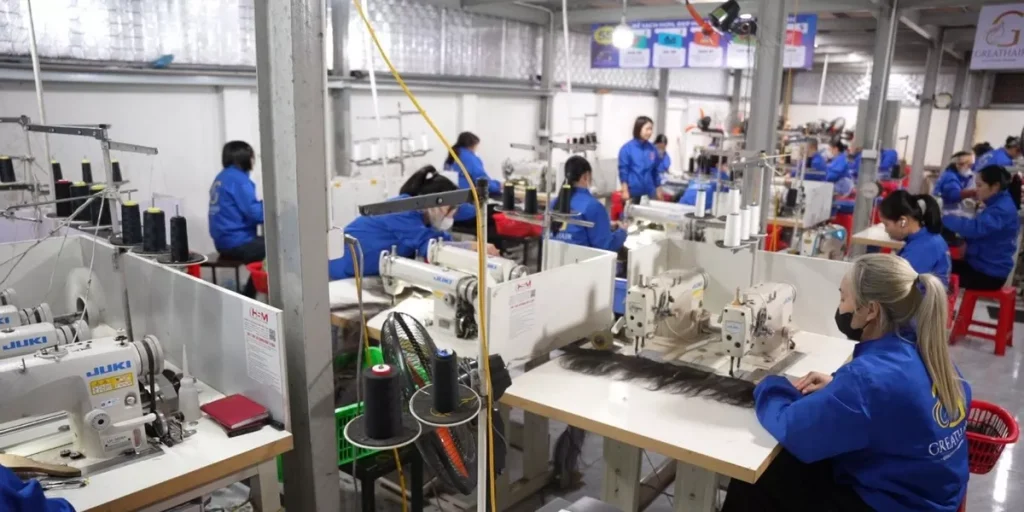
You can get in touch with Greathair using the contact information below:
No matter which grade you choose, proper care has a direct effect on how long the hair keeps its look and feel.
The most consistent advice across extension care guides is still the simplest: use a gentle sulfate-free shampoo, condition regularly, minimize unnecessary heat, and store the hair carefully when it is not being worn. The reference article you shared recommends that same core routine, and it remains the safest baseline for preserving smoothness, moisture, and lifespan.
For higher-density grades like double drawn and super double drawn, brushing technique matters even more because fuller bundles can create more friction if they are handled carelessly. For single drawn hair, careful detangling and moisture balance help preserve the natural silhouette and keep the ends looking healthier for longer.
Care does not create quality, but it absolutely protects it.
Vietnamese hair grade is not just a sales term. It is one of the clearest ways to understand what you are actually paying for.
Single drawn gives you a softer, more natural taper. Double drawn gives you the fuller, more commercial look most buyers want. Super double drawn gives you the boldest, most luxurious finish. None of those options is automatically right for every buyer. The best choice depends on your client, your pricing, your styling goals, and how much fullness you need the hair to deliver.
The smartest buyers do not choose grade by hype. They choose it by fit.
And once you understand that, you stop shopping by vague promises and start buying with much more confidence.
>> Read More: Raw Vietnamese Hair Quality, Sourcing & Wholesale Guide
What does Vietnamese hair grade mean?
Vietnamese hair grade usually refers to the level of sorting, fullness, and overall bundle consistency rather than one universal global standard. In most cases, buyers are comparing single drawn, double drawn, and super double drawn options.
Is there an official grading system for Vietnamese hair?
Not really. Multiple supplier guides note that hair grading language is not standardized across the industry, which is why buyers should always ask what the grade actually means in product terms.
Which grade looks the fullest?
Super double drawn usually looks the fullest because it has the least taper and the most uniform thickness from top to end.
Is double drawn better than single drawn?
It is fuller, but not automatically better for every use case. Double drawn is usually better for buyers who want a more premium, dense finish, while single drawn is often better for a softer, more natural look.
What should wholesale buyers check besides grade?
They should check sample-versus-bulk consistency, texture stability, cuticle condition, end fullness, supplier transparency, and whether QC is done before shipping.
Is Vietnamese hair naturally thick?
Vietnamese hair is commonly described in supplier and buying guides as dense, strong, and well suited to straight or lightly wavy premium styles, which is one reason it is popular in the extensions market.

We Will Contact You Shortly



Address: 8 Ngo 20/45 D. Phu Minh, Minh Khai, Bac Tu Liem, Ha Noi, Viet Nam
Phone: (+84)813282399

There are no products in the cart