Vietnamese Hair is one of the most popular choices for wigs and extensions because it usually gives you the look people actually want: soft, full, polished hair that still feels natural. It is especially loved for its smooth cuticle alignment, naturally dark shades, strong strands, and the way it holds a sleek or softly wavy finish.
The reason so many buyers get overwhelmed is simple. “Vietnamese hair” can mean very different things depending on whether you are looking at raw hair, virgin hair, Remy hair, or a more processed budget option. Grade, texture, and sourcing style all change how the hair will look, wear, and price out.
This guide breaks it down in a way that is easier to picture in real life, not just easier to rank. So whether you are shopping for bundles, wigs, or wholesale supply, you will know what Vietnamese Hair is, what makes it special, and how to choose the version that actually fits your needs.
What Is Vietnamese Hair?
Vietnamese Hair is human hair collected in Vietnam and used for hair extensions, wigs, and bundles. In the market, it is best known for looking naturally smooth, dense, and glossy rather than overly silky in a synthetic-looking way. Most Vietnamese Hair starts in natural dark brown to black shades and is commonly sold in straight or lightly wavy patterns.
What makes that matter in real life is the finish. Good Vietnamese Hair tends to give a cleaner, more polished look, especially when you want long straight styles, soft body wave, or fuller bundles that still move naturally. It is the kind of hair that reads sleek, not stiff.
Vietnamese Hair is popular because it tends to balance strength, softness, and versatility very well. It is often described as having a dense cuticle structure, smooth texture, natural shine, and a longer-wearing feel when the hair is high quality and cared for properly.
Here are the qualities buyers usually look for:
Naturally dark color that works beautifully for natural shades or for lifting with professional coloring
Straight to slightly wavy texture that feels easy to blend and style
Strong strands that can handle regular styling better than lower-grade processed hair
A soft, polished surface that helps the hair look expensive and photo-ready
Good longevity when the hair is genuinely human and the cuticles are kept aligned
That combination is exactly why Vietnamese Hair works for both everyday wear and statement length looks. It can feel refined without looking too “done.”
Vietnamese Hair Types
This is where most of the confusion begins. Vietnamese Hair can refer to several quality levels, and each one gives you a different result in terms of softness, lifespan, price, and styling freedom.
Raw Vietnamese Hair is the least processed option. It is usually sold as hair that has not been chemically altered after collection, which is why it is often considered the most premium category. It typically keeps its original texture and full cuticle direction, so it is a strong choice if you want the most natural movement, the longest wear, and the most flexibility for coloring or restyling.
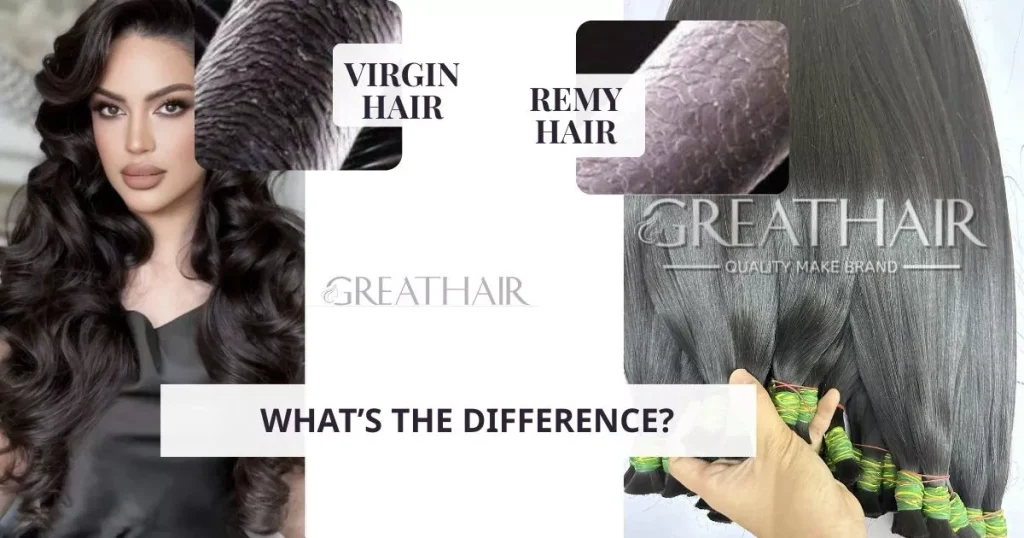
Virgin Vietnamese Hair is also untreated by dye, bleach, or perm, though it may go through light cleaning and preparation before sale. It usually offers a very good balance between quality and price. If you want hair that still feels natural and strong but is a little more accessible than raw hair, this is often the sweet spot.
Remy Vietnamese Hair means the cuticles are kept aligned in one direction. That matters because it helps the hair stay smoother and tangle less during wear. Remy hair may be lightly processed or pre-textured, so it is often a practical option for buyers who want a polished finish without paying raw-hair prices.
Non-Remy Vietnamese Hair is usually the more budget-friendly option. Because the cuticles are not preserved in the same way, it tends to tangle more easily and may lose its smooth finish faster over time. It can still work for shorter-term use, but it is not usually the first choice for buyers who want softness, longevity, and reusability.
The simplest way to think about it is this: raw is the most premium, virgin is high quality and versatile, Remy is polished and practical, and non-Remy is the more entry-level option.
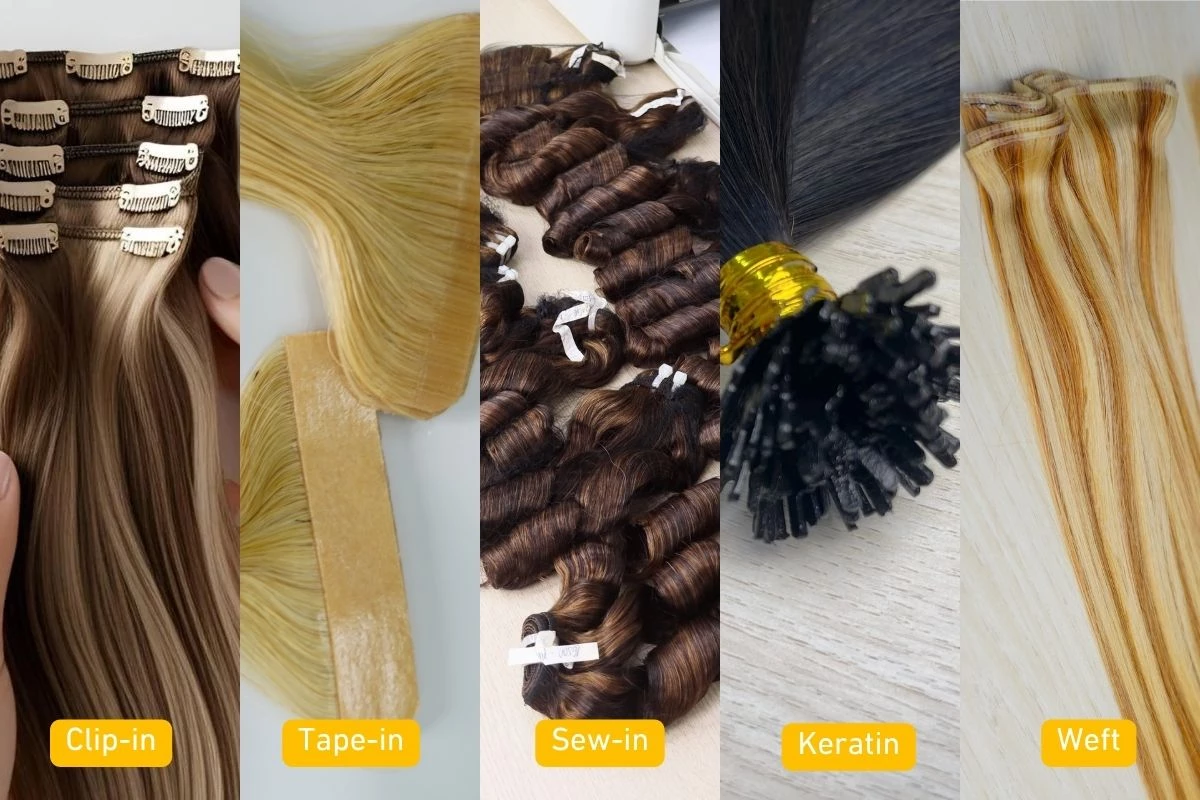
Vietnamese Hair is not just sold in one format. The right option depends on how you want to wear it, how often you want to style it, and whether your goal is personal use, salon work, resale, or custom wig making.
The most common formats include:
Tape-in extensions, which sit flat and usually work well for finer hair and quicker installs
Clip-in extensions, which are ideal for temporary wear and easy flexibility
Keratin tip, I-tip, and U-tip extensions, which allow more strand-by-strand customization and usually need professional installation
Weft hair, which is sewn onto a track and often used for sew-ins or custom installs
The best method is usually less about trends and more about lifestyle, natural hair density, and how permanent you want the result to feel.
Why Vietnamese Hair Is So Popular for Extensions and Wigs
Vietnamese Hair stays in demand because it works across a lot of different needs. It can look refined enough for luxury wigs, durable enough for repeat installs, and natural enough for buyers who want fuller hair without that overly shiny, obviously-added look.
The biggest reasons buyers keep coming back to it are usually these:
It often feels strong and dense without feeling heavy
It works beautifully for straight, silky, polished finishes
It can hold softness and shine when the quality is real
It suits both natural-color buyers and custom-color projects
It comes in multiple grades and processing levels, so there is room for different budgets
In other words, Vietnamese Hair is popular because it gives range. You can keep it natural-looking and everyday, or style it into something more dramatic and high-impact.
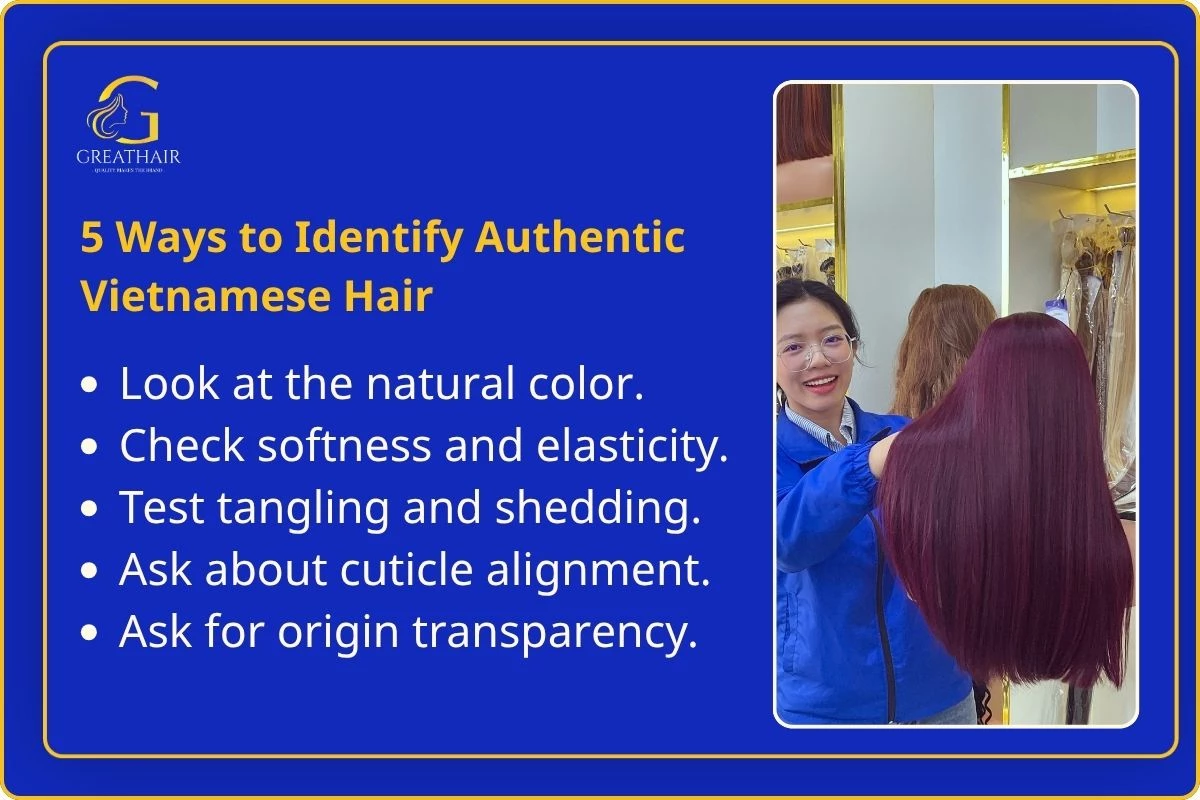
5 Ways to Identify Authentic Vietnamese Hair
Authentic Vietnamese Hair usually reveals itself through consistency, not through hype. The hair should feel like real human hair, move like real human hair, and age like real human hair. If it looks too perfect in a plastic, coated way, that is often the first warning sign.
Look at the natural color. Authentic Raw Vietnamese Hair usually sits in natural dark shades rather than an unnaturally uniform salon-black finish. A little natural variation often looks more believable than a flat, ink-like tone.
Check softness and elasticity. Good hair should feel soft, but not slippery in a fake, overly coated way. It should bend and move naturally without snapping or feeling hollow.
Test tangling and shedding. A few loose hairs are normal. Immediate knotting, excessive shedding, or roughness after light brushing is not a great sign.
Ask about cuticle alignment. Remy hair is valued specifically because the cuticles stay intact and aligned, which supports a smoother, lower-tangle finish.
Ask for origin transparency. Serious Vietnamese Hair Vendors and Vietnam Hair Suppliers should be able to explain where the hair comes from, how it is processed, and whether it is single donor, mixed donor, raw, or textured. Transparency is one of the clearest trust markers in a category where naming is inconsistent.
Signs of mixed, silicone-coated, or low-quality hair
Watch for hair that is too glossy in a way that feels almost reflective, a strong chemical smell, or hair that feels unusually silky on day one but quickly turns dry, rough, and lifeless after a wash or two. A suspiciously low price is another red flag, especially if the seller is claiming raw, single-donor, premium Vietnamese Hair with no real proof behind it.
The best rule here is simple: if the seller can only talk about price and never about source, process, or cuticle direction, keep moving.
Vietnamese Hair vs. Other Popular Hair Types
To choose the right option, it helps to compare Vietnamese hair with other common hair types on the market. The table below gives a quick overview.
Hair type
Texture feel
Thickness
Durability
Shine
Vietnamese Hair
Usually smooth, sleek, softly silky
Medium to thick strands
Strong when raw or minimally processed
Natural healthy luster
Cambodian Hair
Often heavier, denser, slightly coarser
Thicker, weightier feel
Good, but varies by source
Usually lower-gloss, more natural texture
Indian Hair
Often fuller, more textured, more body
Dense and voluminous
Good, but may need more moisture support
Natural with more visible texture variation
Chinese Hair
Can be thicker or more processed depending on source
Often full, but product quality varies widely
Can be shorter-wearing if heavily processed
May look shinier if coated or finished heavily
Brazilian Hair
Often sold as a texture category more than a verified origin
Usually marketed as full and bouncy
Depends on the real source hair underneath the label
Varies widely
This kind of comparison is useful because it shows that no hair type is automatically the best for everyone. Each one suits a different preference, styling goal, and wearing routine.
A good supplier does not just sell hair. A good supplier reduces uncertainty. That means clear origin information, realistic pricing, visible product consistency, and enough operational transparency that you do not feel like you are wiring money into a black box. This matters even more if you are buying wholesale or planning to build a brand around Vietnamese Hair.
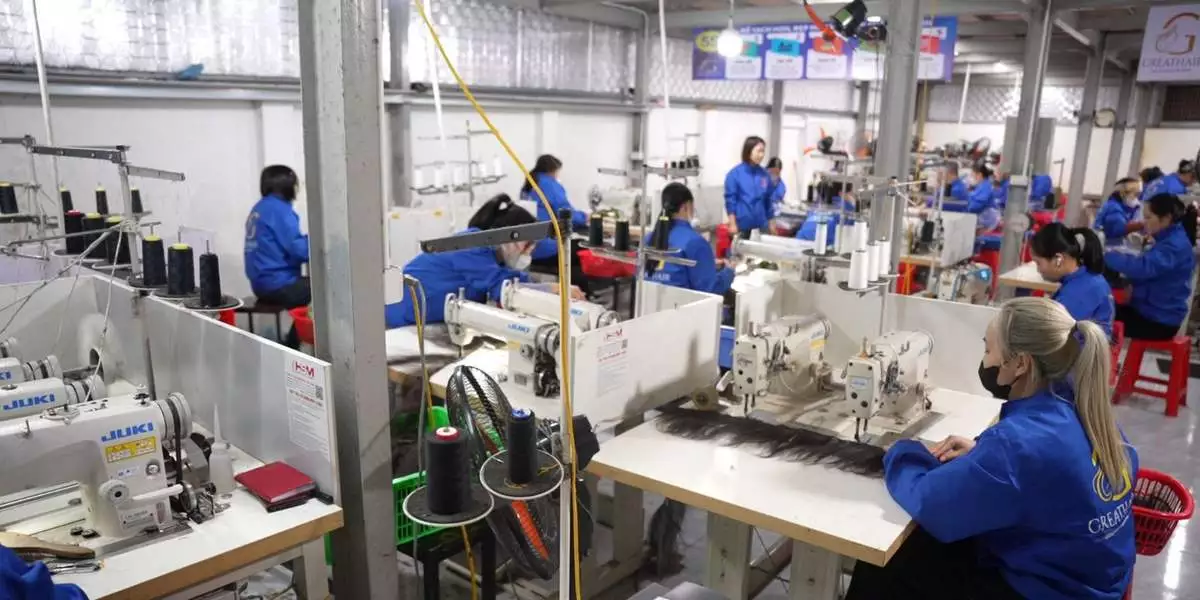
Start with the basics: website quality, realistic product photography, verified business details, reviews, and social proof that feels real rather than copied. Then move to higher-trust checks: ask for a video call, ask to see the factory or warehouse, request a live texture demo, and ask for a sample before placing a larger order. Current supplier guides repeatedly emphasize source verification, samples, MOQ clarity, pricing transparency, and factory checks for a reason.
You should also ask about MOQ, pricing structure, shipping method, payment terms, return policy, and production timeline. If a seller gets vague the moment you ask operational questions, that tells you a lot. Clear answers usually signal a business that is used to real buyers, not just impulse orders from the internet.
If you want Vietnamese Hair that feels soft, looks naturally polished, and stays easy to manage over time, you can explore Greathair’s Vietnamese hair collections here.
Best Vietnamese Hairstyles for Extensions and Wigs
One reason Vietnamese Hair works so well is that it moves easily between understated and statement-making. It can look sleek and office-polished one day, then soft-glam and fuller the next. The right hairstyle still depends on your texture, length, and face shape, but Vietnamese Hair generally gives you a lot of room to play.
A sleek straight look works especially well because the natural smoothness gives the hair that elongated, glossy silhouette without making it feel stiff. Body wave is great when you want movement without going overly dramatic. Loose wave creates a softer, more romantic finish that works beautifully for wigs, bundles, and event styling. Curly styles can look stunning too, especially when the curls are shaped well and kept moisturized. Layered cuts help long hair feel lighter and more face-framing, while ponytails and buns tend to look extra polished when the hair surface stays smooth.
13 Expert Tips to Maintain Vietnamese Hair Quality
Even the best Vietnamese Hair will not stay soft, smooth, and wearable if the routine is too aggressive. Dermatology guidance is very clear on the basics: too much friction, too much heat, skipping conditioner, and rough handling can all contribute to dryness and damage. Good maintenance is not complicated, but it does need to be consistent.
Use a gentle, sulfate-free shampoo whenever possible. Harsh cleansing can leave the hair feeling dry faster.
Do not overwash. Human hair usually performs better when you wash based on buildup, not habit.
Always use conditioner after shampoo. The AAD specifically recommends conditioner after every wash.
Deep condition regularly, especially if the hair has been colored or heat-styled.
Use heat protectant before styling.
Keep heat moderate and lower when possible. The AAD advises using the lowest heat setting and using hot tools less often.
Detangle from the ends upward instead of dragging a brush from root to tip.
Store the hair properly when not in use so it does not tangle against itself.
Do not sleep with the hair wet. Wet hair is more fragile and more prone to breakage when handled.
Avoid formulas with a lot of drying alcohol if the hair already feels thirsty.
Be extra gentle with Vietnamese Curly Hair. Curly textures usually need less brushing and more careful finger detangling.
After bleaching or dyeing, increase moisture support. The AAD notes that coloring and lightening can make hair dry and brittle.
Buy from a trustworthy vendor or factory in the first place. Good maintenance cannot fully rescue low-quality hair.
These habits are not flashy, but they are the difference between hair that still looks polished weeks later and hair that starts looking tired far too soon.
Is Vietnamese Hair good? Yes, high-quality Vietnamese Hair is widely valued for its natural look, strength, and styling flexibility. The key is making sure the hair is genuinely human hair with clear origin and quality transparency.
Is Raw Vietnamese Hair worth the money? Usually yes, if you want better longevity, a more natural finish, and more room to customize the hair. It tends to make the most sense for premium wigs, premium bundles, color work, and long-term wear rather than one-time styling.
How long do Vietnamese Hair Extensions last? It depends on whether the hair is raw or heavily processed, how often it is heat-styled, and how well it is maintained. In general, better-quality human hair lasts longer and stays looking better than heavily processed or synthetic alternatives, especially when handled gently.
Can Vietnamese Hair Bundles be dyed and curled? Yes, good-quality human hair bundles can usually be dyed and heat-styled. But every chemical or heat process adds stress, so the healthier and less processed the hair is to begin with, the better the result is likely to be.
Should I buy from Vietnamese Hair Vendors or a Vietnam Hair Factory? That depends on your needs. Vendors can be more convenient for smaller or easier orders, while factories may offer better customization and more direct production visibility. The real priority is transparency, sample quality, and consistency.
Is Vietnamese Curly Hair naturally curly? Sometimes, but not always. In the market, Vietnamese Curly Hair can mean naturally curly donor hair or Vietnamese hair that has been textured into a curly pattern. Ask the supplier directly how the curl was created and how well it holds after washing.
Conclusion
Vietnamese Hair stays popular for a reason. It gives you a beautiful mix of strength, softness, natural shine, and styling range, but the best choice depends on the details. Once you understand the difference between raw, virgin, Remy, non-Remy, single-drawn, double-drawn, and texture options, buying Vietnamese Hair becomes much less confusing and much more intentional.
Rate this post
Alice Bonita
Hair Extensions Specialist | 15+ Years Experience
Alice Bonita is a hair extensions specialist with more than five years of experience in Vietnamese human hair sourcing, quality inspection and product selection for salons and wholesale buyers.