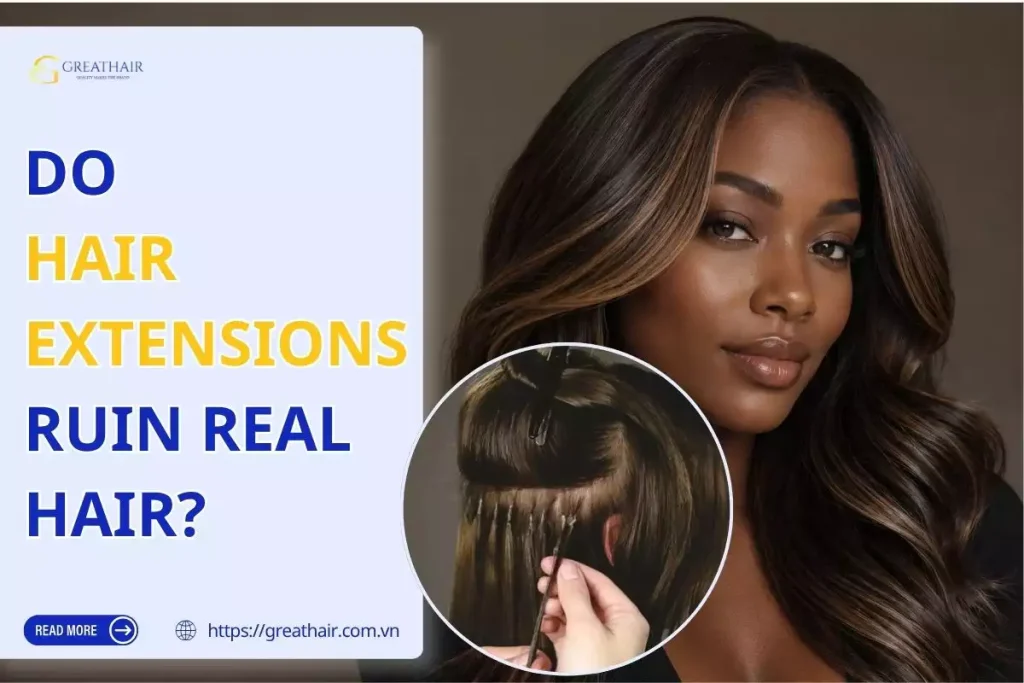
Do hair extensions ruin real hair? No, not automatically. Damage usually happens when the set is too tight or heavy, the method does not suit the natural hair, maintenance is delayed, or removal is rushed. Those mistakes can cause breakage and, in serious cases, traction alopecia from repeated pulling. A well-fitted, professionally installed set can be worn without sacrificing healthy hair, but no method is risk-free. Beauty should never require ongoing pain.
What Actually Makes Hair Extensions Damage Real Hair?
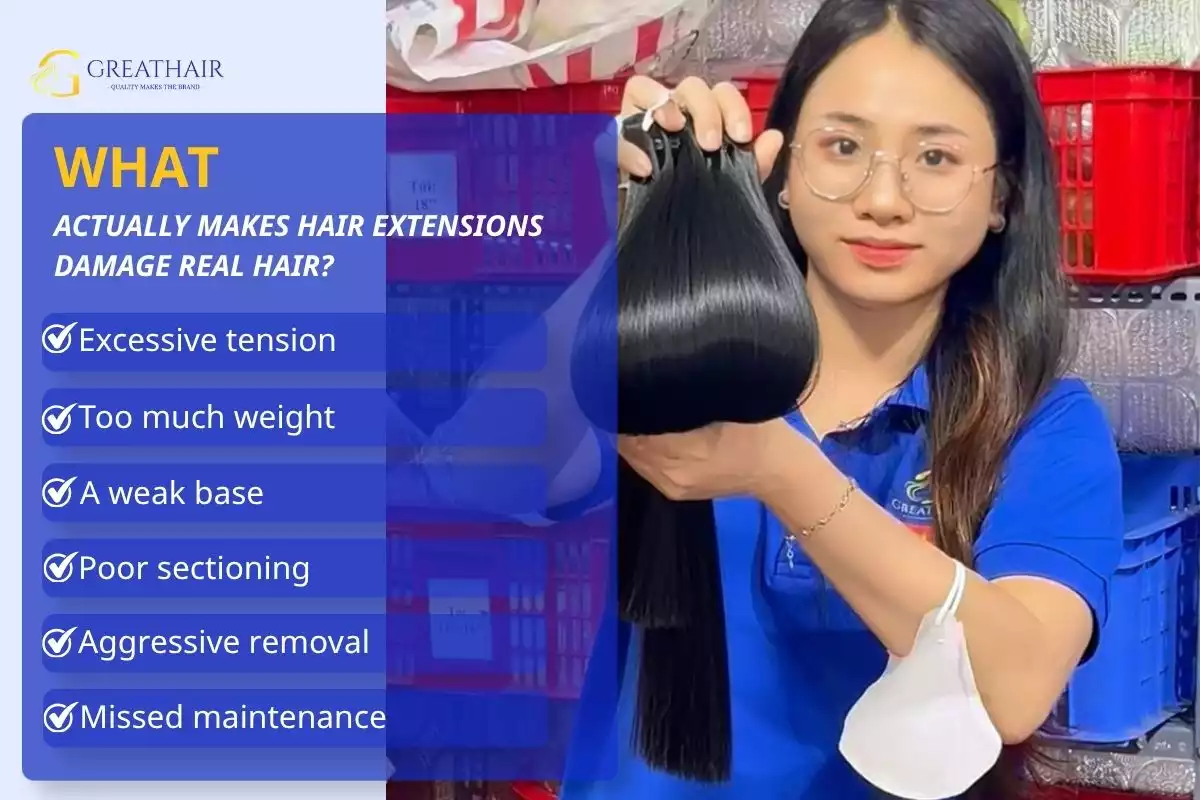
Hair extensions cause damage when natural strands carry more force than they can safely support. Weight, placement, wear time, detangling and removal all influence the result. Fine edges, relaxed hair, active shedding and an irritated scalp leave less room for error. Even premium hair cannot compensate for a tight installation. Most damage is cumulative, not the result of one normal appointment.
The main causes are easy to identify:
- Excessive tension continuously pulls at the root.
- Too much weight overloads small sections, especially at the temples and nape.
- A weak base makes relaxed, bleached, heat-damaged or thinning hair more vulnerable.
- Poor sectioning puts too much extension hair on too few natural strands.
- Aggressive removal snaps hair through pulling, scraping or insufficient remover.
- Missed maintenance lets matting and grown-out attachments tug at the roots.
Why Do Black Women Need to Be Especially Careful?
Black women can wear extensions successfully, but textured hair deserves a tension-first plan. Curved shafts have natural points of weakness, and risk rises when tight braids, added weight, relaxers and heat are combined. A clinical review reported traction alopecia in roughly one-third of women of African descent within studied high-risk populations, although prevalence varies by styling practice. The real issue is repeated stress on hair that may already be weakened. “Protective style” should describe the result, not merely the hairstyle name.
The American Academy of Dermatology lists extensions and weaves, especially over relaxed hair, among styles that may cause traction alopecia when too tight. A consultation should check:
- Hairline and temple density
- Recent relaxer, bleach or color history
- Existing breakage or active shedding
- Scalp soreness or inflammation
- Previous reactions to braids, glue or extensions
Which Hair Extension Method Is Least Damaging?
There is no universally safest extension method. The least damaging choice fits the client’s density, lifestyle and scalp condition, without excessive tension. Removable systems reduce continuous stress but can still break hair when repeatedly clipped in one spot. Semi-permanent methods distribute weight differently, so technique matters as much as product type. Compare the different types of hair extensions before choosing.
| Extension method | Typical tension profile | Main risk to real hair | Better-use condition |
|---|---|---|---|
| Halo | No bonded root attachment | Pressure from a tight wire | Occasional wear |
| Clip-in | Temporary and localized | Reusing one spot or sleeping in it | Rotate and remove nightly |
| Tape-in | Weight across flat panels | Overloading or rough removal | Correctly sized panels and move-ups |
| Sew-in or weft | Load on a braided base | Tight braids, heavy wefts or long wear | Loose foundation and controlled weight |
| K-tip or micro-link | Individual sections | Oversized bonds | Precise strand matching |
| Glue-in weft | Concentrated bond | Breakage, irritation and traction | Avoid on fragile or thinning areas |
How Can You Tell If Extensions Are Ruining Your Hair?
Pain, burning or a headache after installation is a warning, not proof that the style is “secure.” Damage often begins before a bald patch appears. Early traction may cause redness, bumps, tenderness or short broken hairs. Continued pulling can thin the hairline and eventually leave smooth, shiny scarred areas. The sooner tension stops, the better the chance of recovery.
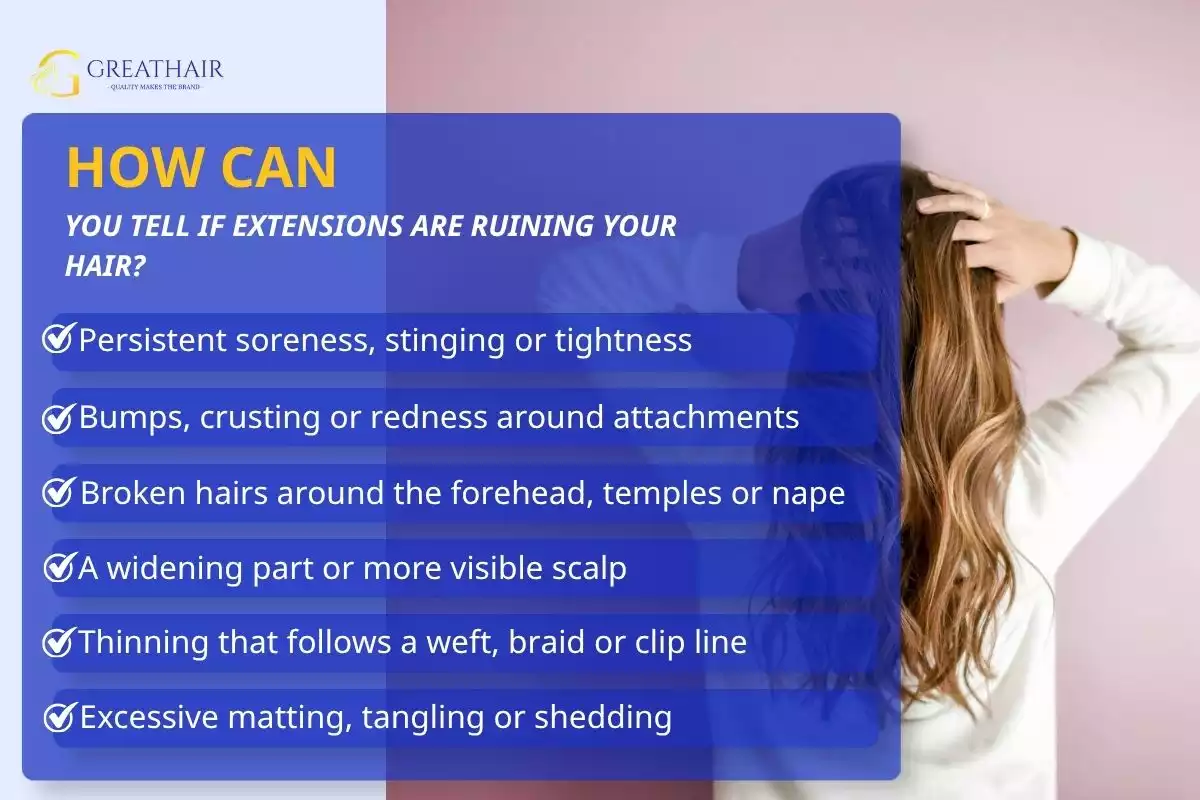
Remove or loosen the style and seek qualified advice if you notice:
- Persistent soreness, stinging or tightness
- Bumps, crusting or redness around attachments
- Broken hairs around the forehead, temples or nape
- A widening part or more visible scalp
- Thinning that follows a weft, braid or clip line
- Excessive matting, tangling or shedding
Patchy loss, inflammation or a shiny area should be assessed by a dermatologist because extensions are not the only possible cause of hair loss.
Can Real Hair Recover After Extension Damage?
Yes, early breakage and early traction alopecia may improve once pulling stops, but long-standing scarring can be permanent. The British Association of Dermatologists explains that early tension-related loss may recover while prolonged pulling can destroy follicles. Regrowth is not instant. Someone still losing hair after removal should not simply try another method. Get a diagnosis before the next installation.
A published case study makes the risk visible. Dermatologists Jennifer Ahdout and Paradi Mirmirani documented two patients whose repeated glued-in wefts produced horseshoe-shaped traction alopecia. Hair loss followed the attachment area, showing that repeated concentrated load can leave a recognizable pattern. This does not mean every weft causes loss; it shows why placement, tension and repeat use matter.
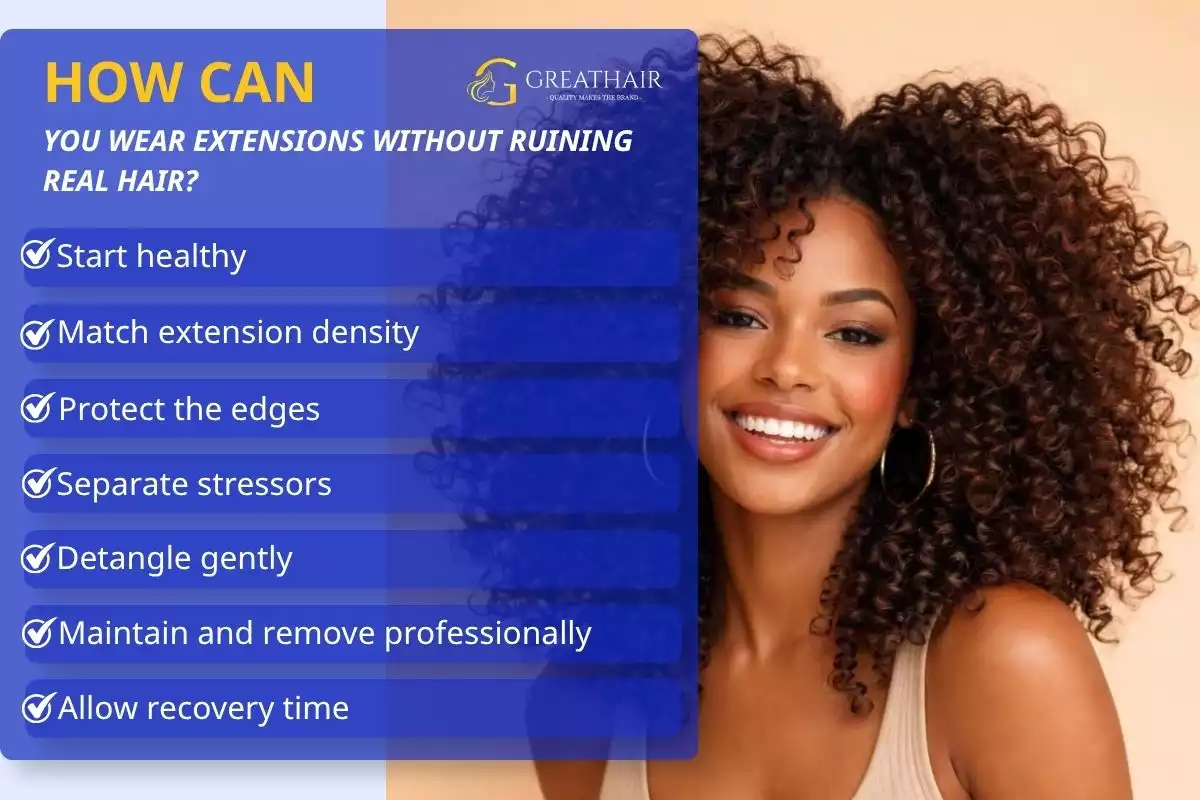
How Can You Wear Extensions Without Ruining Real Hair?
Lower-risk wear starts before installation and continues through removal. A stylist should assess the natural hair, choose a realistic length and use only the weight the base can carry comfortably. There is no evidence-based universal gram limit, so one weight cannot fit every head. Set maintenance dates at installation, not after matting appears. Adjust the set immediately if it hurts.
Use this practical checklist:
- Start healthy and postpone installation during active shedding or scalp inflammation.
- Match extension density to the natural hair instead of maximizing fullness.
- Protect the edges with less weight and fewer hairline attachments.
- Separate stressors rather than relaxing, bleaching and tightly installing together.
- Detangle gently while supporting the attachment.
- Maintain and remove professionally on the set schedule.
- Reduce friction with a loose braid and satin or silk; see how to sleep with hair extensions.
- Allow recovery time when sensitivity or breakage appears.
With over 18 years of experience working with Greathair hair extensions advises removing weaves or extensions after eight weeks. That checkpoint never overrides earlier pain or a method-specific schedule.
What Does Hair Quality Change From an Industry View?
Better extension hair cannot eliminate traction, but it can reduce tangling, repeated detangling and excess heat styling. From years of working in Vietnamese hair manufacturing, we at GreatHair have found that poor hair consistency and poor fitting often create problems together. Cuticle direction, bundle weight, weft construction and processing affect behavior after washing. Hair that mats quickly invites aggressive handling and more pulling. Salons and brands therefore need both product control and installer education.
B2B buyers should test more than softness on day one:
- Wash and air-dry samples before approving bulk production.
- Check weft shedding and nape tangling.
- Verify bundle weight and root-to-tip fullness.
- Compare texture across several pieces.
- Confirm whether hair is Remy, virgin or raw; this Remy hair guide explains the differences.
Where To Buy Quality Vietnamese Hair?
Wholesale buyers need a supplier that matches product construction to how salons install and maintain extensions. GreatHair serves businesses requiring consistent textures, lengths, colors and formats, not one-off retail orders. Review the Vietnamese hair extension production process and our guide to choosing a wholesale hair extensions supplier. Before a bulk order, confirm samples, weight, draw ratio, processing, attachment specifications, lead time and quality-control terms.
Salon owners, hair brands and distributors can contact GreatHair for wholesale recommendations based on their target market. Good supply helps clients achieve beautiful installs without asking fragile natural hair to carry too much.
Frequently Asked Questions
Do hair extensions cause permanent hair loss?
Yes, if repeated tension causes scarring traction alopecia. Early removal of the pulling source may prevent permanent loss.
Do hair extensions stop natural hair from growing?
No. Breakage or follicle damage can simply make growth harder to see.
Are sew-ins bad for Black hair?
Not automatically. The risks are tight cornrows, heavy wefts, long wear and a fragile base.
What is the safest extension method for thin hair?
Usually a light removable option or customized low-density system, after ruling out shedding or scalp disease.
Should new extensions hurt?
No. Persistent pain, burning, bumps or headaches require immediate adjustment.
The Honest Answer
Hair extensions do not have to ruin real hair. Results depend on the load, wear time and response to warning signs. Match the method to actual density, insist on pain-free installation, maintain it on schedule and never trade healthy edges for extra volume. Responsible technique and consistent extension hair belong together.