
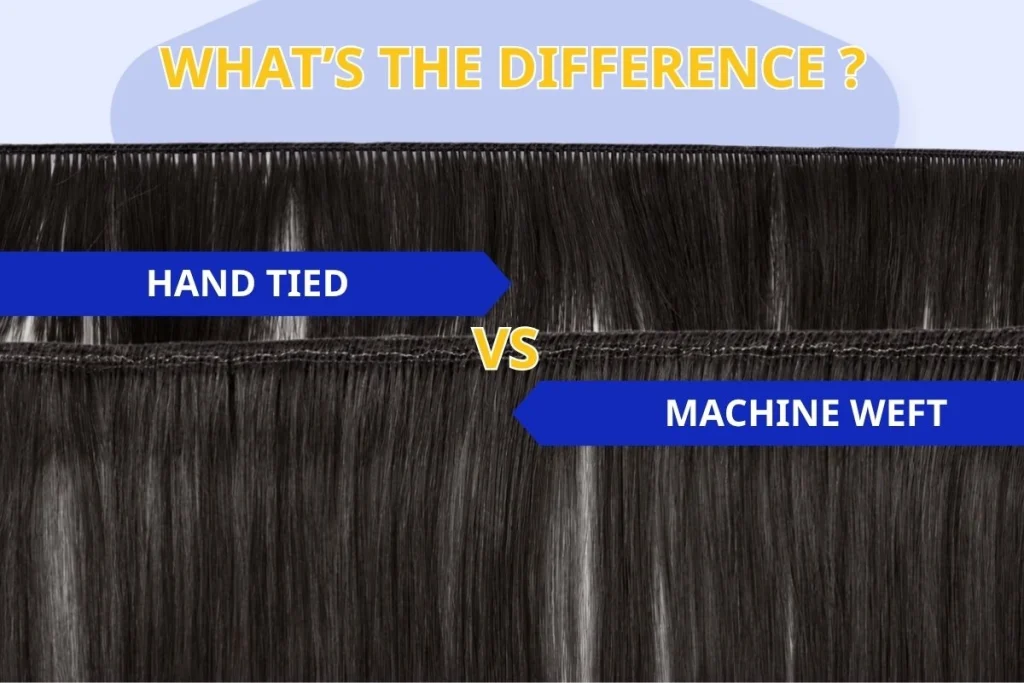
Hand tied and machine wefts differ mainly in how hair is secured to the top seam. A traditional hand-tied weft has a narrow, flexible seam tied by hand and often sits flatter; a machine weft is stitched into a more substantial track that can feel sturdier and fuller. Neither is automatically better. Choose by seam profile, desired hair amount, placement and cut rules.
“Hand-tied” and “machine” describe construction; “sew-in” or “beaded row” describes attachment. Either type may work with a compatible method. See our guide to weft hair extensions for the wider category.
What makes a hand-tied weft different
A hand-tied weft secures hair to a fine thread seam by hand. It usually creates a slim, flexible edge that can sit close to the head. The low profile can help when a thicker seam would be difficult to conceal, though the result still depends on coverage, color blending and installation.
The fine seam needs careful handling. Traditional hand-tied wefts are often supplied in set sections because cutting the tied edge can loosen knots and cause shedding. Some products have an approved way to secure a cut edge, but that does not make every hand-tied weft freely cuttable. Confirm the instructions before trimming or folding a weft to fit.
What makes a machine weft different
A machine weft stitches hair into a continuous track. The seam is often thicker and more structured than a traditional hand-tied edge, which can make it easier to handle and adjust for a row. Many machine wefts can be cut to fit, but the ends may need to be sealed or finished as the maker instructs.
The track can support a fuller-looking row, but may add bulk if there is little natural hair to cover it or if it is stacked at a tight corner. A machine weft is not automatically heavy or visible; weight, width, hair amount and installation tension matter. Check the sample, not just the label.
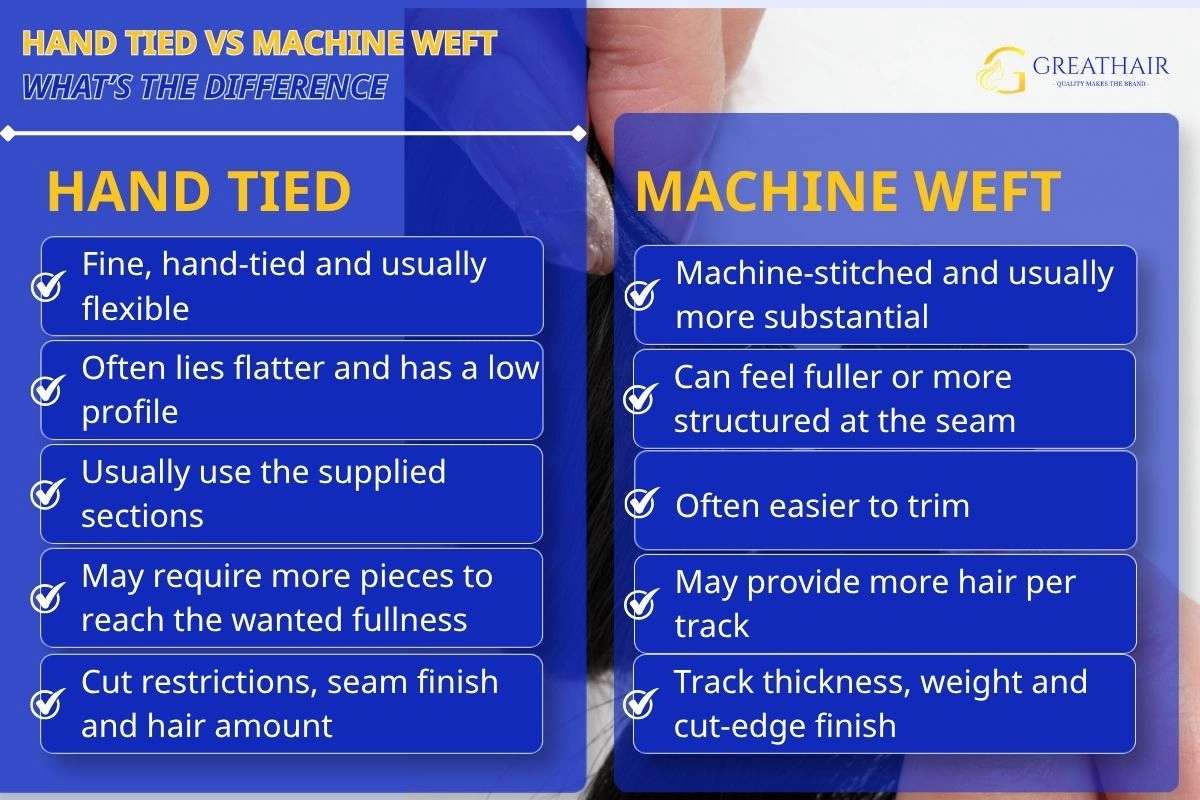
| Feature | Traditional hand-tied weft | Machine weft |
|---|---|---|
| Top seam | Fine, hand-tied and usually flexible | Machine-stitched and usually more substantial |
| How it sits | Often lies flatter and has a low profile | Can feel fuller or more structured at the seam |
| Adjusting width | Usually use the supplied sections; cut only if the maker approves a securing method | Often easier to trim, but confirm how to finish the cut edge |
| Planning a full look | May require more pieces to reach the wanted fullness | May provide more hair per track, depending on weight and specifications |
| Main check before choosing | Cut restrictions, seam finish and hair amount | Track thickness, weight and cut-edge finish |
These are common construction patterns, not universal measurements. Different factories can make wefts under the same label with different weights, widths and seam finishes.
Which one looks more natural and feels more comfortable
Hand-tied wefts are often chosen for a flatter, more discreet seam. Machine wefts can suit a more substantial row or a stylist who needs to customize width. Neither guarantees a natural blend: poor placement, too little coverage, a color mismatch or excess weight can make either type show.
For fine or low-density hair, a slimmer hand-tied edge may be easier to hide, but the stylist must still check the planned weight and coverage. Denser hair may conceal a thicker machine track more easily. In either case, too much hair or tension can create bulk or pulling.
Hair density and seam construction are separate decisions. A thicker machine seam does not prove the ends are full, and a slim hand-tied seam does not mean the product contains less hair. Compare weight, length and drawn grade, then inspect the hair distribution toward the ends. Those details affect finished fullness more than the label alone.
What the difference means for installation
Weft type affects row planning, but does not dictate one universal installation method. Both types can be used in sew-in or beaded-row work when the product and technique are compatible. Sectioning, tension and stitching help determine whether a row feels secure and lies smoothly.
A stylist demonstration in the material reviewed used machine wefts on a lower row for fullness, then hand-tied wefts higher on the head where a thinner seam sat flatter around the curve. The same beaded-row sewing approach was used for both. This is not a formula for every head; it shows that construction and placement can solve different needs in one install.
Discomfort or visible tracks are not unavoidable features of either type. Rows that are too tight, too heavy or placed without enough cover can pull or show through. A stylist should assess the hair and follow the maker’s care and cut instructions.
How to compare weft quality beyond the label
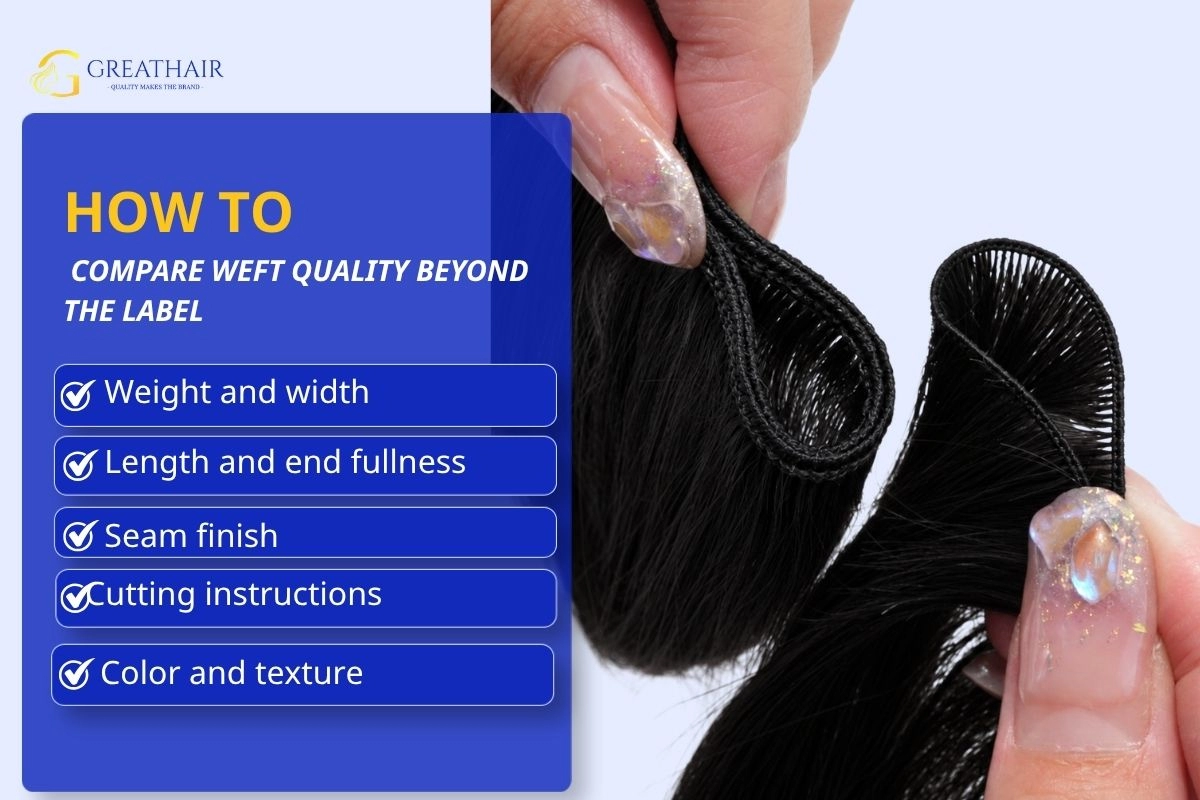
“Hand-tied” and “machine weft” describe the seam, not the hair source, grams per bundle, finished length, end fullness or workmanship standard. Compare the same specifications from each supplier and inspect a sample in the format you plan to wear or sell.
Before choosing, check these points:
- Weight and width: Compare grams and track length, not piece count. A thin hand-tied piece and a broad machine track may contain very different amounts of hair.
- Length and end fullness: Ask how length is measured and whether the ends match the look you want. Drawn grade and hair distribution affect fullness separately from seam type.
- Seam finish: Look for an even top edge and clean corners. Handle the sample gently to spot loose strands, but use the supplier’s stated tolerance rather than treating one check as proof of quality.
- Cutting instructions: Ask whether the specific weft can be cut, where it may be cut and how the edge should be secured. Get the answer in writing before installation or production.
- Color and texture: Check the sample in natural light and compare it with the wearer’s hair or the target collection. A well-made seam cannot compensate for a mismatch in shade or pattern.
In GreatHair’s manufacturing work since 2008, we have learned to look beyond the label. Buyers who compare wefts without matching weight, length, grade, color and width can get contradictory impressions of products that each meet their own specifications. A clear sample brief helps predict how the hair will sit, how full it will look and whether it suits the intended install.
Construction can also affect price because hand-tied work involves more manual production. The final quote still depends on hair grade, length, weight, color, texture and order quantity, so compare like-for-like products. Our hair extension price guide explains why construction is only one part of the cost.
Where to Buy Quality Vietnamese Hair
For quality Vietnamese hair, start with a supplier that can state the weft construction and confirm the weight, length, grade, color and cut protocol for the product you are evaluating. GreatHair manufactures Vietnamese human-hair extensions for salons, hair shops, resellers and private-label businesses, with a factory in Ninh Binh. Explore our weft hair extensions and request a wholesale quote that matches the specifications you need to source.
Frequently Asked Questions
Is hand tied better than machine weft
Neither is best for every wearer. Hand-tied is often slimmer and flatter; machine weft is often more substantial and easier to adjust. Choose by the planned style, coverage, weight and cut instructions.
Can you cut hand-tied wefts
Do not cut a traditional hand-tied seam unless its manufacturer gives an approved method for securing the cut edge. Some designs differ, so confirm the exact product instructions first.
Do machine wefts look bulky
They can add more bulk at the seam than a slim hand-tied weft, but placement and natural hair coverage matter just as much. Ask to see the track and judge it on the intended head or install plan.
Which type lasts longer
The construction label alone does not determine lifespan. Hair quality, seam workmanship, installation, maintenance and repeated wear all affect how long an extension remains usable.
Can both types be sewn in
Many hand-tied and machine wefts are used in sew-in or beaded-row installations. The stylist should confirm that the specific product is compatible with the chosen method and follow its installation guidance.