



There are no products in the cart
Mar 20, 2026
Post by Alice Bonita
Not all premium extensions are defined by styling alone. In many cases, the real difference comes from where the hair is sourced and how carefully it is selected. Raw Filipino Hair is sought after for its strength, natural movement, and long-lasting quality, making the vendor behind it an important part of the buying decision. In this guide, we review trusted raw Filipino hair vendors and share the most important factors to consider when choosing a source that delivers both quality and confidence.
Raw Filipino Hair Vendors 2026
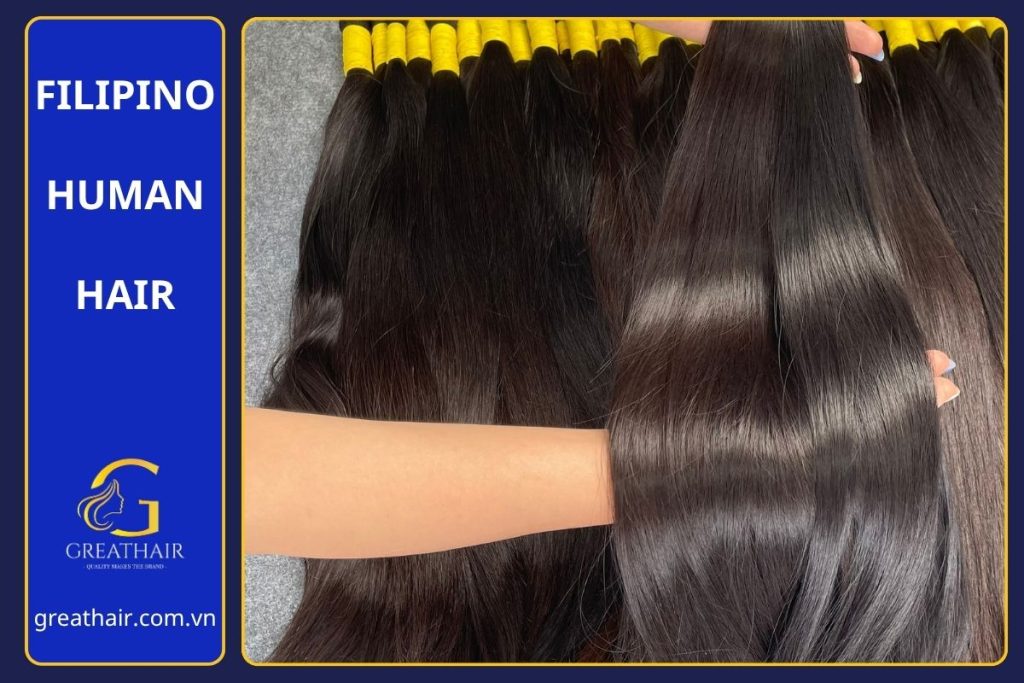
Raw Filipino Hair remains sought after because buyers associate it with natural texture, intact cuticles, styling flexibility, and a look that feels less overly processed. Madali positions its hair as 100% real Filipino human hair in textures from straight to kinky and lengths from 10 to 30 inches, while Natural Virgin Hair describes Filipino hair as medium-to-low luster with strong bounce and texture options such as straight, wavy, body wave, and deep wave. Together, those public descriptions show why Filipino hair keeps attracting both stylists and first-time extension shoppers.
Another reason is blend potential. Filipino hair is often chosen by shoppers who do not want hair that looks too glassy, too flat, or too manufactured. The texture diversity highlighted by Vogue Philippines supports that buyer perception: Filipino hair can naturally lean wavy, curly, or coily, which makes it appealing for fuller installs and more textured finished looks.
| Vendor | Best for | Key strength |
|---|---|---|
| Madali Hair | Retail buyers, first-time buyers | Easy-to-browse store, clear Filipino-origin positioning, wigs and bundles available |
| La Filipina Hair | Wholesale buyers, salon owners, private label brands | Factory-style presentation, export focus, larger-scale production |
| Isla Morena Hair | Buyers exploring more Philippines-based options | Visible product catalog, brand presence, multiple hair categories |
| Merula Hair | Buyers comparing textures | Wide range of raw Filipino hair textures and bundle options |
| Natural Virgin Hair | Buyers doing raw hair comparison | Dedicated Filipino hair category with multiple texture options |
| Filipino Hair Extensions | Buyers who want product-level detail | Straightforward listings, different weft options, more texture transparency |
| GreatHair |
Wholesale buyers, salon owners, private label brands | Factory-direct Vietnamese supplier with OEM/ODM, wholesale support, and a broad extension range |
Madali Hair feels like one of the clearest entry points for retail buyers who want Filipino-origin hair without digging through a confusing factory catalog. The brand presents itself as a Filipino hair extension specialist, says its hair is sourced directly from the Philippines, and offers wefts, wigs, closures, and frontals. Its site also gives buyers a smoother retail experience than many smaller sellers, with visible product ranges, shipping support, and return language that makes the brand feel easier to test for a first order.
What makes Madali especially useful for a shortlist is that the product pages are specific enough to help buyers understand texture positioning. The brand sells straight, curl, and kinky options, describes its hair as unprocessed Filipino human hair, and repeatedly emphasizes natural body and movement rather than only pushing generic “luxury hair” language. For a buyer who wants a brand-led experience rather than a pure factory transaction, Madali looks like a strong first stop.
La Filipina Hair reads more like a factory partner than a polished lifestyle brand, and that is exactly why it deserves attention. Its website says the company is a Filipino-owned factory based in the Philippines, with a production facility of 2,000 square meters, 200 to 300 workers, and annual production capacity of 4,000 kilograms. It also publishes direct contact details and presents itself as a producer and exporter rather than only a reseller.
For serious buyers, the most valuable part is that La Filipina shares more operational detail than many competitors. The site describes hair sourcing in the Philippines, a cuticle-preserving collection approach, and even notes drop-shipment support and production services for clients with their own hair supply. That makes La Filipina a more compelling option for wholesalers, boutique brands, and buyers who care about factory-side capability instead of just front-end marketing.
Isla Morena is worth including because it has a live brand site with product pages, review pages, and a downloadable company-profile page, which gives buyers at least some visible proof that the business is operating as more than a social-media-only seller. Public pages show machine-weft and double-drawn hair offerings, customer review content, and a company profile download area.
That said, Isla Morena is the kind of vendor you should approach with sharper follow-up questions. Compared with La Filipina, the public-facing site gives less sourcing depth and fewer factory details upfront. So the opportunity here is not blind trust; it is potential. Isla Morena looks like a workable lead for buyers who want another Philippines-linked option on their list, but it should be treated as a “verify carefully” vendor before a large order.
Merula Hair stands out for breadth. Its Raw Filipino Hair category currently shows a wide mix of straight, body wave, loose wave, and curly options, and several listings mention one-donor raw human hair, cuticle-aligned hair, or smaller test-style orders. That makes Merula useful for buyers who are still comparing textures and do not want to commit to one pattern too early.
In practical terms, Merula looks strongest for buyers who shop by texture first. If your priority is sampling different Filipino-inspired patterns, comparing price points, or testing how a vendor handles small and mid-sized orders, Merula gives you more variation on the product side than some of the more tightly branded sellers. It is less emotionally branded than Madali, but more flexible for comparison shopping.
Natural Virgin Hair is useful because it keeps Filipino hair visible as a dedicated category rather than burying it inside a giant mixed-origin catalog. Its site presents Filipino-specific pages, describes Filipino hair as 100% unprocessed, and positions it around body, bounce, curl hold, and multiple texture options. It also keeps Filipino raw hair within a broader multi-origin catalog, which can help buyers compare Filipino hair against other hair types in one place.
The reason this vendor belongs on a practical shortlist, not at the very top of a prestige list, is that the site feels older and more marketing-heavy than some newer stores. Still, the Filipino pages are detailed enough to help a buyer understand how the brand wants the hair to be perceived: fuller, bouncier, and suitable for straight, wavy, body wave, deep wave, and custom curly demand. For research and texture comparison, it remains a useful reference point.
Filipino Hair Extensions is one of the most practical storefronts on this list because the product pages are unusually direct. The site separates machine wefts, hand-tied wefts, closures, and curly patterns, and it gives buyers concrete notes about texture options, lengths, and styling differences. That matters because a lot of hair sites stay vague once you leave the homepage.
What makes this vendor especially interesting is the disclosure around texture creation. Its curly page says the curls are steam processed from virgin Filipino hair, which is actually helpful information for serious buyers. Instead of pretending every curl pattern is purely donor-born, the listing tells you how the final look is achieved. For a buyer trying to separate raw texture from styled texture, that kind of honesty is useful.
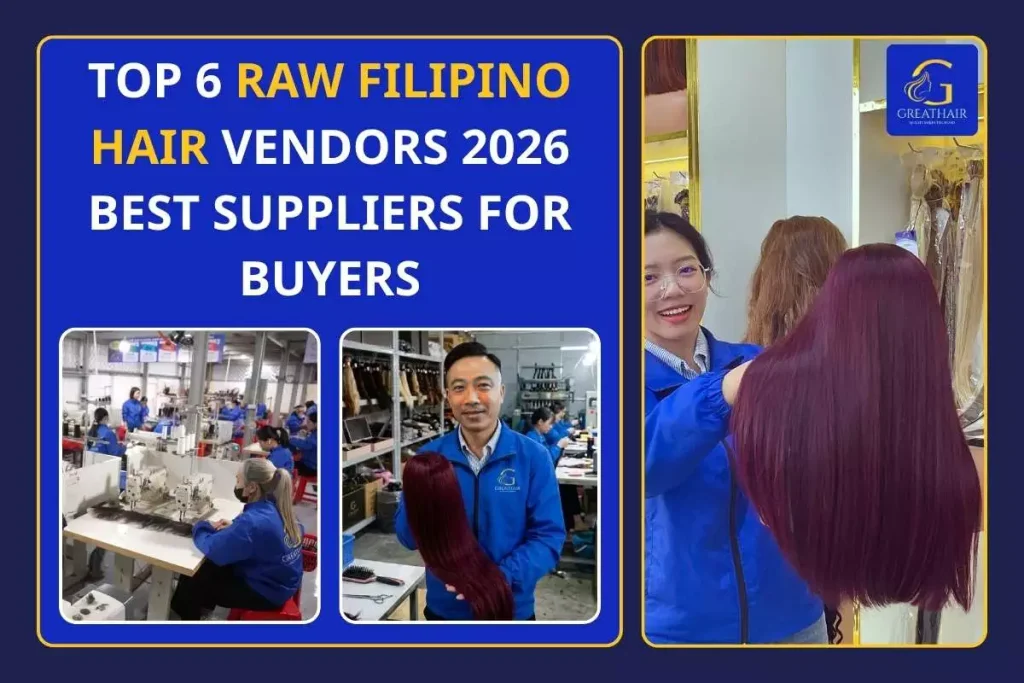
GREATHAIR is technically a Vietnamese factory. It is a Vietnamese factory-direct supplier. It belongs on this list because many buyers searching for Raw Filipino Hair are actually deciding between Filipino texture appeal and Vietnamese supply consistency, and GREATHAIR is one of the clearer Vietnamese alternatives in that comparison. Its official pages describe the company as a factory-direct Vietnamese hair supplier offering premium hair extensions, wigs, and raw hair products, with OEM/ODM services, direct donor sourcing, and global distribution.
For commercial buyers, GREATHAIR’s value is straightforward. The brand emphasizes direct factory control, customization, bulk ordering, quality control, and wholesale logistics. It also publishes a sourcing checklist that recommends sample testing, wash testing, color testing, and shedding checks before scaling an order. If your priority is repeatable wholesale production rather than the specific identity of Filipino-origin hair, GREATHAIR may be the more practical decision.
Raw Filipino Hair is often chosen for textured volume, curl-friendly installs, and more natural blending, while Vietnamese hair is often preferred for sleek, straight looks and easier low-maintenance styling.
Still, the biggest quality factor is not the country label alone. What matters more is whether the hair is truly raw, minimally processed, and cuticle-aligned to help reduce tangling and improve longevity.
Because hair terms are not always standardized and supply chains can be difficult to verify, buyers should check processing claims carefully, order samples first, and prioritize vendors with clear sourcing and transparent policies.
With proper aftercare especially gentle wash routines both Filipino hair and Vietnamese hair can perform beautifully and last much longer.
Answer-first: The safest way to buy Raw Filipino Hair is to verify provenance (where it came from), processing (what was done to it), and consistency (whether future orders match your sample).
Ask questions that force specific answers
A strong vendor can usually explain collection method, cuticle handling, and what “minimal processing” includes (for example washed/sorted/wefted vs silicone coated/acid-washed/steam textured). If answers are vague (“premium Asian hair,” “12A only,” “never tangles”), treat that as a risk signal.
Use a sample test that matches real life
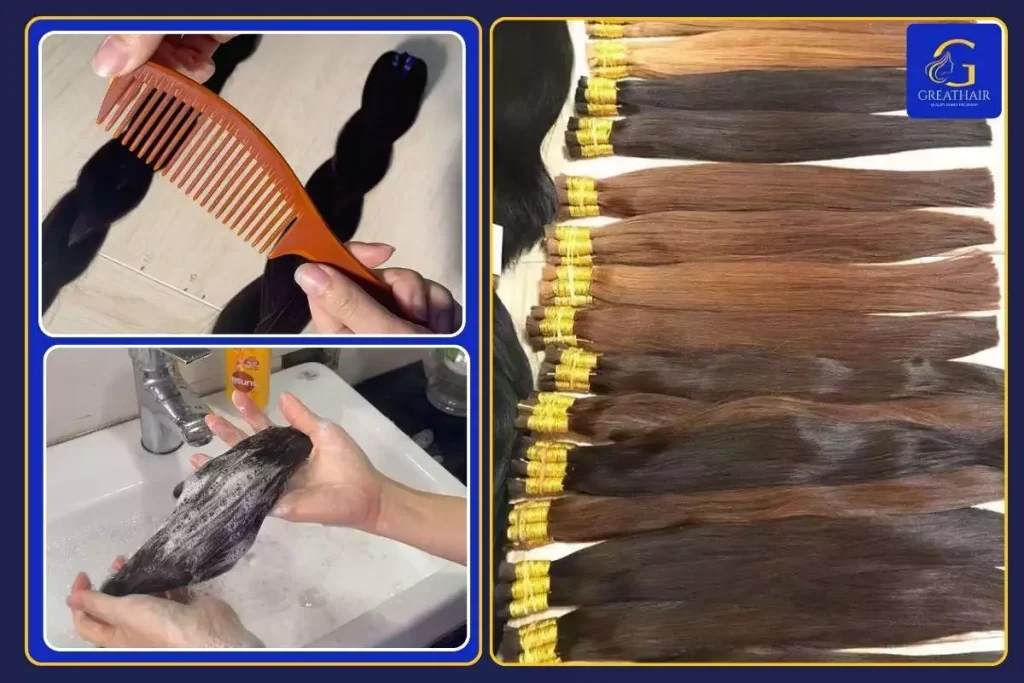
A practical test is simple: wash, condition, air-dry, then lightly wear/style. Many “too perfect” bundles look amazing out of the package, but only authentic, well-prepared hair stays manageable after the first wash cycle.
Look for natural variation, not artificial uniformity
Cuticle-respecting hair often shows small, believable variation in tone and texture. Extremely uniform “jet black” shine can be a sign of dye or coating used to standardize appearance.
Don’t ignore ethics and traceability
Investigations into the human hair trade have documented that hair can come from multiple sources temple donations, individual sellers, and even “waste hair” that is heavily processed making transparency hard but extremely important.
On the brand side, industry reporting describes how some extension groups pursue traceability through audits, supplier codes of conduct, and compliance training—an approach that signals where the industry is moving, even if standards are not universal yet.
Practical takeaway
If you’re buying for yourself: prioritize return policy + sample-buy options before spending on multiple bundles. If you’re buying to resell: prioritize repeatability (batch consistency), documented sourcing, and a supplier who can support reorders without “good hair once, different hair later.”
Answer-first: Extensions don’t get natural scalp oils, so maintenance is mostly about gentle handling + moisture + low friction.
Wash days:
Hair can experience higher friction when wet, so detangle gently (from ends upward), use conditioner for slip, and avoid aggressive rubbing.
Night routine:
Reducing friction while sleeping helps preserve texture. A stylist quoted by Vogue recommended satin bonnets/scarves or satin pillowcases to reduce friction extensions benefit from the same logic.
If hair suddenly tangles after a few washes:
Consider the possibility of silicone-coated or heavily processed hair. Several hair extension educators and brands describe how silicone coatings can feel amazing initially but wash out, leaving hair rough and prone to tangling.
What is Raw Filipino Hair (and is it different from virgin hair)?
“Raw” is generally used for hair that hasn’t been chemically processed or heavily altered, while “virgin” hair is often described as unprocessed but may still be lightly manipulated (for example, some sellers note that “virgin” can be steamed to achieve a pattern). Because labels aren’t standardized, ask what was done to the hair, not just what it’s called.
Is Filipino curly hair always natural?
Not always. Raw hair should reflect donor texture, meaning true curly patterns may be donor-dependent (and can vary). If you see perfectly uniform curls across many bundles, ask whether the curl pattern is natural or created by steaming/setting.
How can I tell if a vendor is selling truly unprocessed hair?
Start with verifiable details: donor sourcing explanation, a clear processing list, and sample testing. After washing, truly unprocessed hair should look like real hair—natural movement, believable shine, and manageable tangling risk consistent with healthy cuticles.
Vietnamese Hair vs Filipino hair: which lasts longer?
Longevity depends more on processing level, cuticle integrity, and aftercare than origin alone. Some vendors state raw hair can last multiple years with proper care, but your best predictor is how the hair behaves after repeated wash-and-wear cycles.
How many bundles do I need for a full sew-in?
Many retailers recommend roughly two bundles for shorter lengths and more bundles as length increases (especially past the mid-back range). Use vendor bundle guidance as a starting point, then adjust for your desired fullness and hairstyle.

We Will Contact You Shortly



Address: 8 Ngo 20/45 D. Phu Minh, Minh Khai, Bac Tu Liem, Ha Noi, Viet Nam
Phone: (+84)813282399

There are no products in the cart