



There are no products in the cart
Jul 30, 2025
Post by Alice Bonita
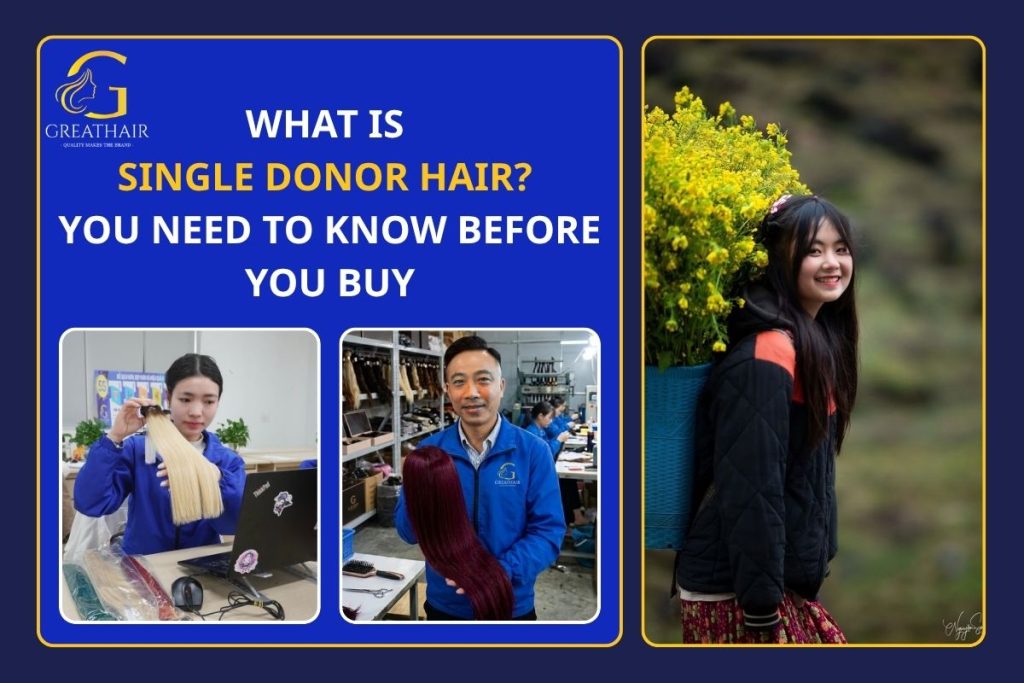
If you have been researching premium hair extensions, you have probably come across the term single donor hair. It often appears beside phrases like raw hair, virgin hair, and cuticle aligned hair, which is exactly why so many people misunderstand it. The most useful way to think about it is simple: single donor hair refers to hair collected from one person rather than blended from multiple sources. The main reason this matters is consistency. When the hair comes from one donor, the texture, natural shade, density pattern, and strand behavior are usually more uniform across the bundle or piece.
But that does not mean “single donor” automatically tells you everything about quality. It does not mean the hair is definitely raw. It does not guarantee the hair is virgin. It does not automatically prove the cuticles are intact and aligned. In other words, single donor hair is a sourcing term first, while raw, virgin, and Remy describe different parts of the hair’s condition or processing history. That distinction matters because many weak articles blur these definitions and leave you paying for language instead of real performance.
Single donor hair meaning
The clearest single donor hair meaning is that all the strands in the final product are intended to come from one source. That usually results in a more coherent look and feel because the hair has not been mixed with strands that behave differently. If you are trying to achieve a natural match or a more predictable finish, that consistency can matter more than many marketing labels.
Why single donor hair is considered premium
Single donor hair is often positioned as premium because it can offer a more unified texture and a more natural overall appearance. When hair is blended from multiple sources, small inconsistencies in strand thickness, movement, tone, and reaction to moisture may become more noticeable over time. Hair from one donor tends to behave more evenly because it shares the same natural origin. That is the real value behind the label when the claim is genuine.
What single donor hair does not guarantee
This is where many articles become misleading. A true single donor claim does not automatically guarantee that the hair is completely unprocessed, chemically untouched, or fully cuticle aligned. Those are separate qualities. High-performing hair often combines several of these features together, but you should not assume one label proves all the others.
Most people search for single donor hair because they want hair that looks more natural, behaves more consistently, and is easier to evaluate over time. In practical terms, consistency matters when you wash the hair, color it, heat-style it, or try to match one piece with another. If the strands all come from one donor, you are less likely to get random shifts in texture or tone within the same product.
Another reason is trust. Many buyers feel more confident paying premium prices when the seller can explain where the hair comes from and how it is handled. In a market where terms are often used loosely, a transparent sourcing story can be just as important as the label itself. That is also why single donor hair reviews should be judged carefully: the best reviews are not the ones that sound excited on day one, but the ones that show how the hair performs after washing, reinstalling, and regular wear. This is an inference grounded in how quality hair is typically evaluated: consistency, cuticle condition, and long-term manageability matter more than first impressions alone.
When it matters
Single donor hair matters most when you care strongly about matching, predictability, and long-term behavior. It can be especially useful when the finished look depends on the hair remaining visually coherent from root area to ends, or when you want a piece that reacts more evenly to styling and maintenance. If you are paying for a higher-end result, consistency is usually one of the first things worth paying for.
When it may not be essential
At the same time, you do not always need single donor hair to get good results. A well-sorted, high-quality cuticle-aligned product can still perform very well even if it is not marketed under that exact label. That is why the smarter question is not simply “Is it single donor?” but “Does it stay smooth, match well, tangle less, and hold up over time?” Real value comes from performance, not terminology alone.
This is the section that matters most if you want to avoid confusion.
Single donor hair vs raw hair
Single donor describes where the hair comes from. Raw hair describes how little it has been processed. Raw hair is generally understood as unprocessed human hair with intact natural qualities, though market usage can vary. So single donor raw hair is a stronger claim than either term on its own because it suggests both one-source consistency and minimal processing. But one does not automatically prove the other.
Single donor hair vs virgin hair
Virgin hair usually refers to hair that has not been chemically processed, such as bleached, dyed, or permed. That means single donor virgin hair is possible, but virgin hair does not automatically mean one donor. These two ideas overlap, but they are not identical. One describes source; the other describes chemical history.
Single donor hair vs cuticle aligned hair
Single donor cuticle aligned hair combines two separate claims. One claim is that the hair comes from a single donor. The other is that the cuticles are intact and aligned in the same direction from root to tip. Cuticle alignment matters because it reduces friction between strands and generally helps the hair stay smoother and tangle less. But cuticle alignment alone is not proof of single donor status.
A truly useful article should answer this honestly: the label alone does not make the hair good. What matters is how the hair behaves after purchase.
Consistency of texture and tone
If the hair is genuinely from one donor, you are more likely to see a consistent pattern in texture, natural shade, strand thickness, and movement. That is one of the strongest reasons single donor hair can feel more premium in real use.
Cuticle condition
Healthy cuticles matter because they affect how smooth, manageable, and durable the hair feels over time. Hair with intact, aligned cuticles is generally less prone to tangling than hair whose cuticles are damaged or running in mixed directions.
Processing level
The less aggressive the processing, the more likely the hair is to retain its natural strength and behavior. This is why raw and low-processed hair often appeal to people who plan to customize or wear their extensions long term.
Performance after washing
Some hair feels impressive when new because it has been coated to look extra smooth and shiny. That first impression is not always reliable. The more honest test is how the hair performs after washing, drying, styling, and repeated wear. Hair that remains manageable after those steps usually tells you more about quality than any label on the packaging.
Ask how the hair is sourced
A credible seller should be able to explain the sourcing model clearly. If the term “single donor” is used but there is no coherent explanation of how the hair is collected, kept separate, and matched, the claim should be treated carefully. This is less about demanding paperwork and more about testing whether the story makes practical sense.
Look for natural consistency, not suspicious perfection
Real human hair can be beautiful and consistent without looking factory-identical in every piece. When hair is presented as extremely uniform in very large quantities, yet also described as highly raw and donor-specific, that deserves closer scrutiny. Natural hair usually has some variation. Perfect sameness at scale can be a sign that the marketing story is cleaner than the sourcing reality. This is an inference from how donor-based and raw hair are described across industry guidance.
Judge the hair by outcome
The best filter is still performance. Does the hair remain smooth? Does it keep a natural look? Does it react predictably to washing and styling? Does it still feel coherent after time passes? Those outcomes matter more than whether the product name sounds expensive.
Raw single donor hair Vietnam is often associated with natural texture consistency, stronger strand feel, and long-term wear, especially when the hair is minimally processed and kept close to its original state. But the country name should not do all the work in your decision. What matters more is whether the hair is actually low-processed, whether the cuticles are well preserved, and whether the seller can explain sourcing honestly. A geographic label can be useful context, but it is not a substitute for quality evaluation.
The same applies to coarse raw hair single donor products. A coarser feel can be desirable if you want a more natural body or a texture that does not feel overly slick. But coarse does not automatically mean better, just as silky does not automatically mean premium. The right texture is the one that matches your intended finish and stays manageable in real wear. This last point is an inference based on extension-buying guidance that prioritizes match, manageability, and cuticle health over surface marketing.
So, what is single donor hair? It is hair sourced from one individual donor and kept separate rather than blended across multiple sources. Its main advantage is consistency, not magic. The strongest version of single donor hair is usually the one that also shows healthy cuticles, restrained processing, and good long-term performance. If those qualities are missing, the label alone is not enough.
The smartest way to buy is to focus less on prestige wording and more on evidence: how the hair looks after washing, how it behaves over time, whether the cuticle quality is preserved, and whether the sourcing story makes sense. That approach protects you far better than chasing labels in isolation.
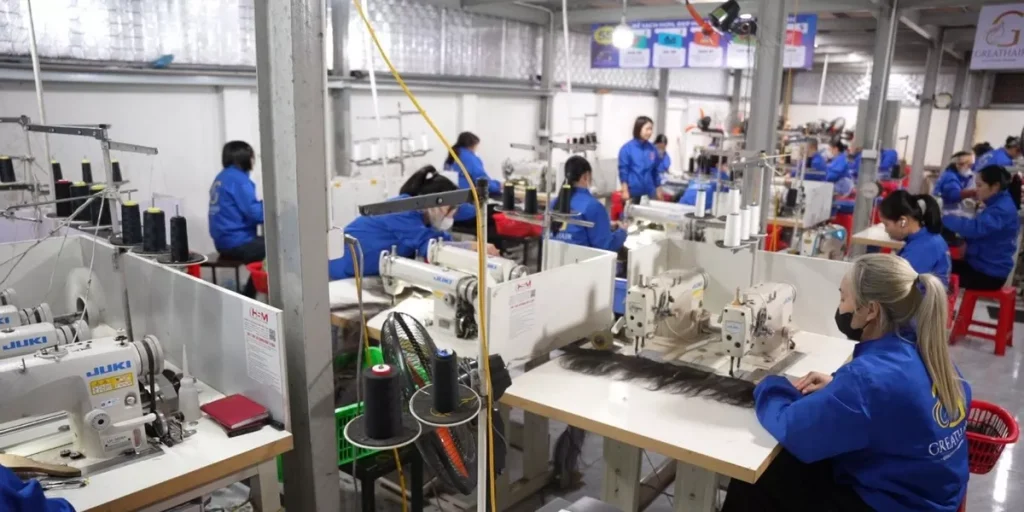
You can get in touch with Greathair using the contact information below:
What is single donor hair?
Single donor hair is human hair collected from one person and kept separate instead of being mixed with hair from multiple donors. Its main value is better consistency in texture, shade, and overall strand behavior.
What is single donor hair meaning in simple terms?
In simple terms, it means the hair comes from one source rather than a mixed batch. That usually makes the final product feel more uniform and predictable.
Is single donor hair the same as raw hair?
No. Single donor hair describes sourcing, while raw hair describes minimal processing. A product can be single donor without being raw, and raw without being marketed as single donor.
Is single donor virgin hair the same as cuticle aligned hair?
No. Single donor virgin hair refers to source and chemical history. Cuticle aligned hair refers to the direction and condition of the cuticles. They are related but not identical qualities.
Are single donor hair extensions always better?
Not automatically. They can offer stronger consistency, but overall performance still depends on cuticle condition, processing level, and how the hair behaves after washing and wear.
What does single donor cuticle aligned hair mean?
It means the hair is claimed to come from one donor and also to have intact cuticles aligned in the same direction. When genuine, that usually helps the hair stay smoother and tangle less.
Is raw single donor hair Vietnam a good option?
It can be, especially when the hair is genuinely low-processed and the sourcing is clear. But the location label alone is not enough; the real test is condition, consistency, and long-term performance.

We Will Contact You Shortly


Address: 8 Ngo 20/45 D. Phu Minh, Minh Khai, Bac Tu Liem, Ha Noi, Viet Nam
Phone: (+84)813282399

There are no products in the cart