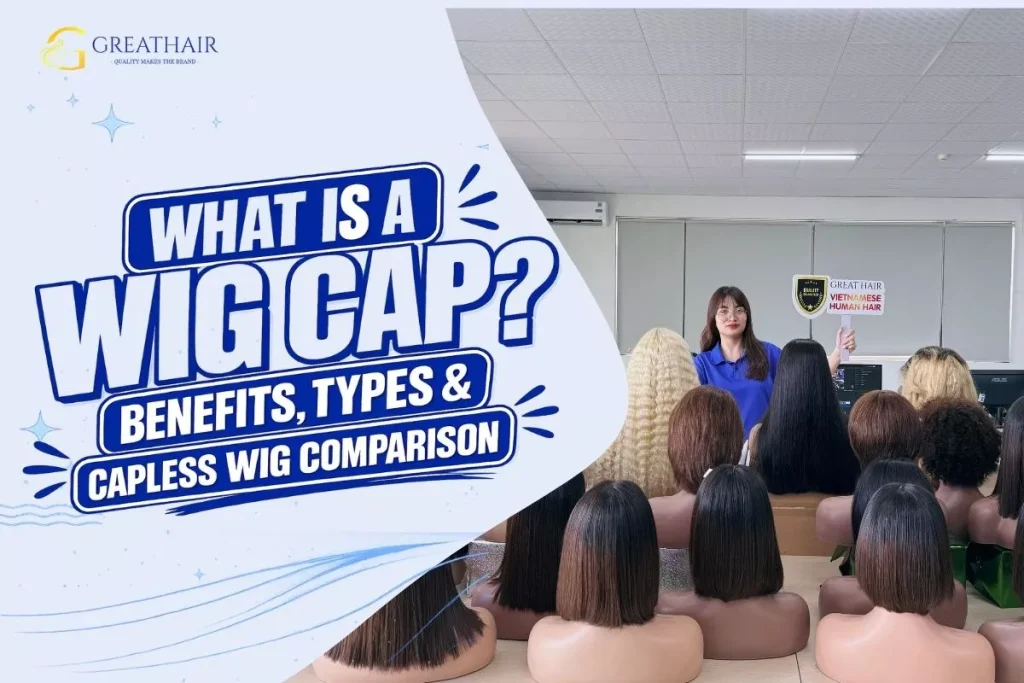
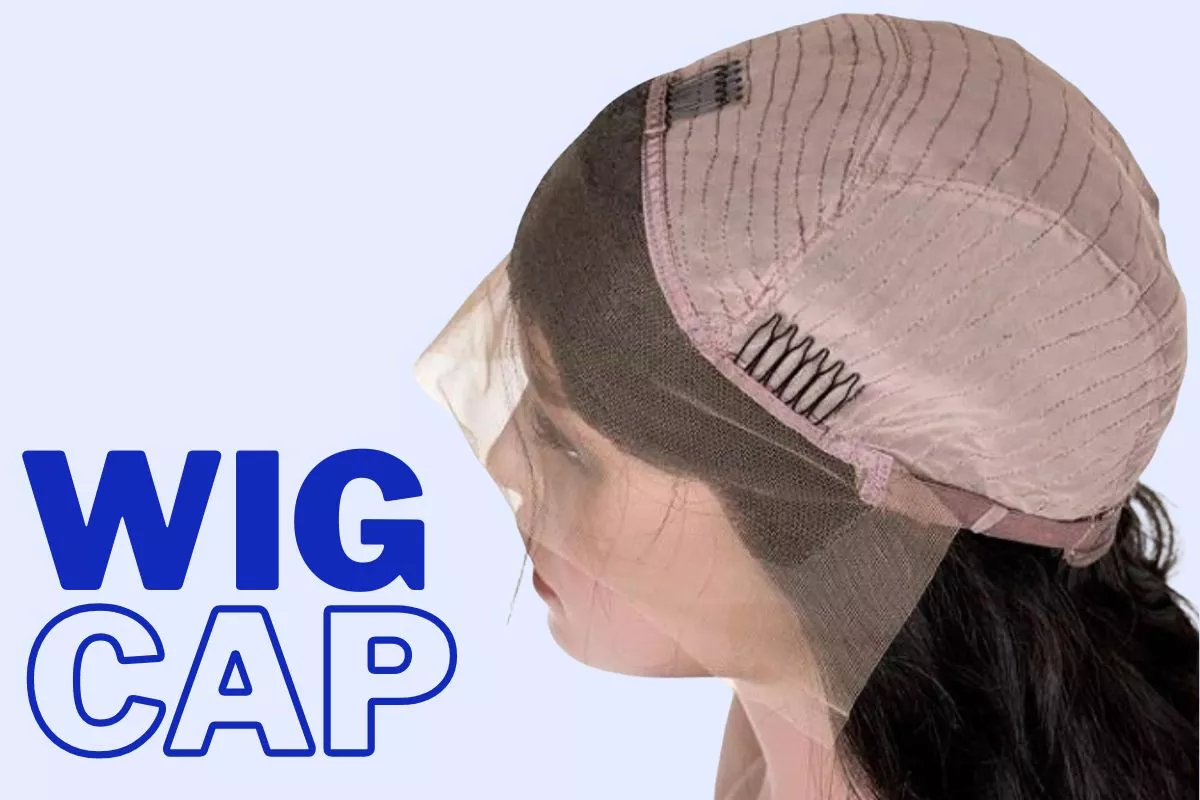
A wig cap is the internal base or foundation of a wig the structural layer to which hair wefts or strands are attached. This construction directly determines comfort, breathability, natural appearance, stability, and overall wearability. Drawing on Greathair’s Manufacturing Vietnamese human hair since 2008 of expertise in premium human hair manufacturing and rigorous quality control processes, we clarify these options to help customers select constructions that deliver both aesthetic results and long-term scalp health.
In the wig industry, the term “cap wig” (or traditional/basic cap wig) typically refers to designs with a closed or solid base. This contrasts with popular “capless” (open-weft) constructions. Many wigs also incorporate advanced features such as monofilament tops or lace fronts for enhanced realism. Understanding these differences empowers better purchasing decisions, whether for style, protective wear, or managing hair loss.
What Is a Cap Wig?
A cap wig features a traditional closed-cap construction. Hair wefts are sewn onto a solid base material that fully covers the scalp, providing complete coverage and structural support. This design creates a stable foundation suitable for various hair densities and lengths.
- Basic/Standard Cap: Machine-sewn wefts on a closed elastic base, often with “permatease” (teased roots) at the crown for built-in volume and to conceal the construction.
-
Combinations: Many modern wigs layer features onto a basic cap, such as a lace front for a natural hairline or a monofilament section for realistic parting.
This closed design offers reliable structure but differs significantly from open constructions in airflow and weight.
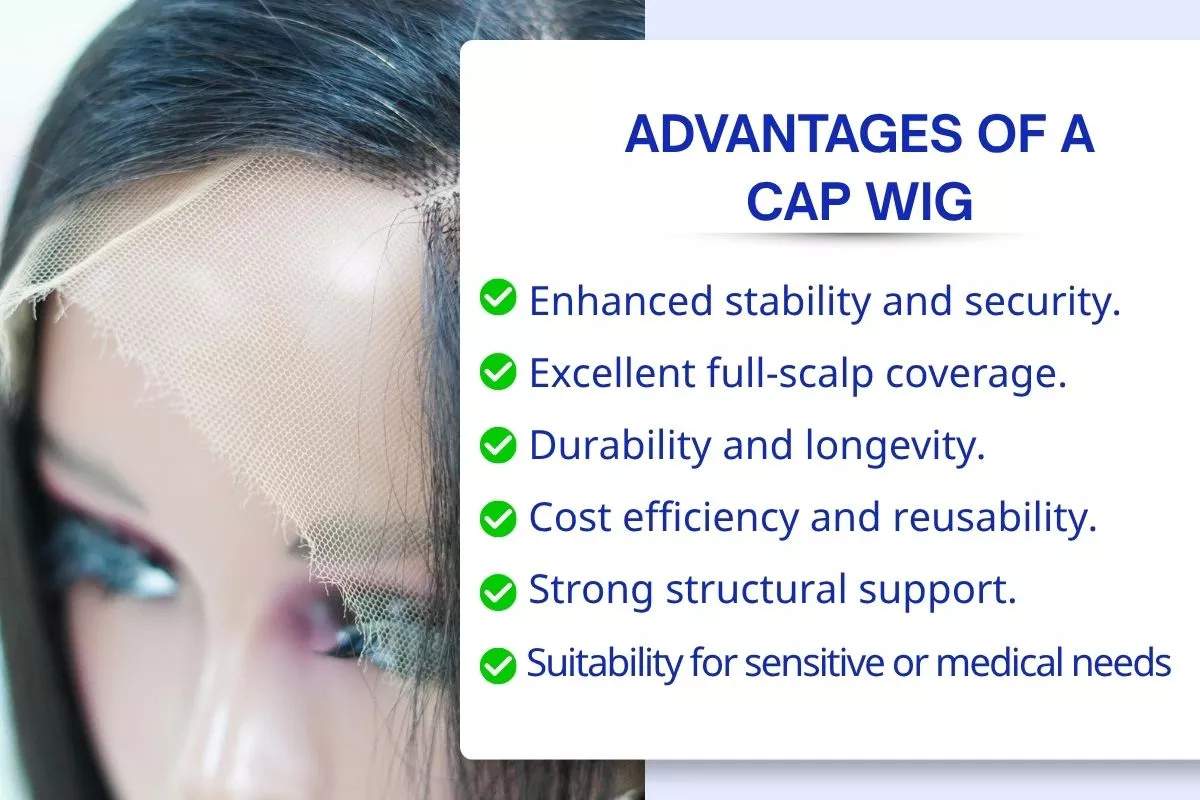
Advantages of a Cap Wig (Traditional/Closed Construction)
Traditional cap wigs provide several practical benefits, particularly when full coverage and durability are priorities:
- Enhanced stability and security: The solid base holds its shape well and resists shifting during daily activities or movement.
-
Excellent full-scalp coverage: Ideal for individuals with complete hair loss, offering a secure, consistent fit without gaps.
-
Durability and longevity: Tightly constructed wefts often withstand regular wear and washing better than more open designs.
-
Strong structural support: Maintains hairstyle integrity, with built-in volume from techniques like permatease reducing the need for extensive styling.
-
Suitability for sensitive or medical needs: Provides a reliable barrier when combined with proper liners, supporting comfort for those undergoing treatments that cause hair loss.
These advantages make traditional caps a dependable choice for users seeking security and a classic, voluminous look.
Disadvantages of a Cap Wig
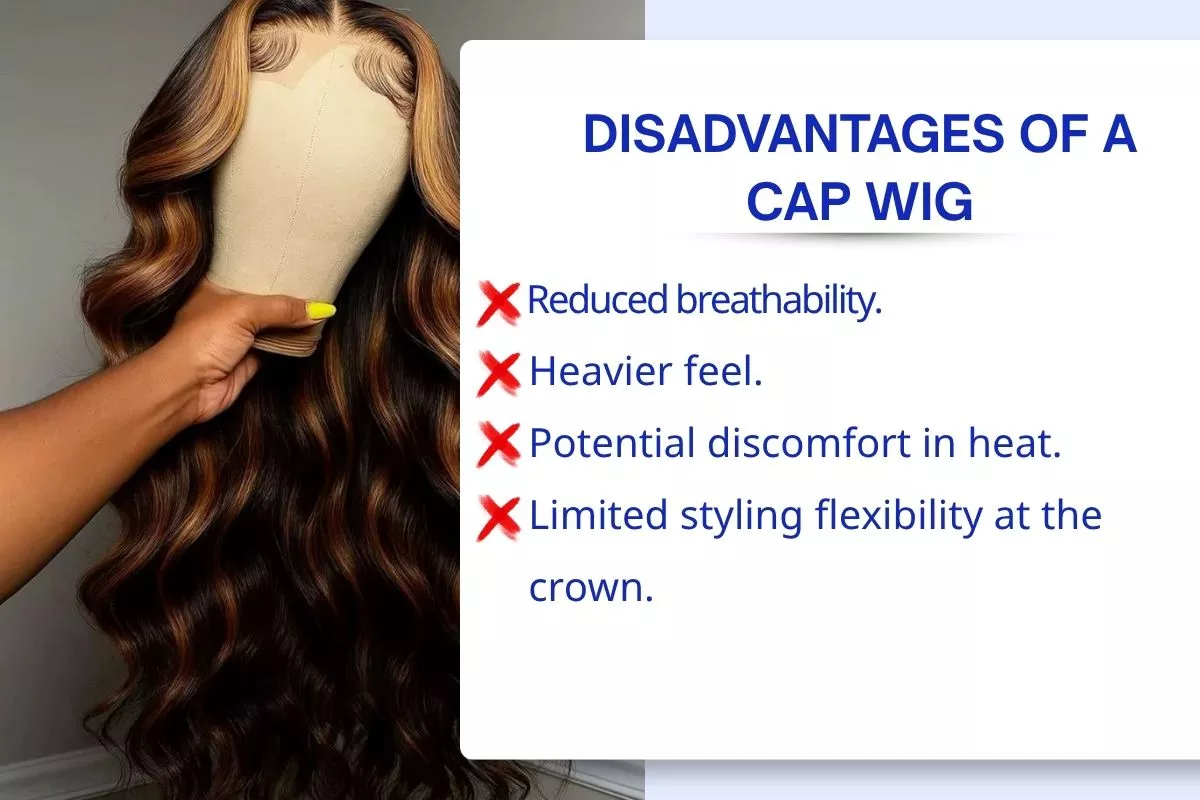
While stable, traditional closed-cap designs present trade-offs:
- Reduced breathability: The solid base limits airflow, which can trap heat and moisture particularly noticeable in warm climates or during extended wear.
-
Heavier feel: More material and denser weft placement increase overall weight compared to open designs.
-
Potential discomfort in heat: Less ventilation may lead to scalp warmth or perspiration buildup, making them less ideal for active lifestyles or hot environments.
-
Limited styling flexibility at the crown: Fixed parting directions are common unless monofilament or hand-tied elements are added.
For many users in warmer regions or those prioritizing all-day comfort, these factors make open-weft alternatives more appealing.
Key Differences Between Cap Wig (Traditional) and Capless Wigs
Capless wigs also called open-cap or wefted wigs use an open-weft construction where hair rows are sewn onto vertical strips with intentional spacing (often 20–75% open at the crown). This creates superior ventilation while retaining a functional cap structure.
| Feature | Cap Wig (Traditional/Closed) | Capless Wig (Open Weft) |
|---|---|---|
| Construction | Solid, full-coverage base with closely sewn wefts | Open spaces between wefts on lightweight strips |
| Breathability | Lower; limited airflow | Higher; excellent ventilation and cooling |
| Weight | Heavier due to denser materials | Lighter and more comfortable for long wear |
| Stability | Excellent structure and shape retention | Good but may require adjustments or grips |
| Durability | Generally strong and long-lasting | Durable with proper care; wefts may need attention |
| Best For | Full hair loss coverage, active stability, classic volume | Hot climates, everyday comfort, beginners |
| Typical Price Range | Basic options $75–$150; upgraded $200+ | Often more affordable entry-level options |
| Scalp Access | Limited direct contact | Easier access for care or relief |
Practical Usage Tips
Selecting and using the right wig cap construction maximizes comfort and results.
- Match construction to your needs: Choose breathable capless or open-weft designs for hot climates, active days, or sensitive scalps. Opt for traditional closed caps when maximum stability or full coverage is essential. For versatile styling and a natural look, consider monofilament or lace-front hybrids.
-
Consider wig cap size: Most wigs come in petite (approximately 21 inches circumference), average (around 22 inches), or large (23+ inches). Measure your head circumference at the hairline, around the ears, and nape. Many include adjustable straps for fine-tuning. If between sizes, sizing slightly larger often provides better comfort with adjustments. Petite sizes suit smaller heads; large sizes accommodate fuller hair underneath or preference for a roomier fit.
-
Additional comfort strategies: For sensitive scalps or hair loss (e.g., post-treatment), a soft liner adds a protective barrier and reduces friction. Quality human hair from manufacturers with strict standards performs best on well-ventilated caps, supporting scalp health and reducing irritation over time.
-
Maintenance for longevity: Clean wigs regularly according to hair type (human or synthetic). Store on a stand to preserve shape. Breathable constructions paired with premium hair help maintain freshness and reduce odor buildup.
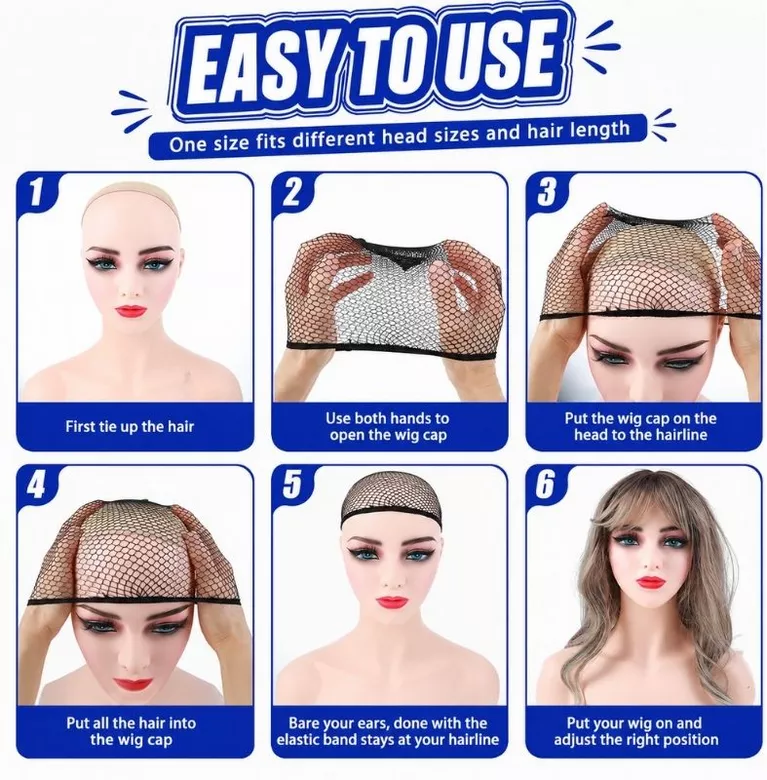
How to put on a wig cap (liner)
An additional thin wig cap or liner (nylon, mesh, or breathable bamboo/silk) worn underneath protects the scalp, smooths natural hair, improves grip, and keeps the wig cleaner.
- Steps 1: First tie up the hair
-
Steps 2: Use both hands open the wwig cap
-
Steps 3: Put the wig cap in the head to the hairline
-
Steps 4: Put all the hair into the wig cap
-
Steps 5: Bare your ears, done with the elastic band stays at your hairline
-
Steps 6: Put your wig on and adjust the right position
FAQ About Wig Cap.
Do I need to wear an additional wig cap liner under my wig?
It is not always required but highly recommended for sensitive scalps, complete hair loss, or to smooth natural hair and improve wig grip. Liners protect skin, absorb oils/sweat, and help keep the wig cleaner longer.
Is a capless wig better than a traditional cap wig?
It depends on priorities. Capless designs excel in breathability, lightness, and affordability ideal for most everyday users and warm conditions. Traditional caps offer superior stability and coverage for specific needs. Hybrids often provide the best balance.
How does wig cap construction affect the natural look?
Closed basic caps may show more at the part unless permatease or added features conceal it. Monofilament and hand-tied constructions create the illusion of hair growing from the scalp with flexible parting. Lace fronts deliver undetectable hairlines.
What price range should I expect?
Basic or capless wigs typically start at $75–$150. Monofilament-enhanced options range $200–$300. Premium hand-tied or full-lace constructions cost $300–$500 or more. Investing in quality construction and hair yields better comfort and durability.
Can wig cap size be adjusted?
Yes. Most wigs include adjustable straps, elastic bands, or stretch materials that accommodate minor variations (about ½ inch). Accurate measurement and trying on (or checking return policies) ensure the best fit.
GREATHAIR – Premium Vietnamese Human Hair Manufacturer
With Founded in 2008 of experience as a leading Vietnamese human hair manufacturer, Greathair combines deep manufacturing expertise with practical insights into wig cap construction. We understand that the quality of human hair and the design of the wig cap work together to determine comfort, natural appearance, breathability, and long-term performance. Our factory-direct approach ensures premium human hair that performs exceptionally across traditional closed caps, capless open-weft constructions, monofilament, and hand-tied bases.
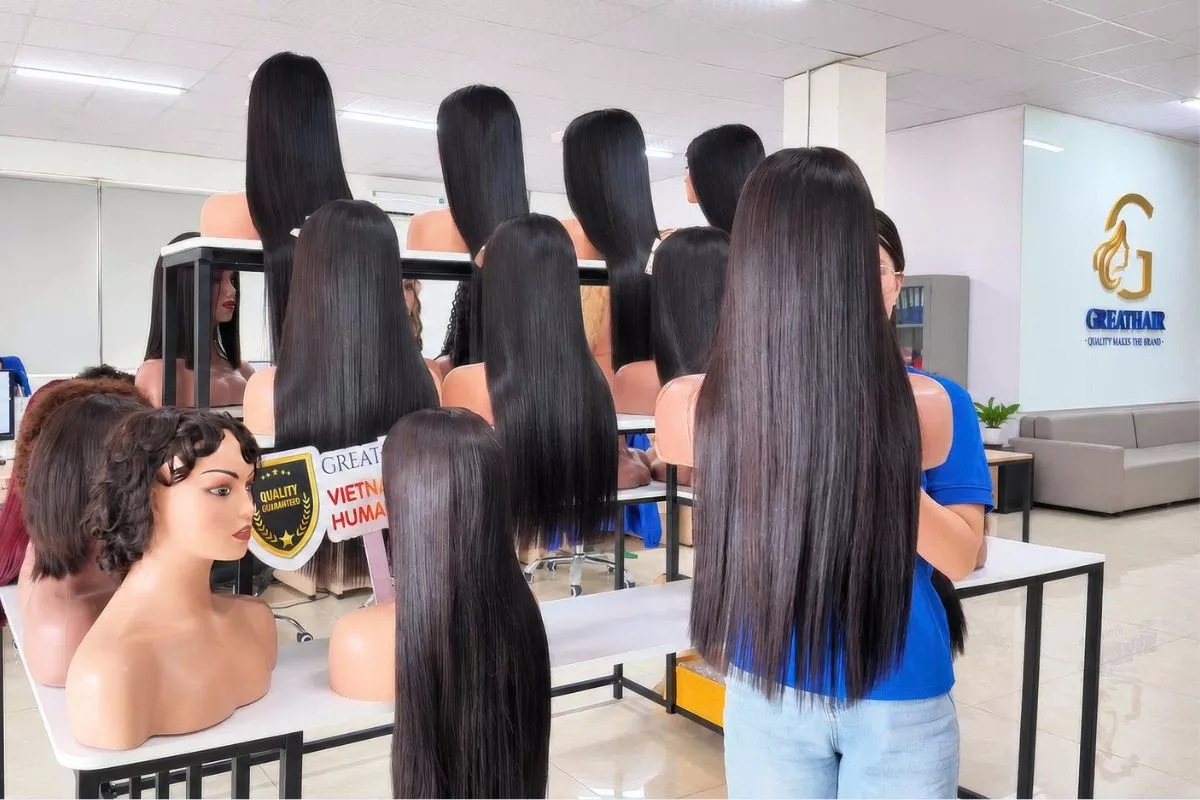
What sets Greathair apart:
- 100% Vietnamese Human Hair sourced from single donors, delivering consistent quality, natural texture, superior dye absorption, and authentic movement that integrates seamlessly with all wig cap constructions from dense traditional bases to highly breathable capless designs.
- Cuticle-aligned technology that significantly reduces tangling and matting, ensuring smoother results and longer lifespan whether paired with closed traditional wig caps or open-weft capless constructions.
- Strict multi-stage quality control with every bundle and finished product carefully inspected across more than 18 checkpoints, guaranteeing hair that attaches securely and naturally to any wig cap base while meeting the highest standards for comfort and durability.
- Factory-direct production, enabling competitive wholesale pricing without compromising quality or ethical sourcing ideal for salons, wholesalers, and private-label brands seeking premium human hair optimized for various wig cap constructions.
- Specialized expertise in textured hair solutions, supporting diverse wig cap needs for Women of Color markets, protective styling, medical-grade comfort, and everyday wear across straight, wavy, curly, and kinky textures.
- Proven global supply experience with fast production timelines and reliable shipping to the United States, United Kingdom, European Union, Africa, and Asia.
Greathair is committed to delivering not only premium Vietnamese human hair but also clear, practical knowledge on wig cap selection helping professionals and consumers choose constructions that maximize comfort, natural appearance, and performance. Whether you need high-quality human hair for custom wig projects, private-label solutions, or guidance on the most suitable wig cap constructions for your market, our team is ready to support your exact requirements.
Looking for premium Vietnamese human hair optimized for different wig cap constructions, or seeking wholesale solutions for your salon, wholesale business, or brand? Contact Greathair today to request product information, pricing, and samples tailored to your needs.
GREATHAIR – Premium Vietnamese Human Hair Manufacturer
- WhatsApp: (+84) 81 328 2399
- Email: [email protected]
- Facebook: greathair.manufacturer
- Instagram: great.hair.manufacturer
- Website: https://greathair.com.vn/