

The best wig density is not the highest percentage. It is the density that matches your finished length, texture, hairline and routine, so the wig looks like your kind of full rather than simply looking heavy. For a natural-looking human hair wig, 130% to 150% is often a sensible starting point. Go lower for a lighter, flatter everyday feel and go higher only when the length, texture or desired silhouette truly needs it.
That answer sounds simple, but the percentage on a product page is only one part of the picture. A 150% wig can look fuller than a 180% wig when it has thicker ends, a different curl pattern or a better-balanced hairline. This guide shows you what to compare before you choose.
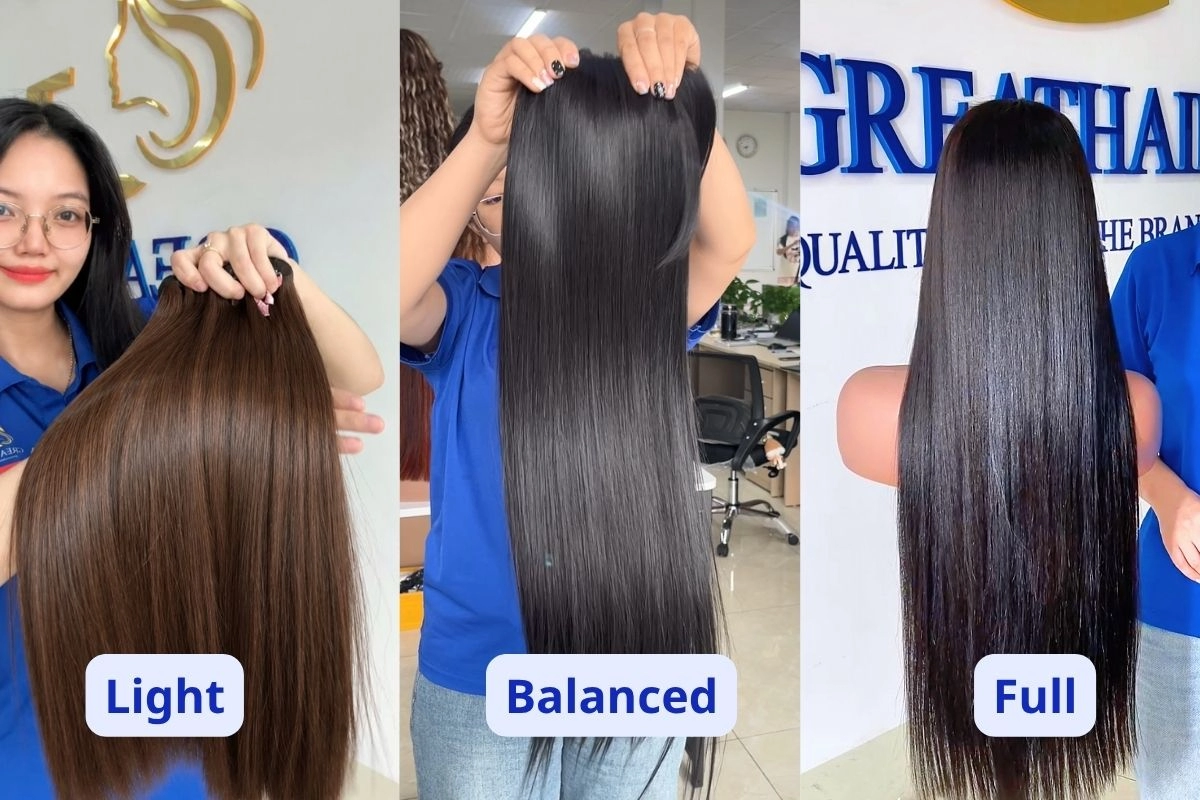
Wig density is a factory reference rather than a universal truth
Wig density describes how much hair is placed across the cap, but 150% is a supplier’s working reference rather than a worldwide standard. It is useful buying language, not a guarantee that every 150% wig will look, weigh or sit the same. Ask instead how the density looks in that exact length, texture, cap and hairline.
Labels also vary between factories. Compare an unfiltered video of the same texture and length, shown dry and unstyled from the front, side and back. A photo with curls, layers, lighting or heavy styling can make density look very different from real life.
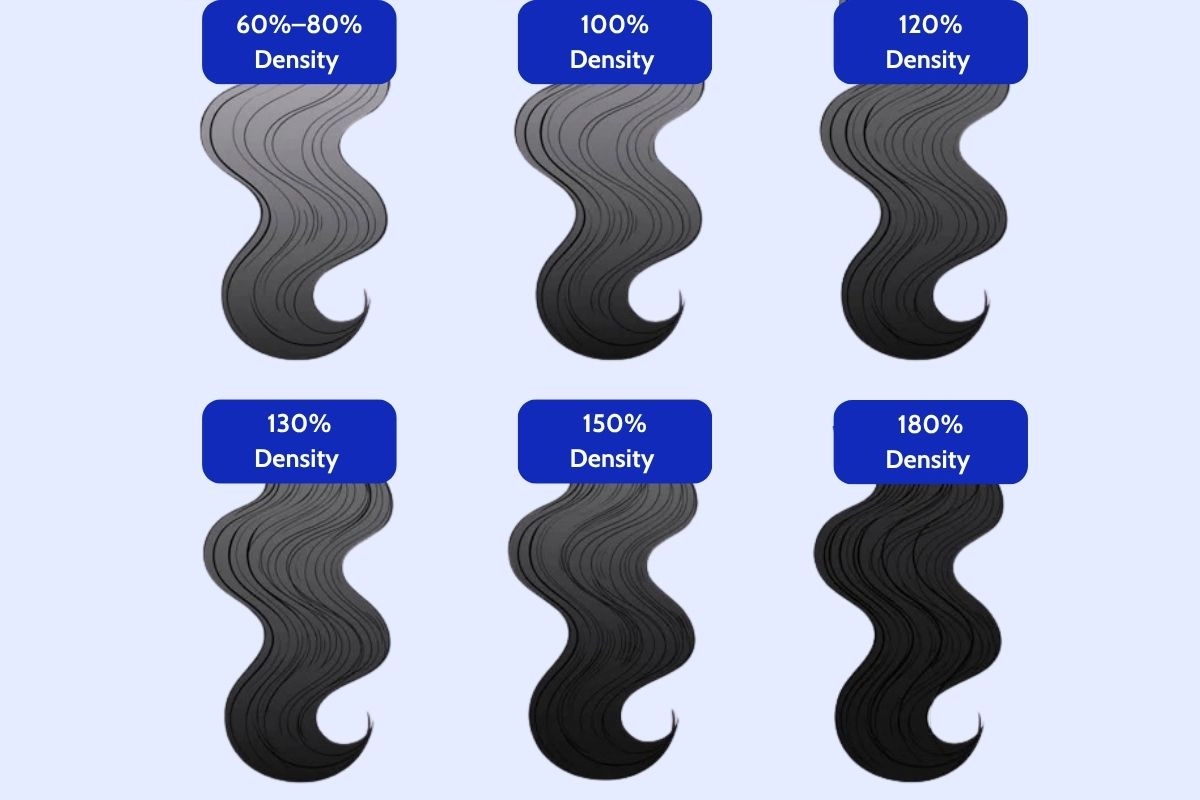
| Density label you may see | What it often looks and feels like | Best starting use |
|---|---|---|
| 60%–80% | Extra-light and close to the head | Fine-hair illusion or a subtle look |
| 100% | Light and understated | Short to medium everyday styles |
| 120% | Natural with more presence | First wigs and relaxed daily wear |
| 130% | Balanced and believable | Natural styles with polish |
| 150% | Full without automatically being dramatic | Styled everyday wigs and medium-to-long lengths |
| 180% | Full, glamorous and substantial | Long lengths or statement looks |
| 200% and above | Deliberately high-impact | Occasion wear or bold volume |
Use the table as a starting point. The mirror test matters more: does the part look believable, do the roots fall naturally, and can you wear the unit for as long as you need?
The number does not tell you how full the ends will look
A density percentage describes hair placement on the cap, not how thick the wig remains from crown to ends. That is why a wig can look “full” in a listing yet feel thin through the bottom when worn straight. To judge fullness properly, separate cap density from the hair standard used to make the unit.
In wig manufacturing, the drawn ratio tells you how much hair remains near the finished length after shorter strands are sorted out. In GreatHair’s specifications, SDD Plus contains approximately 80%–85% long hair from top to bottom, SDD 65%–70%, Double Drawn about 50%, and Single Drawn has the lightest ends. That is a different measure from wig density.
So a 150% SDD Plus wig can look richer at the hemline than a 180% Single Drawn wig. A tapered end can be beautiful for layers; fuller ends suit blunt bobs, sleek straight hair and a more luxurious silhouette. Before buying, confirm the hair standard, ask for a full-length video against a plain background, and compare the final worn length and texture not the percentage alone.
Length and texture change how density shows up
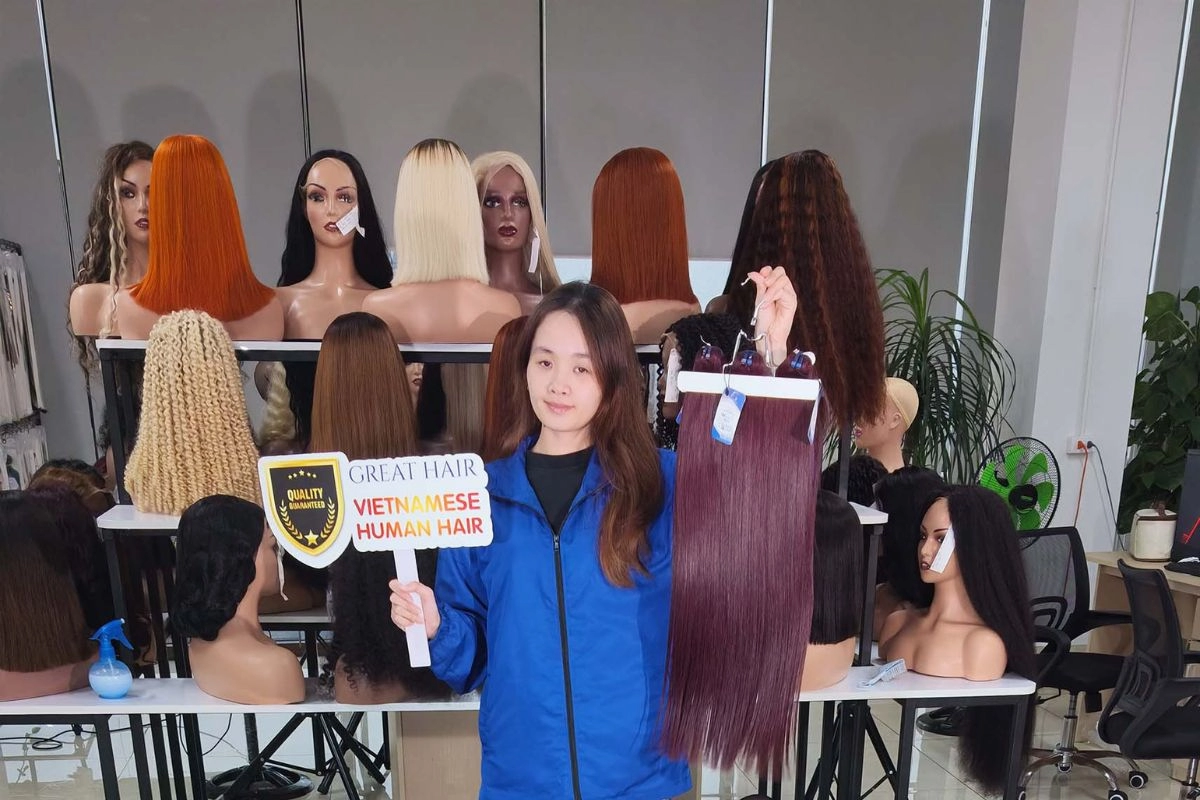
Long, straight hair reveals density most clearly. A 26-inch bone-straight wig at 180% can look sleek and luxurious, yet it will carry more weight and root bulk than a short 180% bob. Curly and kinky textures create visual volume through their shape, so a lower percentage can still look beautifully full once the curls expand.
Choose for the finished style, not a fluffed product photo. Bone straight and straight hair need convincing ends and a gradual hairline; body wave and deep wave can appear fuller than their label suggests; curly and kinky textures create width as well as height. You can compare those effects across our human hair wigs, but always judge the exact texture when it is dry and settled.
The hairline can make or break a high-density wig
A natural-looking wig does not need a sparse front, but it does need a believable transition from hairline to body. High density works only when the lace, knot work and ventilation are controlled so the front does not look bulky or mask-like. More hair behind a poorly made hairline will not solve the problem.
One detail buyers often miss is where density sits. A unit can have a neat first section at the hairline but become abruptly heavier behind it; if knot size also changes, bleaching may expose uneven color or a hard line. A well-balanced 150% frontal can therefore appear more realistic than a poorly constructed 200% frontal.
Request close daylight views of the center part, both temples, the lace from underneath and the hairline pushed back gently without heavy baby hair. From GreatHair’s years of manufacturing Vietnamese human-hair wigs, we have learned that vague requests such as “natural but very full” cause more disappointment than any percentage. Specify the worn length, texture, hair standard, lace type, cap size, parting preference and density together.
Choose density for the life you actually live
Your routine should decide density before a glamorous photo does. For a glueless wig worn to work, school or the gym, a light-to-medium density often feels easier on the head and more forgiving over long hours. For a birthday, shoot or evening look, 150% or 180% may be exactly the right level of fullness.
Think about styling too. A skilled stylist can remove some weight with a cut, layers or selective thinning, but that change is permanent and density is not simple to add back. For half-up styles or ponytails, check perimeter coverage and cap construction rather than assuming the highest percentage gives you freedom everywhere. Hair quality, lace care and construction still affect longevity; see our guide on how long human hair wigs last.
A factory-side case that turns vague into specific
The safest way to choose density is to turn a vague beauty goal into a checkable brief. This is a composite factory-side scenario based on common consultations, not a story about one named customer.
The request is a 26-inch body-wave frontal wig that looks “very full but still natural,” with 200% density. The hidden conflict is drama through the length versus a soft hairline, comfortable all-day wear and a flat installation. Instead of ordering by number alone, compare two matched samples or QC videos with the same length, body wave, cap, hair standard, lace and color at different density targets.
Choose the one that gives the best silhouette in motion, scalp effect at the part, fullness at the ends and comfort on the head. The decision becomes “which unit delivers the promised look and wearability?” rather than “which percentage sounds best?”
Where To Buy Quality Vietnamese Hair
If you are a salon owner, reseller or private-label brand, source density as part of a complete wig specification rather than as a stand-alone number. GreatHair can confirm hair standard, length, texture, color, lace type, lace size, cap size and density before custom production. Explore GreatHair wholesale wig and OEM support when you need samples, QC proof or a specification-led quote for your market.
Ready to order quality curly human hair extensions at wholesale prices? Contact our sales team:
- WhatsApp: (+84) 81 328 2399
- Contact Website: https://greathair.com.vn
- Facebook: greathair.manufacturer
- Instagram: great.hair.manufacturer
FAQ about wig density
What wig density looks the most natural
For many human-hair wigs, 130% to 150% is a dependable starting range for a natural but polished look. Go lower for a finer effect and higher for very long or deliberately full styles.
Is 180% wig density too much for everyday wear
Not necessarily. It can suit long hair and people who love visible fullness, but it may feel warmer and heavier than a 130% or 150% unit.
Does higher wig density mean better quality
No. Hair standard, drawn ratio, lace, knots, cap construction and finishing all matter. A balanced 150% wig can outperform a poorly made 200% wig.
Can a stylist reduce wig density
Yes. A stylist can remove weight with layers or selective thinning, but it is permanent, so start close to your real goal.
Does a curly wig need more density than a straight wig
Not automatically. Curls add visual volume, so a curly wig can look full at a lower percentage than a comparable straight wig.