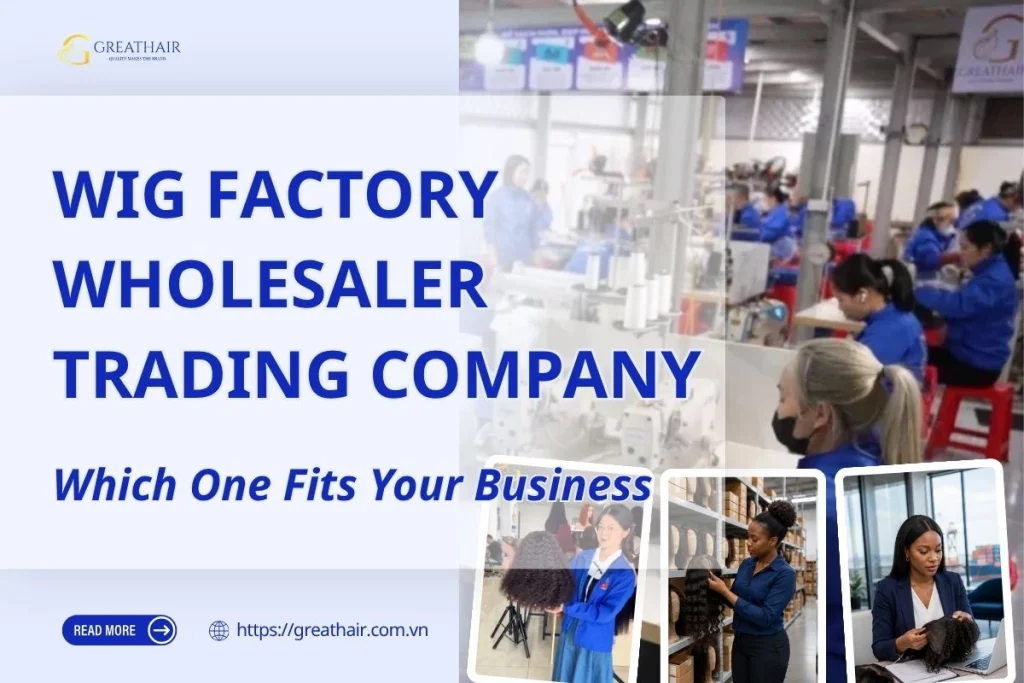
Wig factory vs wholesaler vs trading company at a glance
Choose a factory for product control, a wholesaler for ready-stock speed and a trading company for sourcing breadth. That answer is useful only after you confirm the exact service behind the label. A business can combine models, so compare responsibilities rather than job titles. The table below shows the commercial role each supplier usually plays.
| Supplier type | What it does | Best fit | Main advantage | Main risk to check |
| Wig factory | Manufactures wigs or controls disclosed production stages | Custom or repeatable core products | Technical access, specification control, OEM and private label | MOQ and development time depend on the request |
| Wholesaler | Buys and stocks finished wigs for resale | Fast tests and replenishment | Ready inventory and simpler ordering | Limited customization and possible batch changes |
| Trading company | Sources from one or more factories and manages the order | Mixed ranges and multi-supplier sourcing | Broad assortment and coordination | An extra layer between buyer and production |
What does buying from a wig factory really mean?
Buying from a wig factory should give you clearer access to production decisions and quality evidence. It does not necessarily mean that every material or every process is completed under one roof, so ask which stages are in-house and which are subcontracted. For brands serving Black women, small construction choices such as lace shade, cap measurements, knot finish, hairline, density and texture can shape the customer experience. A direct manufacturer becomes most valuable when those details must remain consistent from sample to reorder.
With years of experience manufacturing hair products and working with salons, online sellers, resellers and private-label businesses, GreatHair has found that the strongest factory relationships begin with a defined target customer and written specification, not only a reference photo and a request for the lowest price.
- ✅ Request a specification covering hair, length, texture, color, density, lace, cap size, hairline, packaging and logo requirements.
- ✅ Approve a representative sample and retain it as the gold sample for the bulk order.
- ✅ Confirm who answers technical questions and who can authorize production changes.
- ✅ Ask what QC records, photos or videos will be available before shipment.
- ✅ Record how repeat orders are matched to the approved specification and earlier batch.
When is a wholesaler the smarter choice?
A wholesaler is the smarter choice when speed and manageable stock risk matter more than deep customization. Beauty supply stores, salon owners and online sellers can use ready inventory to test lengths, textures or colors without developing every unit from the beginning. The trade-off is less visibility into production and less control over the next batch. A reorder with the same product name may still come from a different production run or source, so consistency must be checked rather than assumed.
- Is the item physically in stock, and can the seller show the current batch rather than catalog photos?
- Can the same construction, lace and texture be reordered, or is the offer limited to current inventory?
- How long has the stock been stored, and how is it protected from moisture, dust and handling damage?
- Who handles claims if the item is defective and the original factory is not disclosed?
What does a wig trading company add?
A wig trading company adds coordination, supplier access and assortment, not manufacturing by definition. It can be useful when one order includes wigs, bundles, closures, frontals, packaging or accessories that no single factory produces well. A capable trader may manage communication, consolidate shipments and run independent inspections. The risk appears when the buyer cannot see where products are made, when sources change without notice or when nobody owns a technical claim.
A trading company is not automatically a poor supplier, just as a factory is not automatically a good one. A transparent trader with documented QC can outperform a factory with vague specifications and weak communication. Ask which factory will produce the approved sample and bulk order, whether the source can change, who signs off on QC and how a claim reaches the actual producer.
Which supplier type fits your business model?
Match the supplier model to the job your business needs done. A core private-label wig deserves more production control than a short trend test, while a distributor building a broad catalog may value consolidation more than direct access to every machine. Many businesses use a hybrid strategy instead of forcing one supplier to cover every need. The decision matrix below keeps the choice tied to commercial risk.
| Buyer | Primary need | Likely fit | Control point |
| Private-label brand | Custom cap, lace, texture, color and packaging | Wig factory | Approve a custom sample and gold sample before bulk production |
| Salon or boutique | Fast replenishment of proven ready styles | Wholesaler | Inspect the current batch and confirm reorder continuity |
| Distributor | Wigs plus several related product categories | Trading company or hybrid | Require source disclosure, consolidation checks and clear claim ownership |
| New online seller | Low-risk market testing before a large range | Wholesaler first, then factory | Use sell-through and customer feedback to define the future custom specification |
How can you verify the supplier type before payment?
Verify a supplier through evidence of responsibility, not a factory logo or a polished video. The legal company, payment recipient, production site, sample maker and QC owner should form one understandable chain. If the seller avoids explaining that chain, the commercial label offers little protection. Complete these checks before you treat any quotation as factory-direct.
- ✅ Match the legal business name with the quotation, PI and approved payment details.
- ✅ Request a live video call that shows current production or QC work and allows real-time questions.
- ✅ Map the production stages and identify any work completed by another workshop or factory.
- ✅ Confirm whether the approved sample and bulk order will be made at the same disclosed source.
- ✅ Ask who writes the specification, who approves QC and who can authorize a remake or corrective action.
- ✅ Retain the specification, reference photos, sample records, PI, QC evidence and claim terms in writing.
Product labels do not replace inspection. Use GreatHair’s guide to evaluate high-quality human hair wigs when building the sample and bulk QC checklist.
A practical GreatHair sourcing case
A recurring GreatHair consultation starts with a seller asking one supplier for glueless wigs, bundles and branded packaging at the best wholesale price. The request appears efficient, but the three needs do not carry the same risk. The wig is the brand-defining product and requires control over cap fit, lace, hairline, density and texture. Ready accessories or non-core stock may be easier to source through wholesale inventory or a coordinated supplier network.
The practical solution is to separate the order by responsibility. GreatHair turns the core wig into a written specification, distinguishes stock from made-to-order options, prepares a representative sample and carries the approved reference into the final PI and QC instructions. The buyer can then decide whether convenience on secondary items is worth another supplier layer. This anonymized case reflects a repeated sourcing pattern and does not publish a customer identity, order volume or invented sales result. The lesson is simple — use direct factory control where product inconsistency would damage the brand most.
Where to buy quality Vietnamese hair from a wig factory
Hair businesses should buy Vietnamese wigs from a supplier that can convert a market request into a written, testable product specification. GreatHair works with salons, online sellers, resellers, distributors and private-label brands rather than positioning this service as a retail wig purchase. Depending on the confirmed order, customization may include texture, length, density, color, lace type and size, cap size, packaging and logo. Availability, MOQ, lead time and pricing must be confirmed for the exact stock, custom or private-label request.
Review GreatHair’s Vietnamese wig factory guide to see the manufacturing position in more detail. To request a wholesale price list or a sample, send your target market, buyer type, estimated quantity and required wig specifications. This gives the sales and production teams enough information to confirm feasibility instead of returning a vague catalog quote.
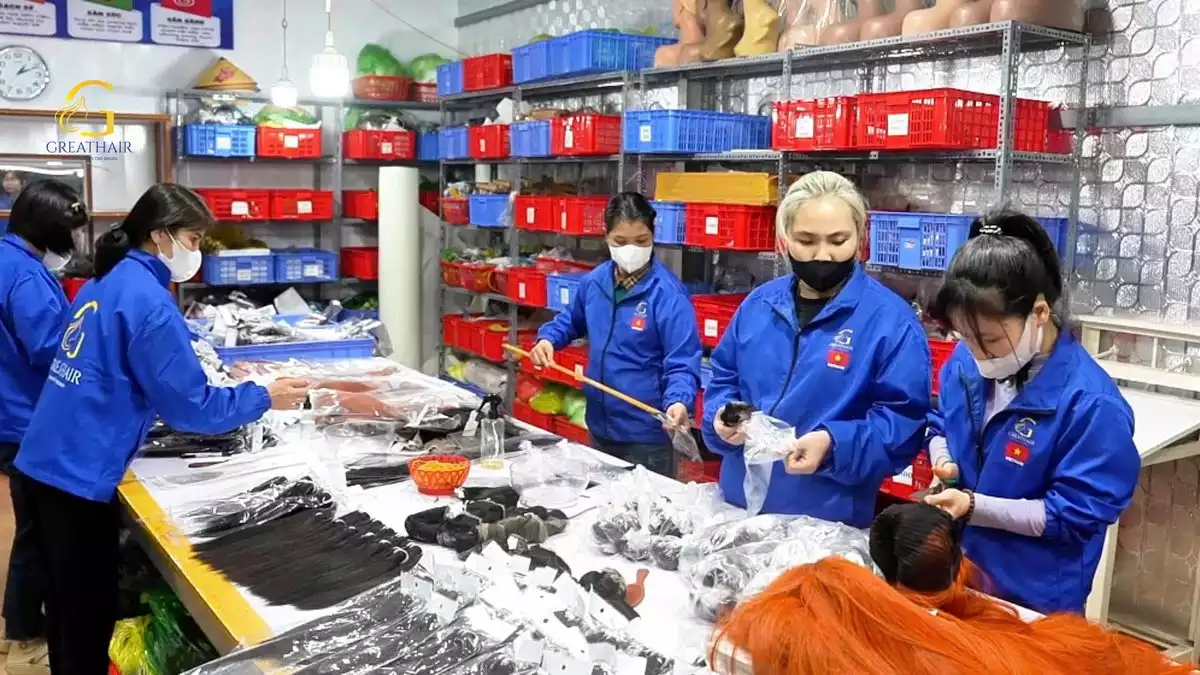
Ready to order quality curly human hair extensions at wholesale prices? Contact our sales team:
- WhatsApp: (+84) 81 328 2399
- Contact Website: https://greathair.com.vn
- Facebook: greathair.manufacturer
- Instagram: great.hair.manufacturer
FAQ About Wig Supplier Types
Is buying from a wig factory always cheaper?
No. Factory pricing depends on the specification, quantity, customization and order terms. Compare landed cost and accountability, not unit price alone.
Can a wholesaler offer private-label wigs?
Sometimes. Confirm whether branding is added to stock units or whether a factory is making a custom product, and identify who owns sample-to-bulk consistency.
Is a wig trading company unsafe?
No. A trading company can be useful when it discloses sources, documents QC and accepts clear responsibility for claims.
How can I tell whether a supplier is a real wig factory?
Check its legal identity, live production evidence, in-house stages, sample and bulk production source, QC records and official payment details.
Which supplier is best for wholesale wigs?
Choose a factory for custom and repeatable core products, a wholesaler for ready-stock speed and a trading company for sourcing breadth.