
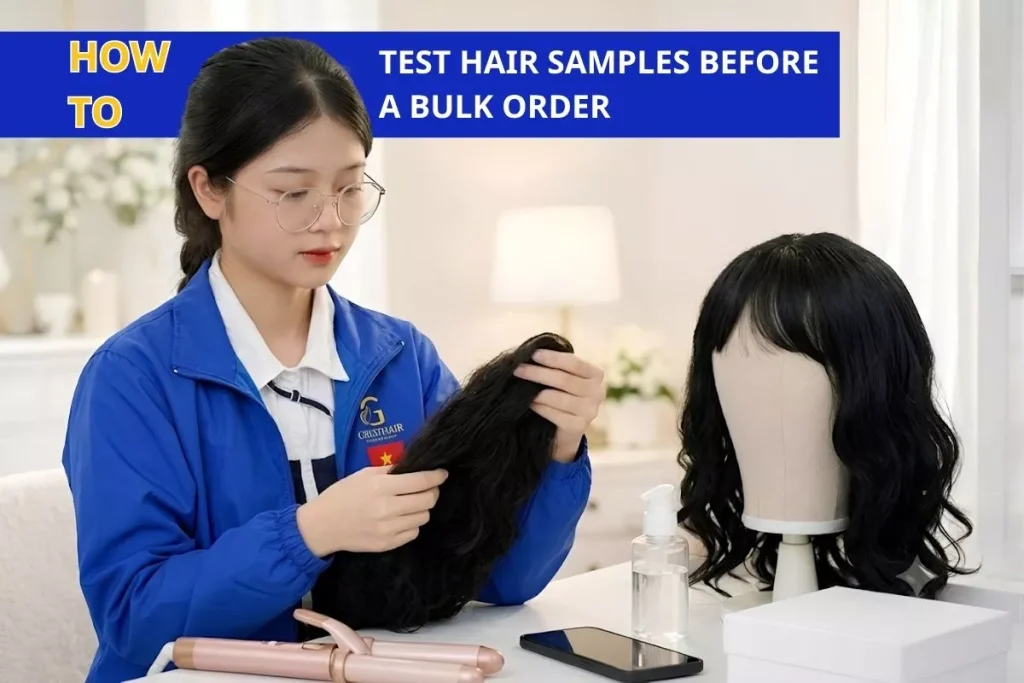
A sample should show whether the product will meet your customers’ expectations. Before testing, agree length and weight tolerances, color and fullness references, construction requirements, and a shedding limit for a fixed brushing method. Each step below ends with an approval decision.
Confirm the product matches the order
Customers expect the length, volume, shade and fit advertised. Order the exact product you intend to sell, including its texture, end fullness and construction. For wigs, confirm cap size, lace dimensions and density.
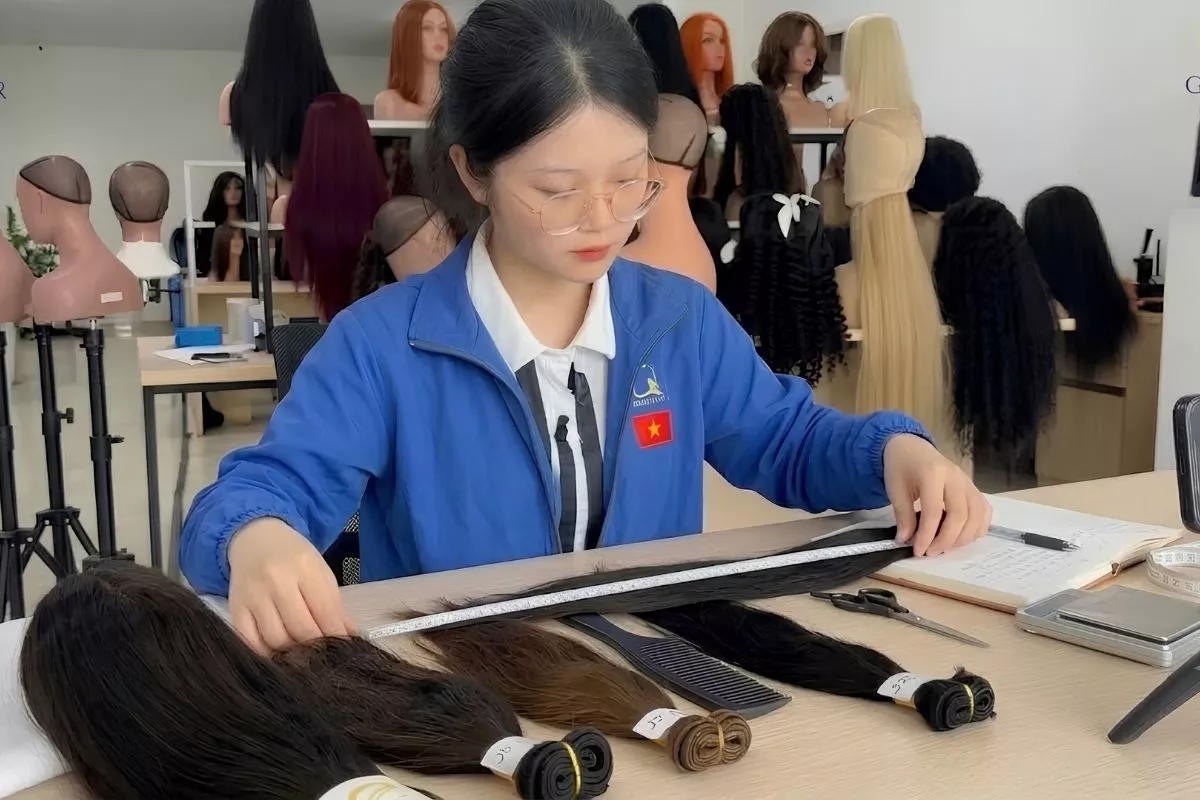
Record the unboxing and label each sample. Weigh it without packaging and measure length using the agreed method, extending curls gently without pulling. Photograph the shade, ends and construction.
Measurements fall within the written tolerances; shade, texture, fullness grade and construction match the order. Hold mismatched samples before treatment. Keep the measurements and photographs as the starting record.
Request written processing details for raw, virgin or Remy claims. See our guide to Vietnamese hair quality.
Check the return policy before washing. GreatHair requires inspection within 48 hours of confirmed delivery and excludes claims on washed or altered products. Confirm separate sample-testing terms in writing.https://greathair.com.vn/understanding-vietnamese-hair-quality/
Check softness, cuticle feel and ends
Customers want a natural feel, manageable hair and the fullness they paid for.
Run your fingers from root to tip, then gently in reverse. Note roughness and snagging. Hair may feel smoother along the cuticle direction, but touch cannot certify Remy status.
Spread the last 5–7 cm against a plain background. Compare end fullness with the reference for the ordered grade. Note unusual gloss or slipperiness and reassess after washing; shine alone does not prove silicone masking.
Root-to-tip handling does not repeatedly snag, and the ends match the agreed fullness reference. Hold samples with persistent roughness, matting or visibly thinner ends than ordered. Photograph the ends and record the feel before and after washing.
Check shedding and attachment strength
Customers need extensions that remain secure during normal handling and wear.
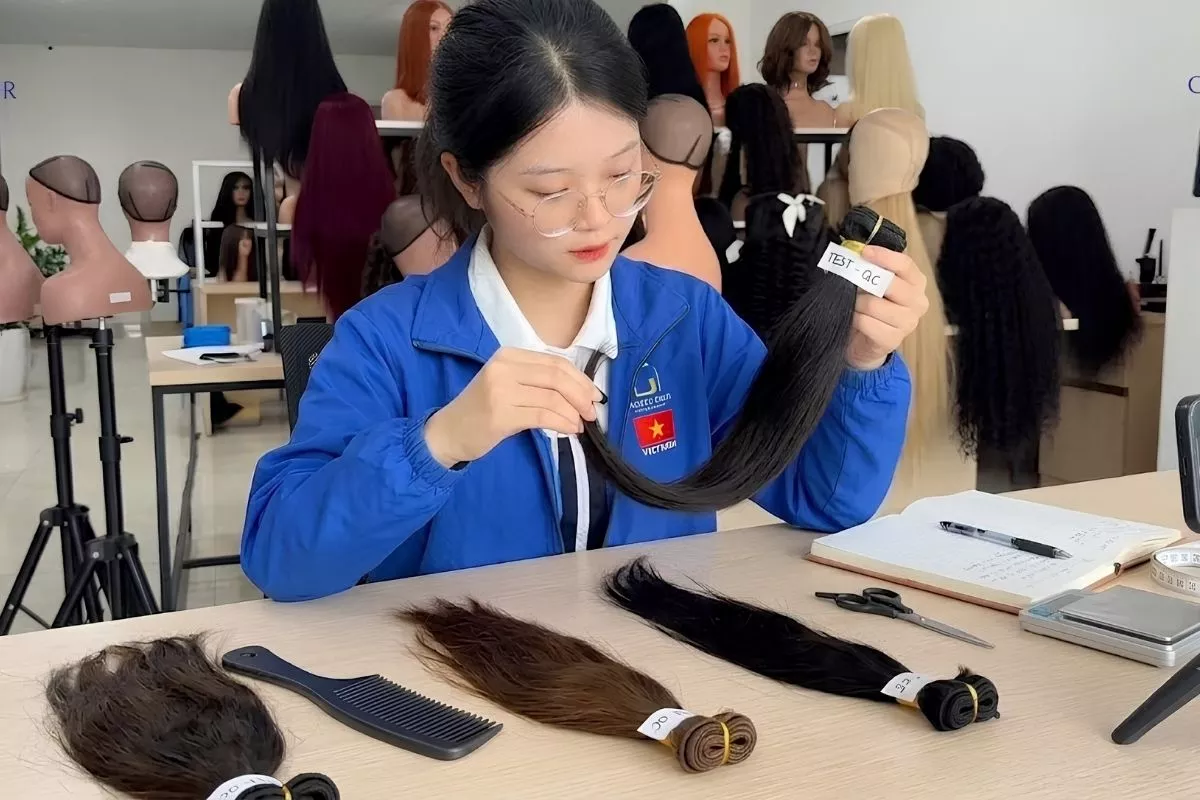
Support the weft or attachment, finger-comb and apply light tension. Use the same brush and number of gentle passes for every sample. Count released full-length strands separately from short broken fragments.
Inspect weft stitching for loose threads, gaps and uneven sections.
Released and broken strand counts stay within the limits agreed for that test, and the attachment remains secure. Hold samples with opening seams, repeated clusters of released hair or counts above the limit. Record counts and photograph any construction defect. Zero shedding should not be assumed.
Check performance after washing and styling
Customers expect manageable hair after normal care and a product suitable for its advertised styling use.
Wash with lukewarm water and a suitable mild shampoo, condition consistently and air-dry fully. Record detangling, frizz, dryness, color changes, texture and odor.
Test a small section at the heat setting agreed for the product. Record temperature and passes. For textured hair, assess the pattern after another wash. If lightening is required, have a qualified colorist test a separate section against the agreed target shade.
After drying, hair detangles with routine care, stays within the agreed shade and texture references, and achieves the intended style without repeated breakage. Hold persistent matting, unexpected color loss, brittle ends or failure of the required styling test. Maximum heat does not prove authenticity.
Start with one complete wash-and-dry cycle. Three to five normal wash cycles for premium lines, or an initial one-to-two-week stylist-led installation trial, are planning options subject to agreed terms.
Confirm consistency and approve the reference
Wholesale buyers need repeatable quality so customers receive the product they were shown.
Compare equivalent samples from suppliers A and B under the same washing, brushing, styling and lighting conditions. Request multiple units, production-lot identifiers where available, and the lengths and colors you plan to stock.
Each tested unit meets its product requirements; differences stay within agreed tolerances, including any permitted natural variation. Hold approval if only one sample passes or defects remain unresolved.
Record actual results, limits and a Pass, Hold or Reject decision for each sample. Keep the approved golden sample, your physical reference, with dated photographs and the test log. Retain an untouched duplicate where possible.
The result is an approved reference and written bulk-order specification. One approved sample does not replace inspection of the shipment.
FAQs about test hair sample
How much does a GreatHair sample cost?
Request a quote for your exact product and destination. Confirm shipping and payment fees through the payment and pricing policy.
What is the minimum sample order?
The GreatHair FAQ currently lists one bundle or one product. Confirm any custom-order minimum separately.
Is the sample fee deducted from a bulk order?
Only if agreed in writing. Do not assume a credit applies.
Does a burn test prove all the hair is human?
No. Testing a few strands cannot establish the composition of the entire product.
Can a short trial prove the hair’s lifespan?
No. It identifies early problems; longer-term performance requires longer observation.
Request your sample
Contact GreatHair’s wholesale team with your product specifications and destination. Request a matching sample quotation and the available QC checklist, then confirm testing terms before treatment.