Two bundles can have the same length and weight but look different through the ends. At GreatHair, we choose loose hair for machine weft hair extensions by comparing strand lengths, natural shade, feel and fall with the bundle you want to sell.
Sewing secures the selected strands into a track; it does not correct a shortage of long hair through the ends.
We choose loose hair to match the finished bundle
A 24-inch straight weft can have a gentle taper or fuller ends. The difference depends partly on how many strands continue through the lower section. A few strands reaching 24 inches do not make that section full.
Your reference bundle shows the taper, shade and feel you expect. These details guide material selection alongside any sourcing or processing requirements. For product options, see our weft hair extensions.
What we check before the hair is sewn
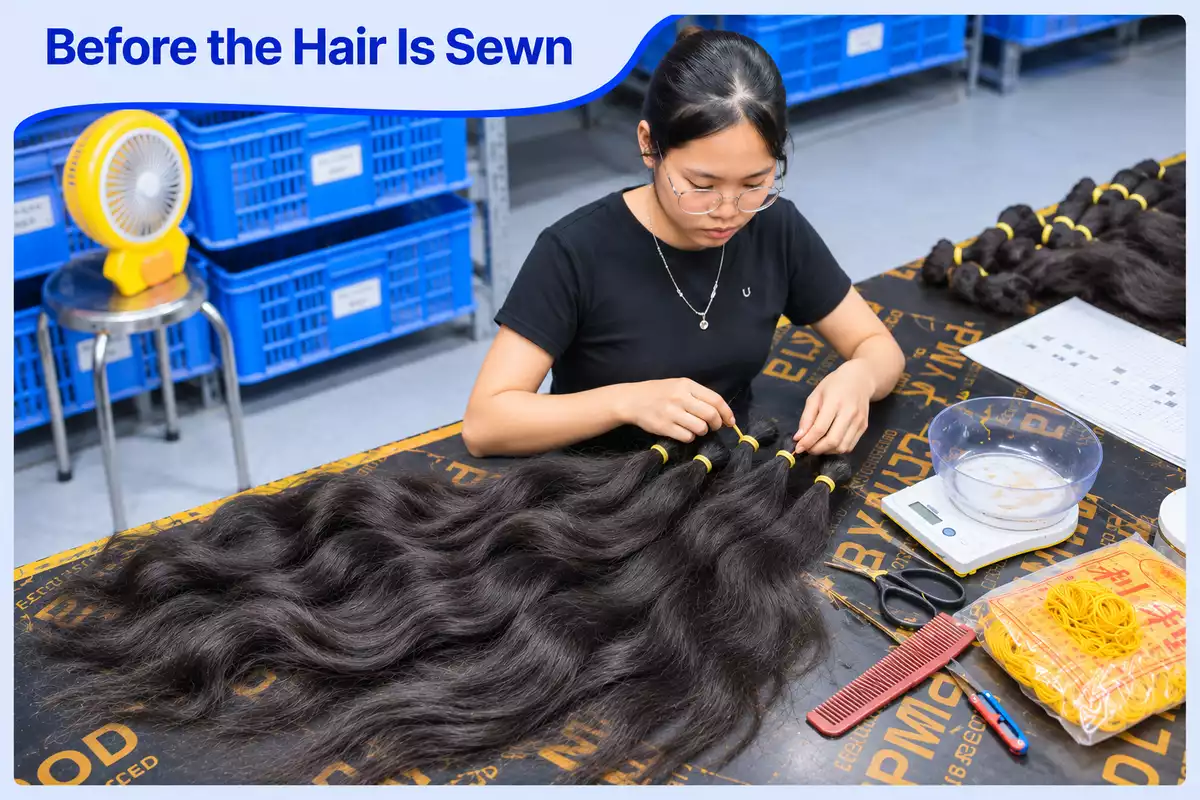
The hair is still loose and unsewn. Comparing sections before they enter the track helps identify differences in length, shade and feel.
For a clear view of the length distribution, the root ends need to be aligned. Uneven root ends can make the tips appear fuller or more tapered than they are.
| What we compare | What guides the selection |
|---|---|
| Strand lengths | Select a distribution that suits the agreed taper or fuller ends. |
| Natural shade | Group compatible shades; visibly warmer or lighter sections need separate comparison with the reference. |
| Feel and natural fall | Select sections that match the reference. Noticeably different sections need separate assessment before grouping. |
| Lengths and tips | Check broken strands or rough areas before including the affected hair. |
Fine strands and thin ends are not the same thing. Strand fineness describes an individual hair. A bundle of fine strands can still have full-looking ends if enough hair reaches the lower section.
Weight alone does not show this distribution. A bundle carrying more of its weight in shorter strands may taper earlier, even when its longest strands reach the ordered length.
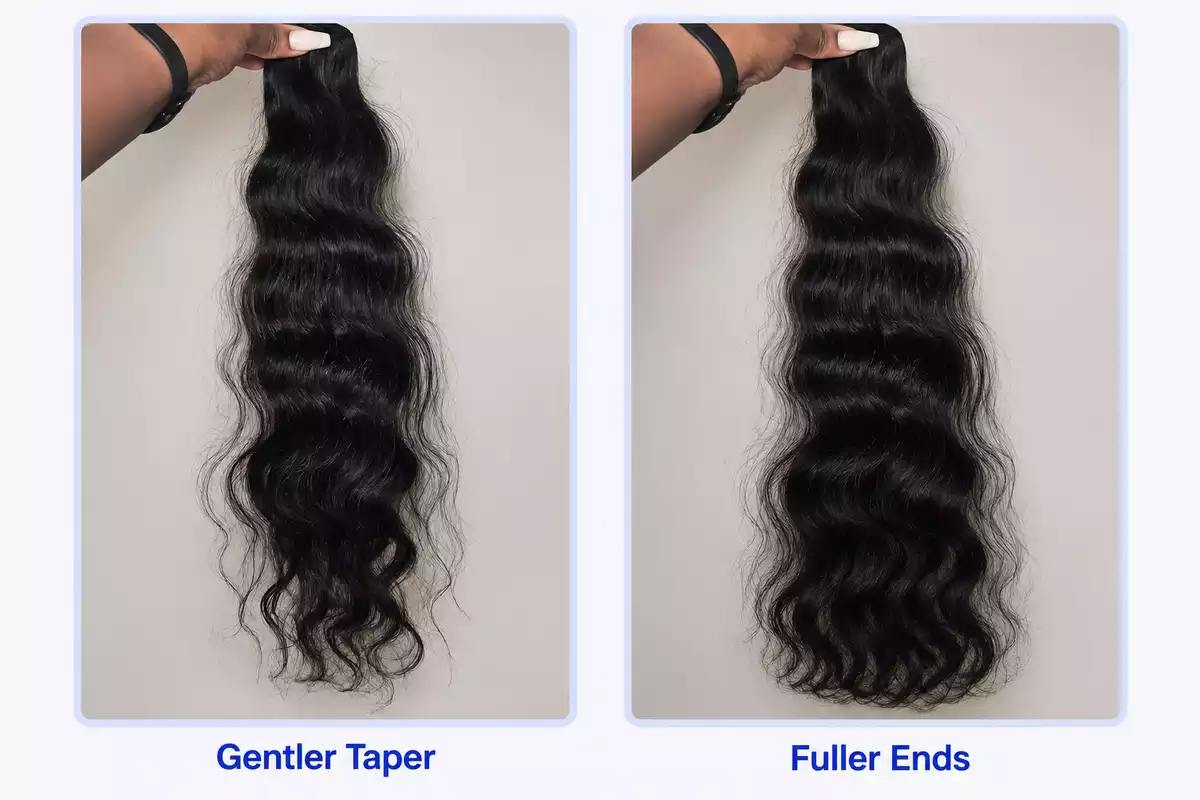
Filtering out shorter strands increases the share of longer hair but leaves less material. Any hair added to restore the agreed weight needs to match the required lengths, shade and feel. Removing short hair cannot create additional long strands.
A sound shorter strand may suit a tapered bundle; a broken or rough strand needs a condition check. Feel alone cannot confirm processing history.
Our drawn grades guide explains single, double and super double drawn hair. Use the agreed reference bundle to confirm the end fullness you expect from the grade.
When the loose hair does not match the reference
The difference determines the next selection decision.
- Enough suitable long hair remains. Further sorting may bring the length distribution closer to the reference.
- Too little suitable long hair is available. A different group of material may be needed to achieve the requested length, weight and fullness together.
- Shade or feel differs. Select material closer to the reference. Further length sorting alone will not resolve that mismatch.
If the original combination is unavailable, discuss another material selection, a shorter length or a different end profile with us. Adding weight is useful only if the additional hair contributes where fullness is missing.
Confirm any change, including its effect on price and timing, before bulk production.
Raw, single donor and Remy describe different requirements
These terms guide selection but do not specify end fullness.
Raw describes processing condition. Confirm the starting hair’s history and any later treatments. Raw starting hair does not make a colored or texture-processed weft an unprocessed finished product.
Single donor describes hair from one person. Confirm whether the claim covers the incoming bundle or each finished weft. Any hair added to a finished bundle sold as single donor must come from that same donor. See our single donor hair guide.
Remy refers to retained cuticles aligned in the same root-to-tip direction. That direction needs to be preserved through sorting and preparation.
Check a sample in the length and finish you plan to stock
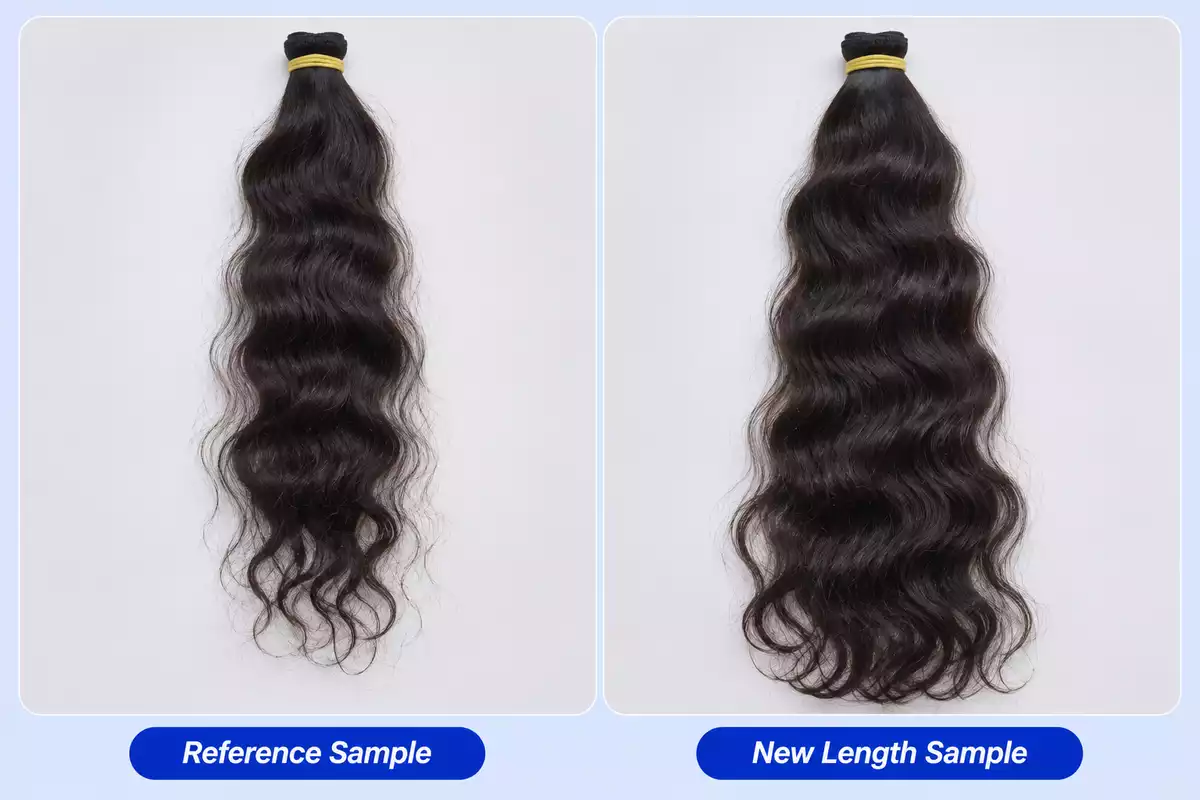
If you add 26-inch machine weft extensions after approving 20 inches, the shorter sample remains a reference for feel and shade. Request a 26-inch sample to check the ends at the new length.
Compare dry samples on the same background, with similar spreading and overlapping. Check where each bundle narrows, feel the lengths and tips, and compare color under the same lighting. For waves or curls, assess the relaxed pattern separately from the length measurement.
Keep the approved sample and specifications for repeat orders. Our weft sample ordering guide covers arranging the purchase.
FAQs about machine weft hair extensions
Can you work from a bundle I already sell?
Send an unaltered reference or clear photos and identify the features you want matched. A physical sample lets us compare feel as well as appearance.
Should I request another sample when changing texture?
Yes, if you need to approve the new finished look. A straight sample cannot show how waves or curls will gather through the ends.
What should I compare when reordering from a new lot?
Compare feel, shade, texture and the shape of the ends with your retained sample. Review a sample from the new lot if a difference matters to your collection.
Discuss Your Machine Weft Requirements with GreatHair
GreatHair manufactures human hair products in Vietnam for salons, resellers and hair brands. Send your reference bundle or clear photos, along with the lengths, weight per bundle, color, texture and end fullness you want.
- Discuss the material. Include any raw, single donor or Remy requirement.
- Confirm the sample. Check availability in the lengths and finish you plan to stock.
- Plan the order. Review quantities by length, production timing and delivery arrangements.
Contact GreatHair with your requirements and delivery destination.