



There are no products in the cart
Mar 03, 2026
Post by Alice Bonita
If you’ve spent any time in the hair extension business or even just shopping for premium bundles online you’ve probably seen the same debate come up again and again: Vietnamese hair vs Chinese hair. Suppliers make bold claims. Resellers promise “raw,” “virgin,” or “100% human hair.” Prices vary dramatically. And somewhere in between, buyers are left wondering what’s actually different and what truly matters.
For salon owners, private label brands, and wholesale buyers in the U.S., this decision is more than cosmetic. It affects product performance, customer satisfaction, return rates, and long-term brand reputation. Understanding the real difference between Vietnamese and Chinese hair isn’t about choosing sides. It’s about aligning your sourcing strategy with your business model.
Let’s take a deeper look at how these two Asian hair powerhouses compare and which one makes sense for your goals.
Over the past decade, Asian human hair has become a dominant force in the global extension industry. From Los Angeles to Atlanta, high-quality straight and textured bundles sourced from Asia fill salon shelves and warehouse inventories.
Two countries play particularly significant roles in this supply chain: Vietnam and China.
Vietnam is widely recognized for its raw, donor-based hair, often marketed as ethically collected and minimally processed. China, on the other hand, has built a massive industrial infrastructure, positioning itself as the world’s largest processor and exporter of hair products.
The confusion arises because China doesn’t just sell domestic hair. Many Chinese factories import hair from other countries including Vietnam process it, and export it under Chinese labeling. So when comparing Vietnamese hair vs Chinese hair, we’re not just talking about geography. We’re talking about sourcing philosophy, processing standards, and production scale.
Authentic Vietnamese hair typically comes from rural donors. Many women in northern and central Vietnam grow their hair long, often untreated, and sell it directly to collectors. In some cases, hair is gathered from temple donations, though this is less common compared to India.
A defining feature of raw Vietnamese hair is the single-donor model. Instead of mixing strands from multiple sources, suppliers often keep each donor’s hair intact. This maintains consistent cuticle alignment and natural texture throughout the bundle.
Because donors traditionally avoid chemical treatments, heat styling, and frequent coloring, the hair is usually strong and healthy from the start.
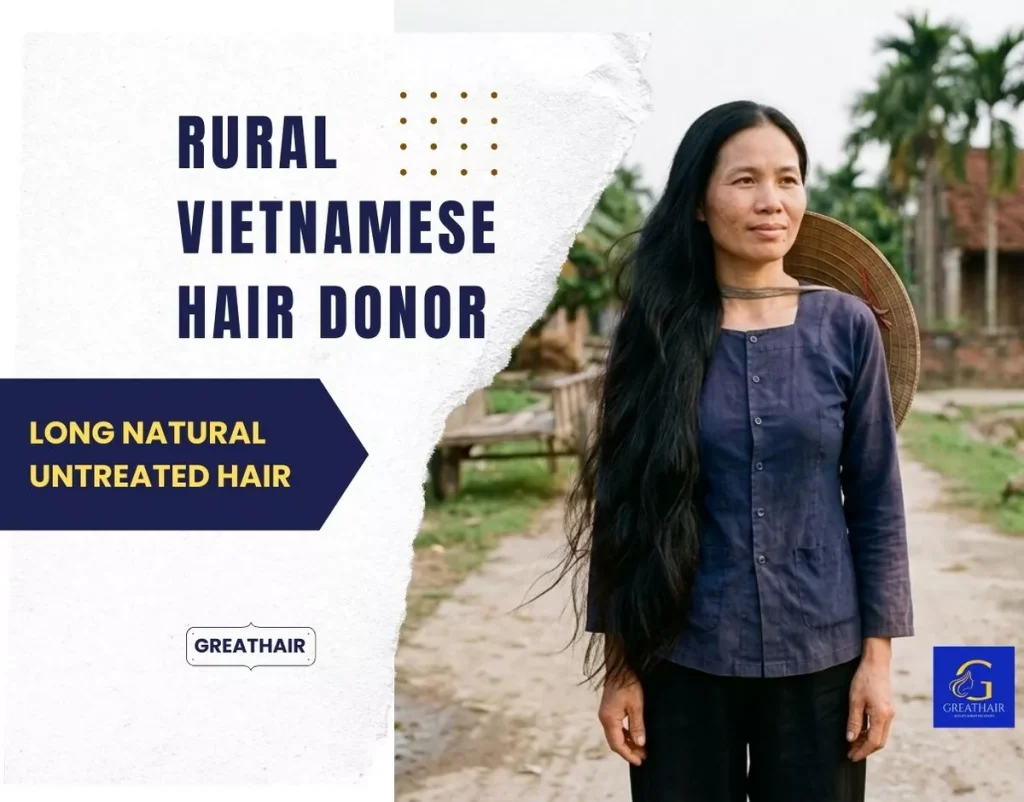
When we talk about raw Vietnamese hair, we’re referring to hair that has not been chemically altered. It may be washed, sorted, and wefted but not acid-treated or silicone-coated.
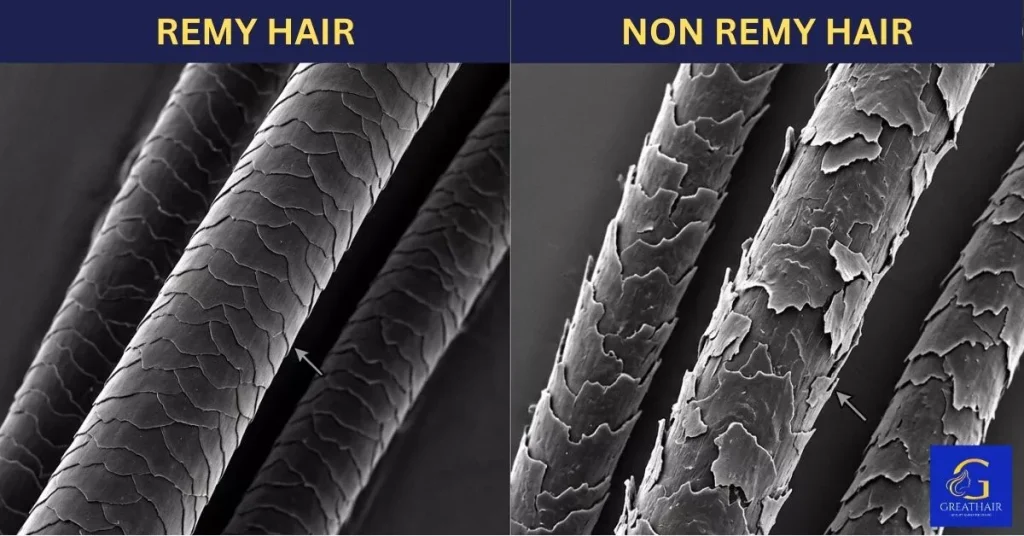
Vietnamese virgin hair wholesale suppliers often emphasize minimal processing. The cuticles remain intact and aligned in the same direction, qualifying it as Remy hair rather than non-Remy hair.
This difference becomes especially important when comparing Remy hair vs non Remy hair. Remy hair retains the natural cuticle layer, which reduces tangling and extends lifespan. Non-Remy hair, by contrast, often has cuticles stripped during heavy processing.
Vietnamese hair is known for its:
Thick, strong cuticles
Naturally coarse-to-medium texture
High elasticity and bounce
Long lifespan, often 2–5 years with proper care
Excellent performance during bleaching and coloring
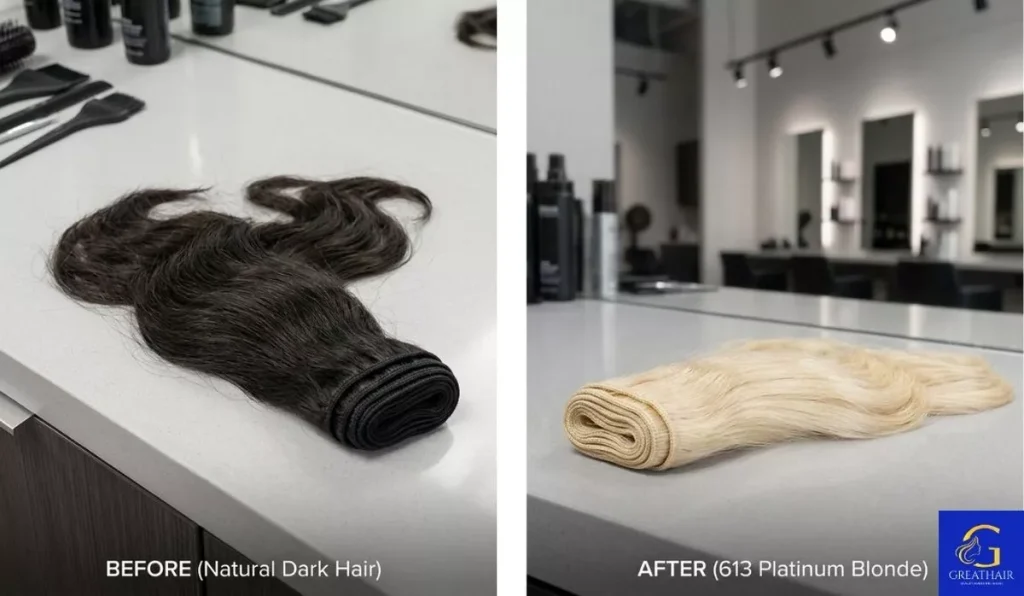
Many stylists prefer Vietnamese hair for dramatic color transformations, especially lifting to platinum or 613 blonde. Because the hair hasn’t undergone acid treatment beforehand, it tends to withstand chemical processes better.
For a broader buyer-focused comparison, read The Difference Between Vietnamese Hair And Other Hair.
Chinese hair can come from several channels. Some is domestically collected, but a significant portion is imported from India, Southeast Asia, and other regions. After import, it is processed in large-scale factories.
This is why the term Chinese factory hair is often used. The country’s strength lies in manufacturing capacity rather than raw donor volume.
China’s hair industry operates on an industrial scale. Hair is sorted by machines, bundled in uniform weights, and often treated to achieve a consistent look.
In many cases, lower-grade hair goes through an acid bath to strip cuticles, then receives a silicone coating to restore shine. This creates a smooth, glossy appearance at first glance but the effect may fade after several washes.
Acid treated hair can feel silky when new, but once the silicone layer washes away, tangling and dryness may appear.
Chinese hair products often offer:
Uniform texture across batches
High initial shine
Competitive pricing
Large volume availability
For distributors focused on volume and turnover, this consistency and scale can be appealing.
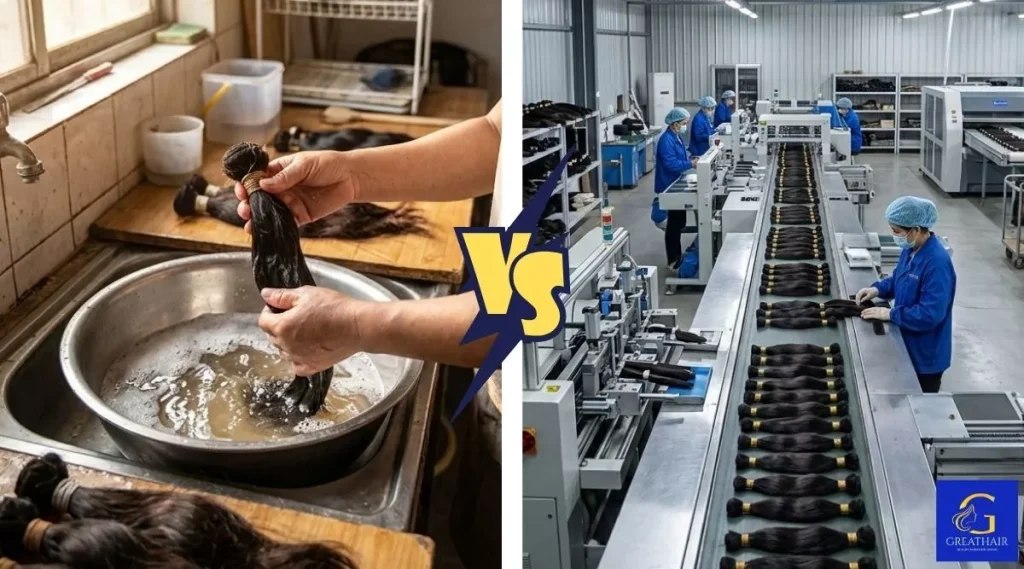
Below is a simplified visual comparison to clarify the difference between Vietnamese and Chinese hair:
| Criteria | Vietnamese Hair | Chinese Hair |
|---|---|---|
| Cuticle Alignment | Naturally aligned, Remy | May be stripped and re-coated |
| Thickness & Texture | Thick, strong strands | Often softer, sometimes thinner |
| Durability | 2–5 years with care | 6–18 months on average |
| Curl Holding | Holds curls well | May drop curls faster |
| Bleaching Performance | Lifts to 613 effectively | Risk of dryness if pre-treated |
| Shedding & Tangling | Minimal when Remy | Higher risk if non-Remy |
Of course, not all suppliers fit perfectly into these categories. Quality varies within each country. But generally, Vietnamese hair is associated with raw quality, while Chinese hair emphasizes manufacturing scale.
Vietnamese virgin hair wholesale pricing tends to be higher because of limited donor supply and minimal processing. Raw bundles can cost significantly more per kilogram than mass-processed alternatives.
Chinese hair suppliers often offer lower entry prices due to large-scale production and blended sourcing.
Vietnamese factories may require moderate minimum order quantities, especially for customized lengths or textures. Chinese manufacturers typically accommodate a wider range of MOQs thanks to their industrial scale.
China benefits from massive export infrastructure and established global trade routes. Vietnam’s export system is growing rapidly, but shipping times and freight costs can vary depending on the supplier’s scale.
Higher cost doesn’t necessarily mean lower profit. Premium hair allows brands to position themselves in luxury markets, command higher retail pricing, and reduce return rates.
Budget-focused businesses may achieve faster turnover using lower-cost inventory.
Vietnamese hair offers durability, authenticity, and strong bleaching performance but at a higher upfront investment.
Chinese hair provides affordability, large supply capacity, and consistent appearance but may require careful vetting to avoid heavily processed stock.
Neither is universally better. The question is strategic fit.
Luxury brands targeting high-end U.S. salons often prefer raw Vietnamese hair. Clients paying premium prices expect longevity and natural movement.
Salons specializing in platinum blonde transformations also benefit from hair that tolerates multiple bleaching sessions.
If your business model focuses on long-term customer loyalty rather than fast turnover, Vietnamese hair may align better with your vision.
Distributors serving budget-conscious markets often rely on Chinese hair suppliers for volume.
If your priority is large-scale inventory, competitive pricing, and quick restocking cycles, factory-processed Chinese hair may support your growth strategy.
For e-commerce sellers testing new SKUs rapidly, the lower cost structure reduces risk.
Distinguishing origin isn’t always easy, especially when products are re-exported.
Some common checks include:
The burn test: real human hair smells like burnt protein. Synthetic blends smell like plastic.
The wash test: acid treated hair may feel dry after multiple washes once silicone fades.
Smell check: chemical odors can indicate heavy processing.
Cuticle direction: gently rub strands upward. If tangling increases significantly, cuticles may be misaligned.
Visual inspection: uneven ends and mixed strand thickness can indicate non-Remy blending.
These methods aren’t foolproof, but they provide clues when evaluating suppliers.
Vietnamese manufacturers are typically smaller but specialized. Many export directly to the U.S., Europe, and Africa. Their strength lies in donor relationships and raw material integrity.
When vetting Vietnamese hair suppliers, evaluate production capacity, export documentation, and whether they truly control raw collection or rely on middlemen.
Large Chinese manufacturers dominate platforms like Alibaba and AliExpress. These platforms act as global marketplaces connecting buyers with factories.
The advantage is transparency in reviews and pricing comparisons. The challenge is verifying actual product quality versus listing descriptions.
Rather than focusing on a specific company name, it’s smarter to evaluate production certifications, sample consistency, and communication reliability.
Industry demand is shifting.
Buyers are increasingly moving from heavily processed factory hair toward raw, ethically sourced options. Consumers ask more questions about origin and treatment methods.
There is also rising interest in private labeling and customization. Brands want exclusive textures, signature packaging, and control over supply chains.
As transparency becomes more important, understanding the difference between Vietnamese and Chinese hair becomes part of brand storytelling not just sourcing.
So, is Vietnamese hair better than Chinese hair?
The honest answer depends on your business objective.
If your goal is to build a premium brand with long-lasting extensions, strong bleaching capability, and minimal tangling issues, Vietnamese hair often provides stronger long-term value.
If your priority is affordability, fast turnover, and scaling large distribution networks, Chinese factory hair may deliver operational efficiency.
From a quality standpoint, raw Vietnamese hair generally outperforms acid treated hair in durability and chemical tolerance. But from a supply-chain standpoint, Chinese manufacturers offer unmatched volume and speed.
The smartest decision isn’t about choosing a country. It’s about defining your market position first luxury or mass market, long-term loyalty or rapid sales cycle and then aligning your sourcing accordingly.
In the evolving landscape of human hair extensions, informed buyers win. Understanding the nuances of Vietnamese hair vs Chinese hair allows you to protect your brand, satisfy your customers, and grow with confidence in 2026 and beyond.
For a deeper look at quality, sourcing, and wholesale considerations, explore Raw Vietnamese Hair Quality, Sourcing & Wholesale Guide.
Here’s why global clients choose GreatHair:
100% Vietnamese Human Hair: No synthetic blends. Soft, durable, and heat-friendly for styling.
Remy Hair – Cuticle Aligned: All strands run in the same direction to reduce tangling and extend product lifespan.
Ethical Sourcing: Transparent collection process ensures stable raw material quality.
Factory-Direct Pricing: No middlemen, allowing better margins for salons and brands.
15 Years of Manufacturing Experience: Deep understanding of international quality standards, density requirements, and consistency.
Global Market Distribution: Exporting to the U.S., UK, EU, Australia, the Middle East, and other international markets with professional packaging and reliable logistics.
For salons, distributors, and private label brands serving the global market, working directly with an experienced manufacturer helps ensure long-term consistency and scalable growth.
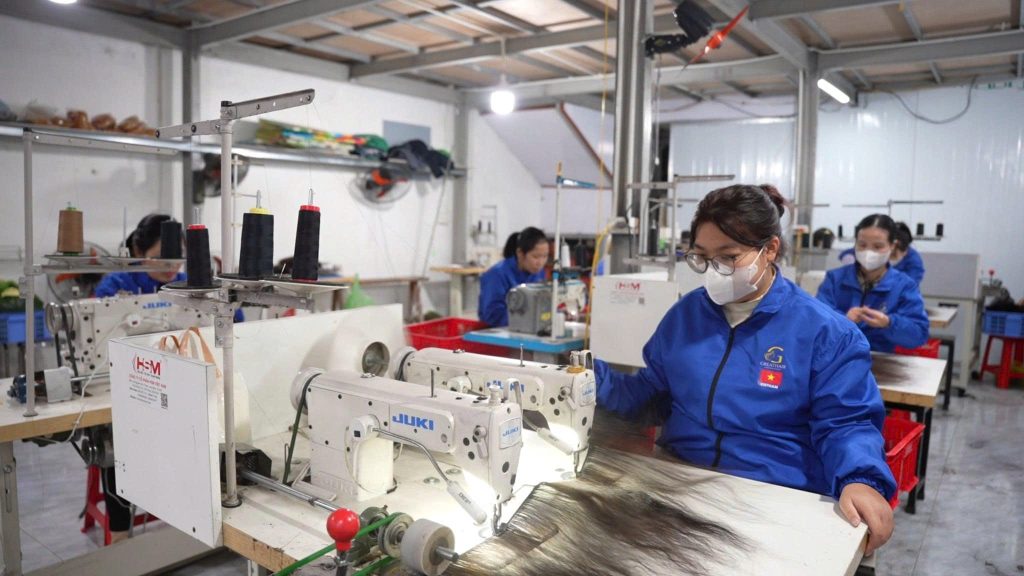
GreatHair 100% Vietnamese Human Hair
Contact GreatHair Today
Is Vietnamese hair better than Chinese hair?
It depends on your goal. Vietnamese hair is typically stronger, thicker, and lasts longer, while Chinese hair is often more affordable and widely available in bulk quantities.
Why is Vietnamese hair more expensive?
Vietnamese hair is usually collected from single donors and undergoes minimal chemical processing, which increases durability and bleaching performance, leading to a higher price point.
Does Chinese hair contain chemicals?
Some Chinese factory-processed hair may go through acid treatment and silicone coating to improve appearance and uniformity. However, quality varies by supplier.
Which hair is better for bleaching to 613 blonde?
Raw Vietnamese hair generally performs better for heavy bleaching due to stronger cuticles and lower chemical exposure during processing.
How can I tell if hair is really Vietnamese?
Check for cuticle alignment, wash the hair to see if shine fades (silicone coating), and ask about sourcing transparency. Reliable suppliers should provide clear origin details.

We Will Contact You Shortly


Address: 8 Ngo 20/45 D. Phu Minh, Minh Khai, Bac Tu Liem, Ha Noi, Viet Nam
Phone: (+84)813282399

There are no products in the cart