

A 20-inch hair bundle can measure exactly 20 inches and still look shorter than you expected. The weight might be correct, too, even though the ends seem much thinner than the photos.
This happens because length, weight and fullness describe different things. A measuring tape won’t tell you how much hair reaches the bottom. And a scale can’t tell you whether the bundle has been sorted for thick ends.
If you’re buying hair extensions for your salon or ordering stock for a hair business, it’s worth checking all three. You can do most of it at home with a ruler, a small scale and a dry sample.
First, Get the Hair Ready
Leave the hair in its original condition for the first check. No washing, straightening or extra styling.
There’s a practical reason for this. If the measurements are wrong, you’ll want to show the supplier exactly what arrived. Washing or altering the hair may also affect your return options.
Remove the shipping bag and any loose packaging before weighing. Keep the original product label, though. You’ll need it when recording the result.
The hair should be completely dry.
A damp bundle can weigh more, and curls may hang differently while they’re still drying. That’s not what you want when checking the weight on an order sheet.
You’ll need a measuring tape, a digital scale and somewhere to lay the hair flat. A plain background helps when photographing dark or blonde bundles.
Nothing fancy.
Before doing anything else, take a photo of the product and its label. If you have several similar samples on the table, you’ll be glad you did.
Where Does the 20-Inch Measurement Begin?
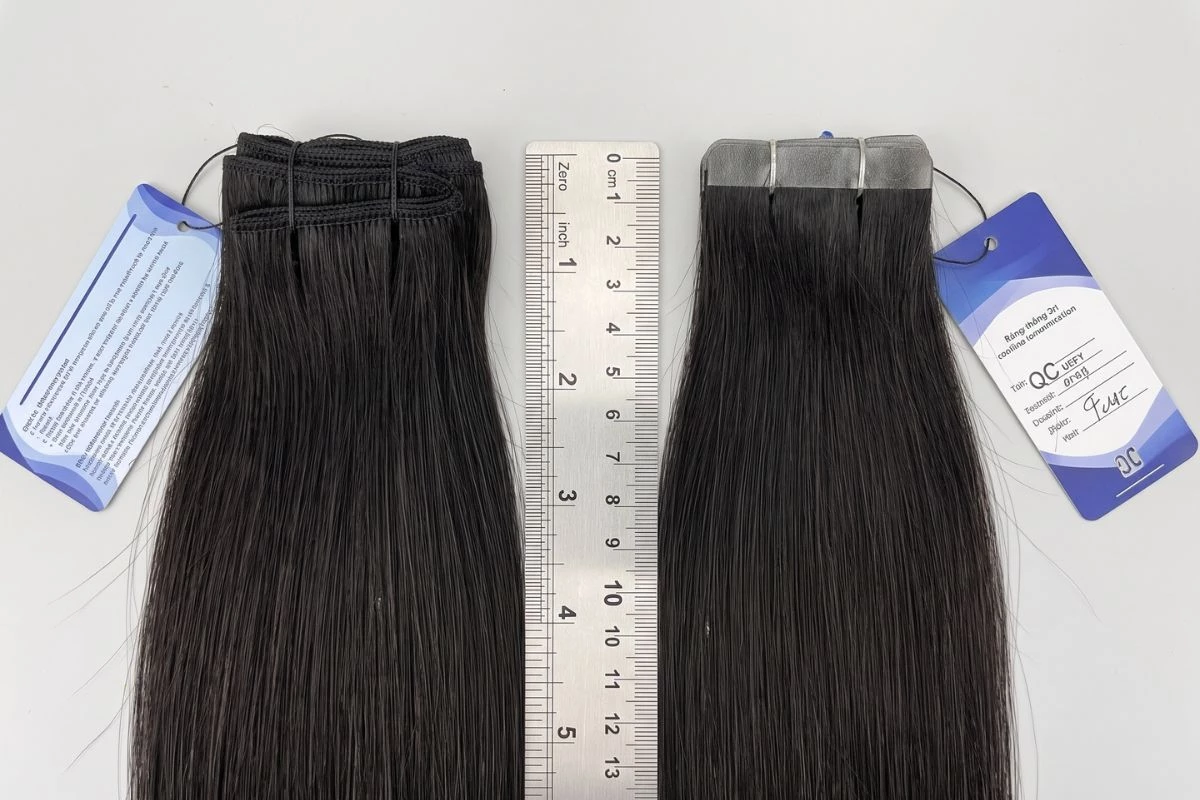
With straight hair, measuring the length is fairly easy. Getting the starting point right is another matter.
Take a machine-weft bundle. The starting point may be the top of the sewn band. For tape-in hair, it may be the top of the tape tab. Other extension types have their own construction details.
So before measuring, check which point the supplier uses.
Lay the bundle on a flat surface. Put the tape measure beside it and smooth a small section of hair down.
Follow the strands to the longest ends. Don’t pull hard or stretch the fibers.
For a 20-inch product, the longest strands should reach the agreed 20-inch mark, allowing for whatever tolerance you’ve accepted.
But look at the rest of the bundle as well.
Some of the hair may stop well above that point. That’s normal, especially with single drawn hair. It doesn’t mean the product was cut incorrectly.
The label usually tells you the nominal length, not that every strand is exactly the same length.
If you need help choosing how a length will look once installed, GreatHair’s hair extension length guide covers that separately.
Curly Hair Looks Shorter for a Reason
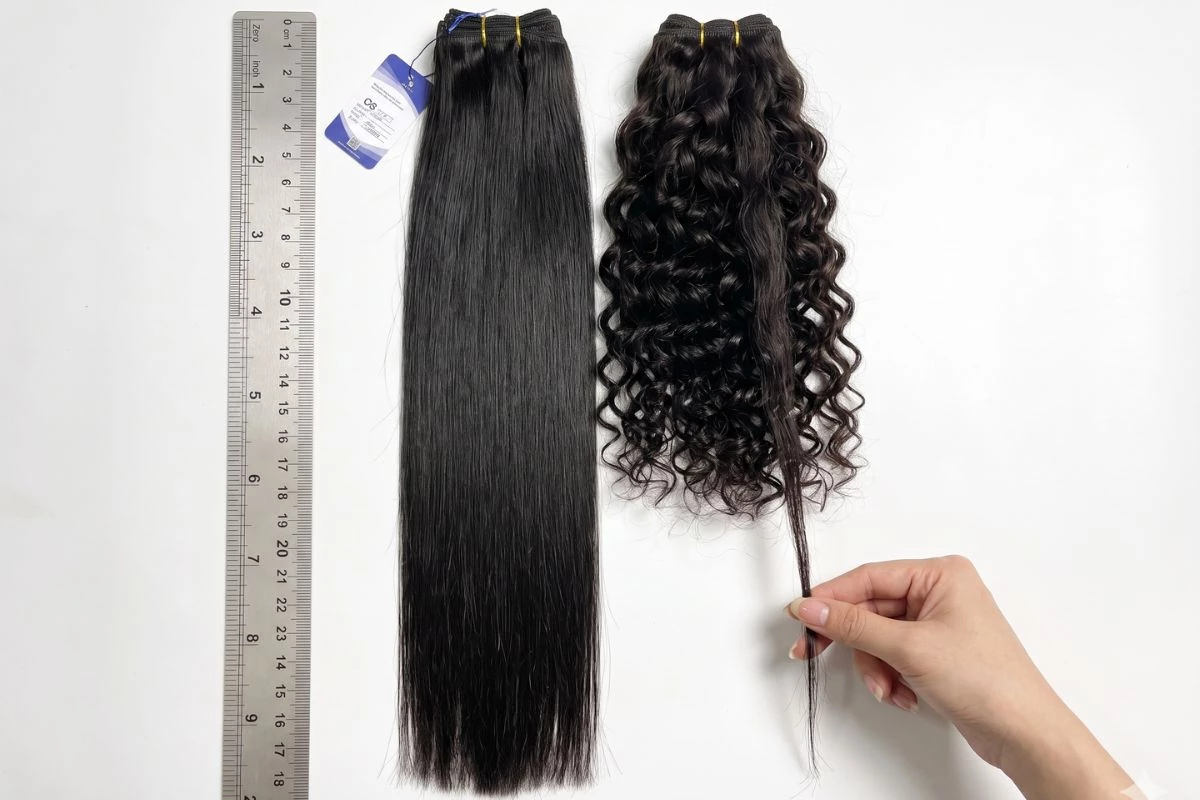
Put a straight 20-inch bundle beside a curly one of the same stated length. The curly hair will usually hang higher.
Nothing mysterious there. The strands are following the curl pattern rather than hanging straight down.
For hair sold by stretched length, hold a small section near the top and gently extend the curl. You only need enough tension to see the strand’s length.
Measure it from the agreed starting point.
With tight curls, try another section or two. A single strand may not represent the rest of the bundle.
There’s no need to straighten the hair with heat.
It also helps to keep two separate notes if the visible drop matters to your customers. One is the stretched length. The other is how far the hair hangs with its natural curl pattern.
These measurements answer different questions.
A customer buying curly extensions may care about where the hair falls on her back. A wholesale buyer checking the supplier’s stated length needs to know which measuring method was agreed.
The number on the label makes sense only when both sides use the same method.
Does 100 Grams Mean 100 Grams of Hair?
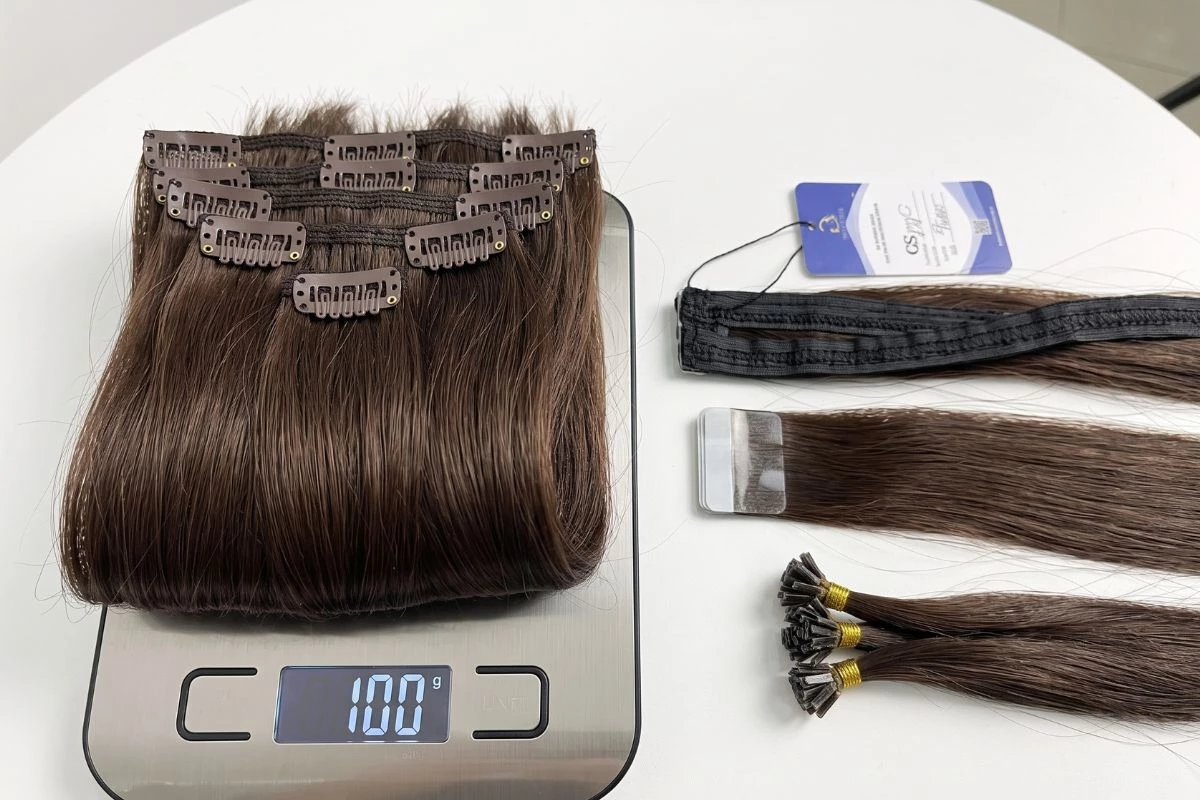
Not always.
With machine wefts, the sewn band has weight. A clip-in set includes clips. Tape-in extensions have adhesive tabs, while keratin extensions carry bonds at the top.
If those parts are attached when the product is weighed, the scale counts them.
That matters when you compare two suppliers.
Suppose both offer a 100-gram product. One quote refers to hair-only weight. The other refers to the finished product, including its permanent attachments.
The figures look the same on paper. They’re not describing the same amount of hair.
When your sample arrives, place the digital scale on a firm surface. Set it to zero and weigh the dry product without its shipping packaging.
Using a bowl or tray? Tare it first.
Write down the reading, along with what was included.
If the weft is still attached, record the result as finished bundle weight. Don’t subtract an estimated amount for the stitching and call the rest net hair weight. You’d only be guessing.
Instead, ask the supplier whether its listed weight includes the weft or other attachments.
This is particularly useful for ready-made extension sets. A 100-gram clip-in set may contain several pieces. Check both the total weight and the number of pieces before comparing it with another offer.
Why Two Bundles With the Same Weight Can Look So Different
Here’s something you can see without a scale.
Lay two bundles of the same length and weight side by side. Spread the hair so it falls naturally.
One may stay relatively thick near the ends. The other may become thin over the final few inches.
There’s still the same amount of hair in each bundle. It’s just spread differently along the length.
This is the reason drawn grades matter.
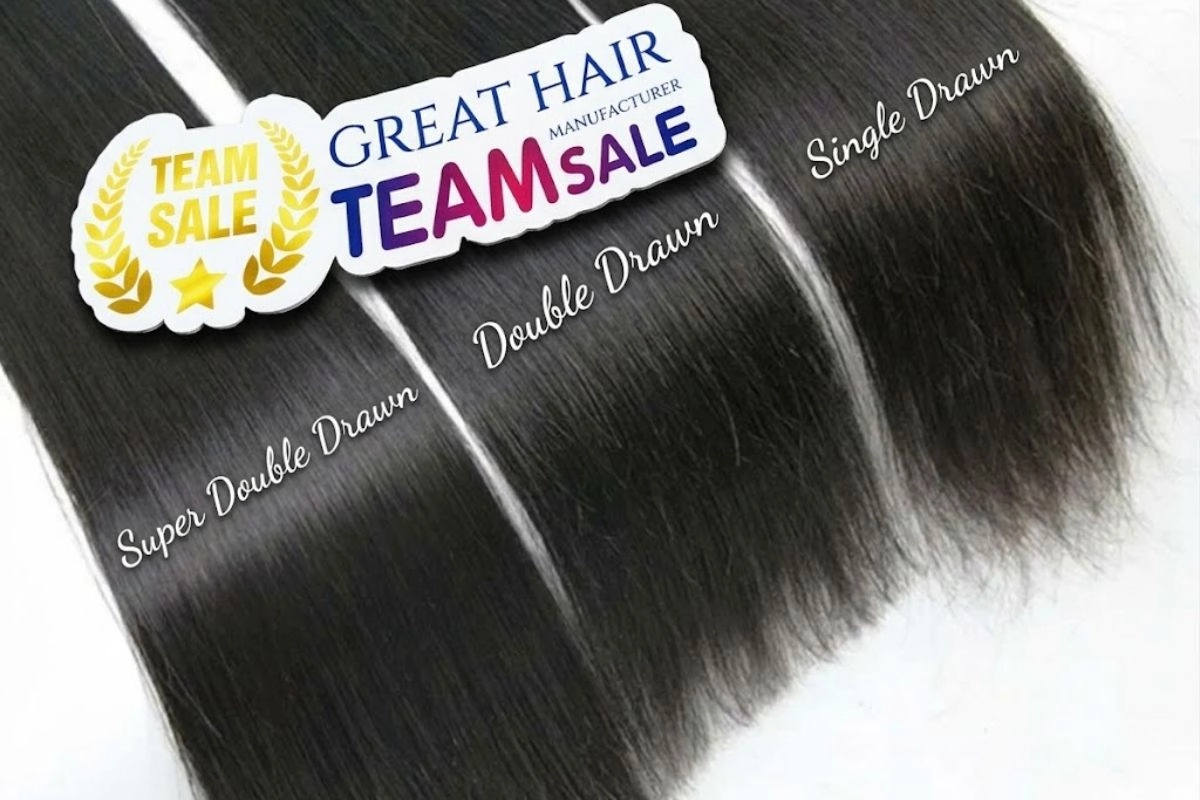
Single drawn bundles have more mixed-length strands, giving the ends a natural taper. Double drawn hair is sorted to make the bottom look fuller. Super double drawn hair is generally fuller again.
The names are useful, but they’re not universal measurements. Suppliers can use different standards.
If you’ve ordered double drawn hair, don’t judge it by the label alone. Compare the ends with the sample or reference you approved.
A fuller bundle isn’t automatically the right choice, either.
Some customers like a soft, natural finish. Others want the thick bottom line you see on bone-straight wigs. Those styles need different amounts of hair reaching the ends.
GreatHair explains the grades in more detail in its single, double and super double drawn hair comparison.
Checking How Full the Ends Really Are
You can learn quite a lot by looking at the last few inches of a bundle.
Lay the hair over a plain background. Let the strands spread evenly without pulling them into a tight shape.
Now look at the bottom 5–7 cm.
Does the hair gradually become thinner? Or is there a clear, thick line close to the longest ends?
Take a photograph of the entire bundle, then another of the lower section.
You don’t need to count each strand. For a visual comparison, the shape and fullness of the ends are what you’re recording.
But compare like with like.
A 16-inch, 100-gram bundle will often look fuller than a 24-inch bundle of the same weight. Curly hair can also appear bulkier than straight hair because of its shape.
If you’re checking whether two suppliers offer a similar drawn grade, use samples with matching lengths, weights and textures.
The lighting should be similar as well. So should the way the hair is spread.
For a new order, you can keep the approved sample as your reference. For repeat orders, that same sample gives you something familiar to compare against.
It’s much clearer than saying you want “very thick ends.”
Small Differences and Actual Problems
What happens if a bundle measures a little shorter than the label?
Check the method first.
Was the ruler placed at the right point? Was the curly hair measured stretched or in its natural shape? Did you check the longest strands or the visible bottom line?
If you’re still getting a different result, look at the tolerance agreed with your supplier.
The same goes for weight.
There’s no reason to invent a universal allowance for every type of extension. A loose bulk-hair bundle and a finished clip-in set aren’t measured in exactly the same way.
Agree on the acceptable range before placing a large order.
For end fullness, you may need an approved photo or physical sample rather than a number. A drawn grade tells you the general type of finish, but doesn’t always define how thick the ends must be.
The important part is having something both you and the supplier can check.
Keep the Numbers With the Sample
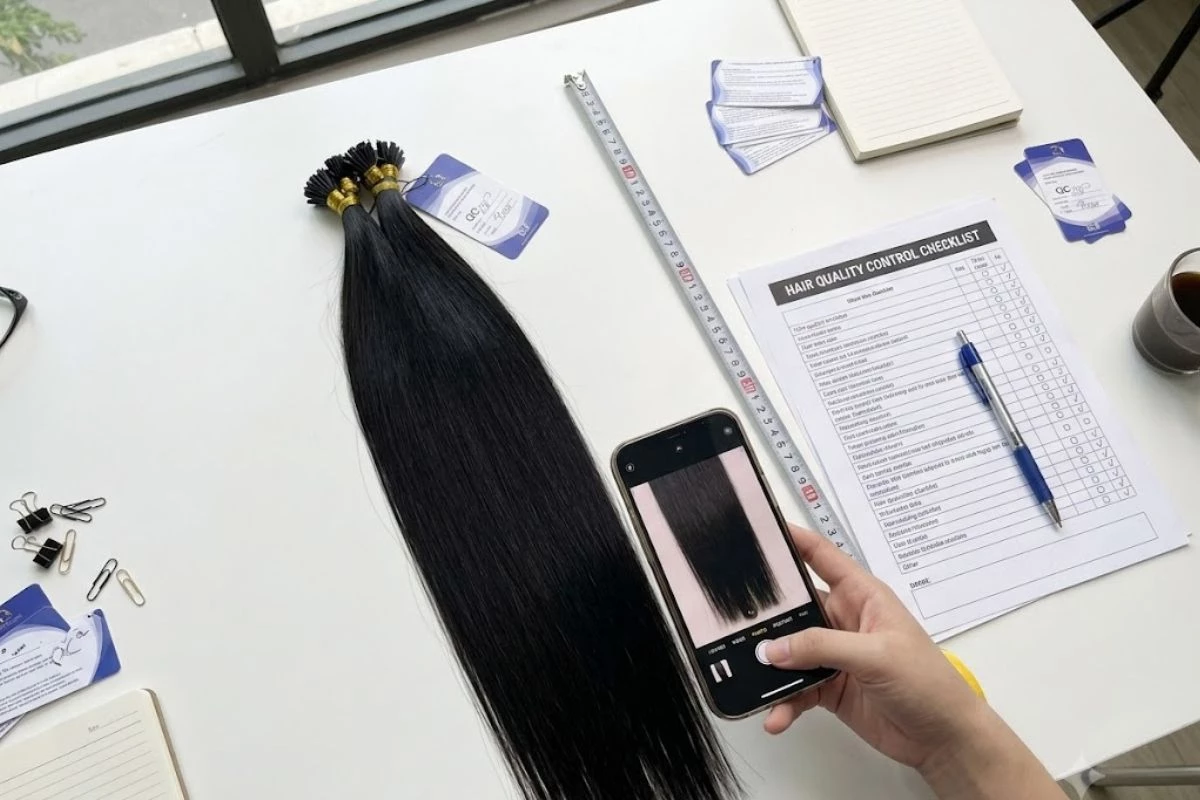
If you’re comparing several bundles, write the results down while the hair is still in front of you.
A simple record works fine.
| Detail | What to note |
|---|---|
| Product | Supplier, sample code and hair type |
| Length | Label length, measured length and starting point |
| Weight | Stated grams, actual grams and included parts |
| End fullness | Drawn grade and reference photo |
| Tolerance | Agreed length and weight ranges |
| Result | Approved, hold for review or rejected |
Keep the pictures with the measurements. Include a photo of the ruler or scale when possible.
If the product doesn’t match, you’ll have a clear record to send back to the supplier. If it does match, you can use it when ordering again.
For wholesale orders, this is also a useful way to build a reference for the next batch.
You can combine these measurements with the other checks covered in GreatHair’s hair sample testing guide, including shedding, washing and construction quality.
Before changing or washing a sample, confirm the supplier’s testing and return terms.
FAQs About Measuring Hair Extensions
Do I measure curly extensions while they’re wet or dry?
Use dry hair unless the supplier has agreed to another method. Wet hair can change the visible curl shape and affect weight readings. For stretched length, gently extend a dry section.
Does the weft count toward the weight of a bundle?
It depends on how the supplier defines the product weight. If you weigh a finished bundle with the weft attached, the scale includes the weft. Ask whether the advertised weight means hair-only or finished product weight.
Are all the strands in a 20-inch bundle exactly 20 inches?
No. Bundles generally contain a mix of strand lengths. The amount of shorter hair varies by drawn grade. That’s why the longest measured length and the fullness of the ends should be checked separately.
Can wig density be converted into grams?
There’s no fixed conversion. Wig density percentages depend on the cap, length and construction used by the supplier. A 180% density wig won’t always have the same weight as another wig with the same stated density.
What if my sample weighs less than the label says?
Check the scale and make sure you know what’s included in the stated weight. Then compare your reading with the agreed tolerance. If it falls outside that range, photograph the result and contact the supplier before approving the product.
Order Hair Samples From GreatHair
GreatHair supplies Vietnamese human hair for salons, hair brands, resellers and wholesale buyers.
If you’re ordering bundles or extensions, let us know the length, weight, texture and drawn grade you’re looking for. Include the construction details if you need machine wefts, tape-ins, keratin tips or custom products.
Our team can discuss available samples and confirm the specifications for your order.
Visit GreatHair Wholesale to get in touch.
A good place to begin is a sample you can measure yourself.