



There are no products in the cart
Aug 14, 2025
Post by Alice Bonita
When buyers compare Vietnamese hair with other hair types, the biggest mistake is focusing only on the country name. The real difference is rarely just geography. What matters more is how the hair is sourced, how much it has been processed, how consistent the bundles are, and how the hair performs after washing, coloring, styling, and long-term wear.
That is exactly why Vietnamese hair keeps coming up in premium conversations. It is often chosen by salons, resellers, and wholesale buyers who care less about first-day shine and more about how the hair behaves in real use. A bundle can look beautiful out of the package and still become a problem after two washes. For professional buyers, that is where the real comparison begins.
This guide looks at the difference between Vietnamese hair and other hair from a buyer’s perspective. Instead of treating every source as simply “better” or “worse,” it explains what you should actually compare before choosing a supplier or building a product line.
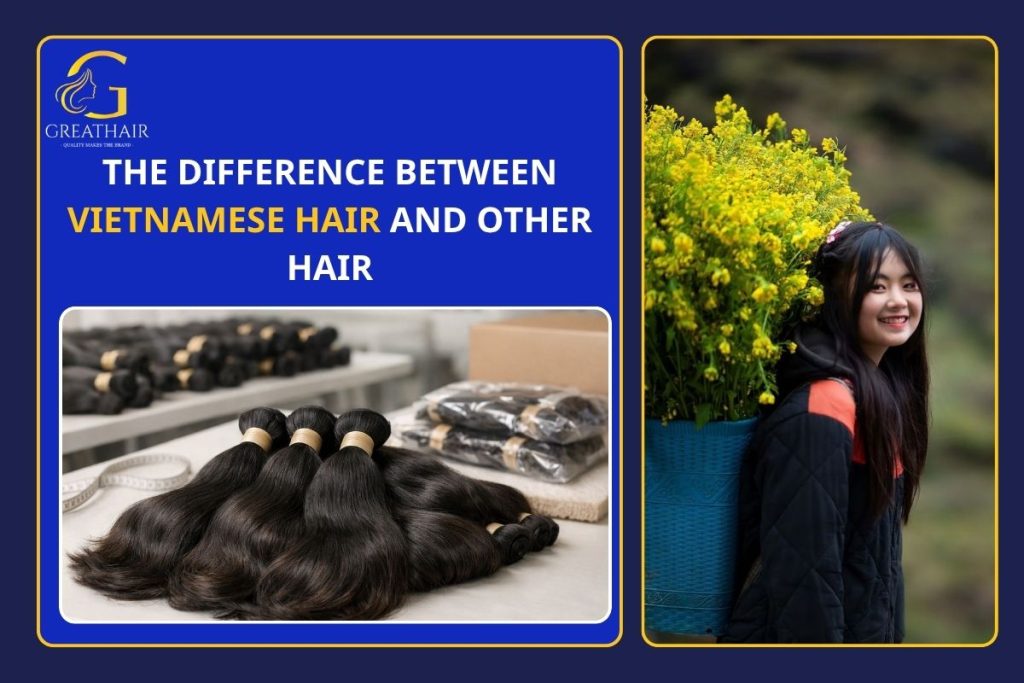
Most buyers start comparing hair origins when they begin to see differences in customer results, not just differences in price. One source may look softer at first. Another may color more predictably. Another may be easier to sell at a lower entry price but harder to keep customers satisfied over time.
That is why the phrase “Vietnamese hair vs other hair” matters. Buyers are really asking deeper questions:
Will the hair last?
Will it tangle after washing?
Will the color lift cleanly?
Will bulk orders stay consistent?
Will my customers come back happy?
Those are the questions that decide whether a source is right for a salon, reseller, or wholesale brand.
Vietnamese hair is often valued for its natural density, balanced texture, and more stable performance over time. For many buyers, the appeal is not that it looks dramatically different on day one. The appeal is that good Vietnamese hair tends to hold up better through real use when it is sourced honestly and processed carefully.
That point matters because not all Vietnamese hair is equal. Hair sold as Vietnamese can still be mixed, coated, or overprocessed. So when buyers say Vietnamese hair is “better,” what they usually mean is that well-sourced Vietnamese hair often gives them fewer surprises later.
In real buying decisions, Vietnamese hair is usually compared on five things: texture, thickness, color behavior, long-term manageability, and consistency from sample to bulk. Those are the factors that make comparisons useful instead of superficial.
A country label can help you understand general expectations, but it should never replace product evaluation. Two bundles from the same country can behave very differently if one has intact cuticles and the other has been heavily processed.
That is why serious buyers compare hair by function, not by marketing language alone.
They look at whether the texture stays stable after washing. They check whether the ends remain full. They pay attention to shedding and tangling. They ask whether the sample truly matches the bulk order. They also look at whether the supplier confirms specs clearly before production and performs quality control before shipping.
In other words, the difference between Vietnamese hair and other hair is not only about origin. It is also about sourcing standards, factory control, and how realistic the supplier is about the product.
When buyers compare Vietnamese hair with Chinese hair, the discussion usually centers on texture feel, softness, and long-term manageability. Vietnamese hair is often preferred by buyers who want a more natural, substantial feel and who care about performance over repeated wear. Chinese hair may appeal to buyers looking for a smoother first impression or lower entry pricing, depending on the product line and level of processing.
The better question is not which one sounds better in marketing. The better question is which one fits your business model. If your customers want premium installs, custom coloring, and better reusability, Vietnamese hair may be the more suitable choice. If your line focuses on lower price points and faster turnover, the comparison becomes different.
For a closer side-by-side breakdown, link here with the anchor text difference between Vietnamese hair and Chinese hair to your child page Difference Between Vietnamese Hair Vs Chinese Hair.
Vietnamese hair and Indian hair are compared very often because both are widely known in the human hair market, but buyers usually choose between them for different reasons. Vietnamese hair is often associated with a denser, smoother, more controlled finish, while Indian hair is frequently compared for its natural movement, broader texture appeal, and versatility across different customer segments.
In practice, this comparison becomes important when buyers are deciding what kind of finish they want their brand to be known for. A salon focusing on sleek installs, polished wigs, and long-term wear may lean toward Vietnamese hair. A reseller serving a broader range of everyday textures and price points may evaluate Indian hair differently.
For a full feature-by-feature review, link the phrase Vietnamese hair vs Indian hair detailed comparison to Vietnamese Hair Vs Indian Hair Details Comparison.
Vietnamese hair and Cambodian hair are often discussed together because buyers looking for premium Southeast Asian hair usually compare these two before making a decision. The comparison often comes down to texture preference, bundle fullness, overall feel, and how the hair fits the target customer.
Some buyers prefer Vietnamese hair for its cleaner, more uniform presentation and easier scaling across repeat orders. Others look at Cambodian hair when they want a slightly different texture profile or a different type of natural body. The important thing is not to assume they are interchangeable. Even when two sources seem close on paper, the finished look and buyer experience can still differ.
For a deeper comparison, link Cambodian hair vs Vietnamese hair detailed comparison to Cambodian Hair Vs Vietnamese Hair Detailed Comparison.
When buyers compare Vietnamese hair and Brazilian hair, they are usually comparing product positioning as much as material feel. Vietnamese hair is often chosen by buyers who want a more natural luxury look with long-term consistency, while Brazilian hair is often discussed in terms of softness, fullness, and styling appeal.
This comparison matters most for brands deciding how to position themselves. If your audience is looking for durable premium hair for salon services, wigs, or repeat wear, Vietnamese hair may fit better. If your audience is shopping based on softness and a more familiar mainstream category, Brazilian hair may enter the conversation differently.
For the complete breakdown, link the differences between Vietnamese hair and Brazilian hair to The Differences Between Vietnamese Hair And Brazilian Hair.
Sometimes yes, but not automatically.
Vietnamese hair can be better for certain buyers because it often matches what premium salons, wig makers, and resellers need most: consistency, manageable texture, strong density, and better long-term value. But “better” only means something when you define what you are measuring.
If you are measuring the lowest upfront price, Vietnamese hair may not always win. If you are measuring long-term wear, easier recoloring, customer satisfaction, and repeat business, the answer may look very different.
That is why this question should never be answered in a simplistic way. Vietnamese hair is not better just because it is Vietnamese. It becomes the better option when its sourcing, quality, and consistency align with what your customers are paying for.
The smartest buyers do not compare hair only by country. They compare by performance.
Start with sourcing transparency. Ask whether the hair is single-origin or mixed. Ask whether it is raw, lightly processed, or heavily processed. Confirm the texture, color, weight, drawn method, and expected end fullness in writing.
Then compare real-use behavior. How does the hair feel after washing? How does it behave under heat? Does it keep its density? Does it tangle easily? Can the supplier keep the same standard from sample to bulk?
This is where quality control matters. A trustworthy supplier should check the hair before shipping, confirm specs clearly, and set realistic expectations instead of overpromising. Buyers who skip this part often end up comparing prices when they should have been comparing risk.
That depends on what you sell and who you sell to.
If your business focuses on premium installs, custom wigs, and customers who care about long-term value, Vietnamese hair may be the strongest fit. If your business focuses on lower entry pricing, faster inventory movement, or broader texture variety, another source may make more sense for certain SKUs.
The point of this hub is not to force one answer for every buyer. It is to help you compare intelligently.
The best source is the one that matches your market, your service model, your margin goals, and your quality standard.
The difference between Vietnamese hair and other hair is not a one-line answer. It is a buying decision that depends on texture expectations, sourcing standards, processing level, supplier consistency, and how the hair performs over time.
That is why this page works best as a hub. It gives buyers the big picture first, then lets them go deeper into each comparison based on what they actually need to know.
If you are building a salon brand, a resale business, or a wholesale line, use this page as your starting point. Then move into the detailed comparisons below to decide which source fits your product and customer best.
For a broader look at quality standards, sourcing risks, and what wholesale buyers should check before ordering, read our Raw Vietnamese Hair Quality, Sourcing & Wholesale Guide.
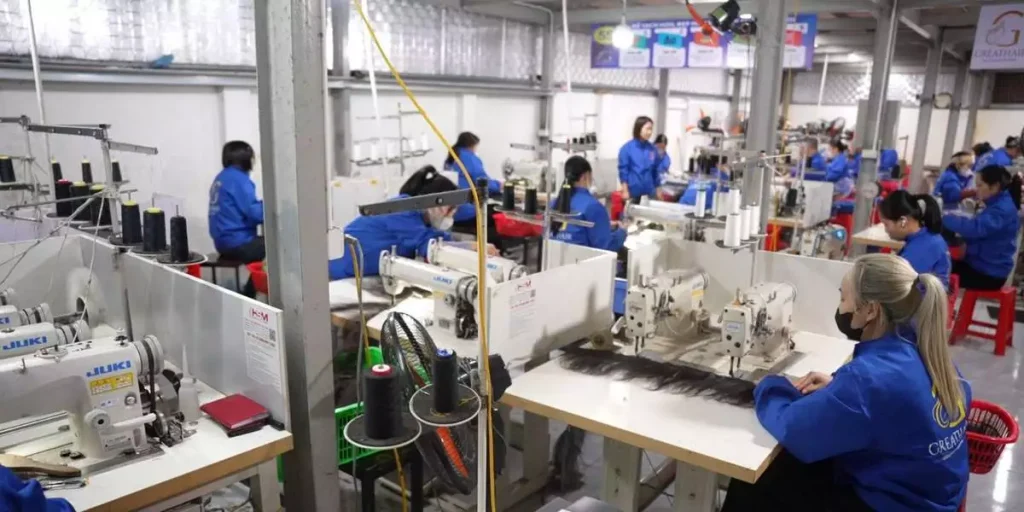
Explore GreatHair’s collection today and discover premium hair extension options that bring elegant volume, added length, and a more natural finish to your look.
What is the biggest difference between Vietnamese hair and other hair?
The biggest difference is usually not the country name alone. It is the combination of sourcing, processing, texture behavior, density, and consistency from one order to the next.
Is Vietnamese hair always better than other hair?
No. Vietnamese hair is often a strong choice for premium buyers, but the best option depends on your target customer, budget, and product goals.
Why do buyers compare Vietnamese hair with Chinese, Indian, Cambodian, and Brazilian hair?
These are common comparison paths because buyers want to understand differences in feel, finish, durability, texture profile, and long-term value before choosing a supplier.
Should I compare by country or by quality?
Start with country as a broad reference point, but make the final decision based on quality, processing level, and supplier consistency.
What should I check before buying any hair source?
Confirm the exact specs, test a sample, compare sample to bulk, review wash behavior, and make sure the supplier performs quality control before shipping.

We Will Contact You Shortly



Address: 8 Ngo 20/45 D. Phu Minh, Minh Khai, Bac Tu Liem, Ha Noi, Viet Nam
Phone: (+84)813282399

There are no products in the cart