Yes, hand-tied extensions can damage your natural hair, but damage is not inevitable. The risk comes from the tension and weight placed on your own hair, plus how the extensions are installed, maintained, and removed. A thin, flat weft can create a discreet finish, but it cannot make an overly tight or heavy installation safe. If your scalp hurts or you develop a headache during installation, ask your stylist to stop and check the tension.
What “hand-tied” means and what it does not
Hand-tied describes how the hair is formed into a weft. It does not describe how much weight your natural hair can support or guarantee that the installation will feel comfortable.
Hand-tied wefts are typically thinner and flatter than machine wefts. That can help a stylist create a less bulky row, especially when a client wants a natural-looking blend. But “lighter than another weft” does not mean “light enough for every head of hair.” The final load depends on the length and amount of extension hair, the number of rows, and the strength and density of the natural hair holding them.
There is also a practical difference between the weft and the installation method. Depending on the technique, a stylist may attach the weft to a beaded foundation or another row of natural hair. The attachment points, row placement, and tension determine how that weight is carried. For a broader look at weft construction, see our ultimate guide to weft hair extensions.
Hand-tied wefts also need careful handling. Some should not be cut freely because the edge can unravel. A stylist should follow the weft manufacturer’s instructions when customizing or securing it.
What actually causes damage
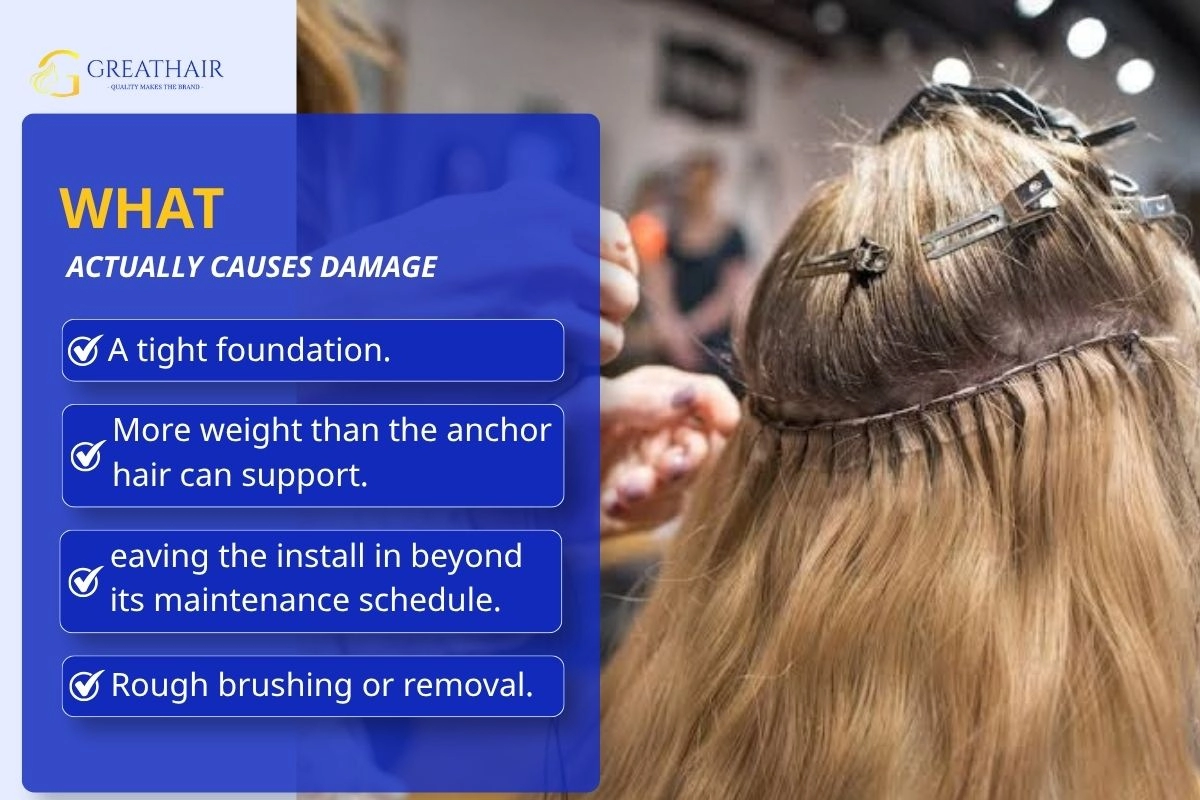
Hand-tied extensions are most likely to cause problems when excessive tension, weight, overdue maintenance, or rough removal repeatedly stresses the same natural hair.
The main risk factors are:
- A tight foundation. If braids, beads, or the sewn row pull on the scalp, individual strands bear constant tension. Pain or a headache is a warning sign, not a necessary part of getting used to extensions.
- More weight than the anchor hair can support. Long, dense extensions can put too much load on fine, fragile, or already weakened strands. There is no single “safe number of grams” that works for everyone; the same bundle weight can feel very different on different heads of hair.
- Rows that are poorly positioned or unevenly loaded. A row that sits awkwardly, bulges, or pulls more strongly in one area can concentrate stress instead of spreading it comfortably.
- Leaving the install in beyond its maintenance schedule. As natural hair grows, the row moves away from the scalp. Delayed maintenance can make tangling and matting near the roots harder to manage and can make removal more difficult.
- Rough brushing or removal. Pulling directly at the row, brushing through knots without supporting the hair, or trying to remove a sewn-in weft without proper technique can cause breakage.
It helps to distinguish hair-shaft breakage from traction alopecia. Breakage means strands snap along their length. Traction alopecia is hair loss linked to prolonged or repeated pulling on the scalp hair. Extensions and the weight of excessively long hair are recognized contributors; ongoing traction can eventually damage follicles.
How can you tell if the row is too tight?
A well-fitted row should feel secure, not painful. Persistent soreness, a headache, scalp irritation, or visible breakage means you should ask your stylist to check the installation.
Watch for:
- Pain or strong tightness that does not settle after installation
- Redness, itching, scaling, bumps, or pustules near the row
- Short broken hairs around the anchor points or hairline
- New thinning, gaps, or a widening part where the row pulls
- Tangling or matting close to the scalp
These signs do not prove that extensions are the only cause, and a blog cannot diagnose hair loss. If you notice persistent scalp symptoms or patchy thinning, reduce the tension and consult a dermatologist. DermNet lists itching, redness, scaling, folliculitis, broken hairs, and thinning among possible features of traction alopecia.
Are hand-tied extensions suitable for fine or fragile hair?
Sometimes. Fine hair alone does not automatically rule out hand-tied extensions, but the natural hair must be strong enough to support the chosen weight and the stylist must adapt the install to the client.
A lighter weft may reduce bulk, but it cannot solve active shedding, fragile roots, or damage close to the scalp. If your hair is snapping easily, feels unusually weak when wet, or is thinning, pause before adding more weight and get professional advice. A removable option may be more suitable while the underlying issue is assessed.
Think about your usual routine, too. Frequent tight ponytails, intense brushing, or an installation that stays in longer than recommended can add stress to the same areas. For a deeper comparison of options, read our guide to extensions for fine and damaged hair.
How can you lower the risk?
You can reduce risk by matching the extension weight to your natural hair, having the row fitted by an experienced stylist, and keeping up with maintenance and removal.
Before installation, ask the stylist to assess your scalp and the strength of the hair that will support each row. Discuss the length and fullness you actually need. A lighter, shorter set with fewer rows may be a better fit than choosing the maximum volume available.
During the appointment, pay attention to how your scalp feels. Tell the stylist immediately if a section pinches, pulls, or hurts. The American Academy of Dermatology advises clients to ask for a style to be loosened if it hurts or feels too tight; it also recommends professional installation, careful cleansing, and breaks from extension styles. aad.org
At home, follow your stylist’s care instructions. Detangle gently from the ends upward, support the hair near the row while brushing, and avoid pulling or scratching directly at the attachment points. Keep the scalp clean and dry the roots fully before bed. A loose braid at night can help limit tangling without creating another tight pull.
Keep the move-up appointment your stylist recommends rather than stretching it because the row still looks acceptable. The AAD’s general guidance is to wear weaves or extensions for no more than two or three months at a time, then switch to a style without them. A hand-tied row may need professional maintenance sooner, depending on the installation and hair growth.
Where to buy quality Vietnamese hair for hand-tied extensions
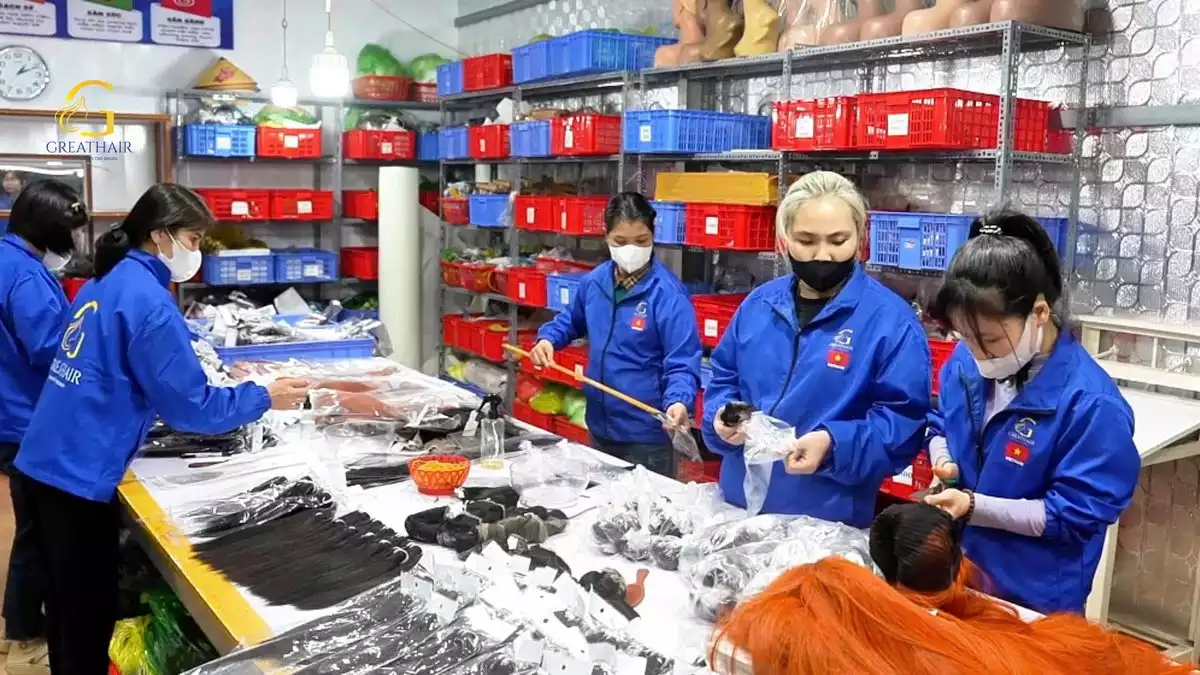
For salon owners, extension stylists, resellers, and brands, GreatHair supplies Vietnamese hair and offers a weft product range for wholesale inquiries. Our manufacturing experience since 2008 has taught us to treat weft construction as one part of a successful install; the stylist still needs to match the hair amount and method to the client’s natural hair. Trusted Worldwide
In GreatHair’s August 2026 factory price list, virgin weft prices range from $15 to $176.20 per 100 g bundle, depending on length, draw, and color. The listed hand-tied weft fee is +$55 per kg, or +$5.50 per 100 g bundle, bringing the corresponding range to approximately $20.50–$181.70 per 100 g bundle before order-specific terms. These are factory hair prices, not salon installation or maintenance costs. Contact GreatHair’s wholesale team for a quote based on your specifications.
FAQ
Do hand-tied extensions damage fine hair?
They can if the weight or tension exceeds what the natural hair can support. A stylist should assess the hair and tailor the amount and placement.
Should hand-tied extensions hurt after installation?
No. Pain or a headache can mean the style is too tight. Ask the stylist to check and loosen the affected area.
Can hand-tied extensions cause traction alopecia?
Yes. Repeated or prolonged pulling can contribute to traction alopecia, which can lead to lasting hair loss if the tension continues.
How long can I keep hand-tied extensions in?
Follow your stylist’s maintenance schedule. General AAD guidance recommends taking a break from extension or weave styles after two or three months at most.
Are hand-tied wefts safer than machine wefts?
They are generally thinner and flatter, but that does not make them automatically safer. Fit, weight, tension, maintenance, and removal matter more than the weft label.