

To start an online hair business, choose a customer group, validate a small product range, test suppliers, and calculate what each sale leaves after costs. Then launch a limited order you can afford to hold while you learn. Your first goal is evidence that customers want the product at a price that supports the business.
This guide explains how to move from an idea to your first orders without committing your entire budget to inventory.
Define the customer and the buying problem
Start with a situation you can serve. A customer buying her first glueless wig may need help with cap fit and daily styling. A stylist ordering wefts may prioritize consistent color, installation compatibility, and reliable restocking.
Ask potential buyers what they purchased last, what disappointed them, what they paid, and how quickly they needed delivery. Discuss a specific product and price. Compliments about your brand idea provide little evidence of purchase intent.
Write a short buying brief covering your initial market, customer, product, target selling price, and the problem you will solve. Avoid deciding someone’s product needs or preferred shopping platform from age alone.

Choose a sales model you can support
Your fulfillment model determines when you pay suppliers and what delivery promise you can make.
| Model | Useful when | Main tradeoff |
|---|---|---|
| Ready stock | Customers need prompt dispatch | Cash remains tied up in unsold variants |
| Preorders | Buyers accept a clearly stated wait | Delays can create cancellations and refund pressure |
| Salon or stylist sales | You have access to clients and fitting expertise | Service time and partner compensation affect earnings |
Salon sales can use either ready stock or preorders. Start with the combination you can manage consistently.
Preorders still require sample spending and cash planning. Payment arrangements vary; Shopify’s preorder guidance describes full, partial, or no payment at checkout. Confirm your platform’s supported options before promising a deposit arrangement.
If considering dropshipping, verify stock availability, dispatch, packaging, and returns with the supplier. Do not advertise it until those arrangements are confirmed.
Build a launch budget and protect working cash
Separate initial spending from recurring bills, as the U.S. Small Business Administration recommends. Then record when payments fall due. A profitable order can still leave you short of cash if the supplier needs payment before your customer funds become available.
Illustrative launch using GreatHair list prices. This example uses natural-color Virgin bundles in the SDD grade, at 100 g per bundle, from GreatHair’s US/UK price sheet reviewed on 3 October 2026. Confirm current prices and grade specifications before ordering. Quantities and non-product costs are assumptions for a home-based seller with an existing phone and computer.
| Budget item | Assumed amount |
|---|---|
| Samples, testing, and sample delivery, assumed | $250.00 |
| Four 18-inch bundles at $39.70 each | $158.80 |
| Four 20-inch bundles at $46.60 each | $186.40 |
| Four 22-inch bundles at $51.60 each | $206.40 |
| Pilot freight and import charges, assumed | $180.00 |
| Basic packaging, assumed | $60.00 |
| First-month store and administration, assumed | $130.00 |
| Initial content and advertising, assumed | $150.00 |
| Uncommitted cash reserve, assumed | $450.00 |
| Total launch cash | $1,771.60 |
The 12 bundles total $551.60 before discounts or customization. Confirm whether this order mix is accepted and obtain destination-specific shipping and import costs. The sheet does not establish a delivered US or UK total. Add local registration, insurance, applicable taxes, owner pay, and later operating months separately.
For the 20-inch bundle, adding an assumed $15 inbound cost to the $46.60 list price gives $61.60. A hypothetical $100 sale, less that amount, $5 packaging, $4 payment fees, $6 delivery subsidy, and $10 customer acquisition, leaves $13.40 before overhead, returns, owner pay, and taxes.
That is not net profit. Track actual costs by SKU and avoid counting an advertising expense twice when reconciling the launch budget with sales.
Keep the first collection small
Choose a range that answers one clear buying need. Two lengths in one texture and color can be easier to explain, photograph, and replenish than a broad catalog.
Count the combinations before ordering. Three lengths, three textures, and two colors create 18 stock keeping units, or SKUs. Stocking just two of each requires 36 units. Additional wig cap sizes multiply the range further.
For wigs, define cap fit, lace dimensions, texture, and length. For bundles, specify unit weight, length, texture, and end fullness. Ask suppliers to quote matching specifications so you can compare equivalent products.
Use our guide to choosing wholesale hair vendors for the detailed selection process. Confirm the minimum order quantity, or MOQ, for each product and variation before planning stock.
Approve samples before placing a pilot order
Order samples that represent what you intend to sell. Record measurements and construction, then evaluate washing, drying, and styling under the care conditions you will recommend to customers.
A dramatic bleaching demonstration cannot establish every aspect of quality. Assess whether the product supports its intended use, and document any processing claims you plan to repeat in your listing.
Keep an identified reference sample and a written specification. For a wig business, our guide to verifying a wig manufacturer covers supplier checks separately.
Once a sample passes, place a manageable pilot order and compare the delivered goods against it. One good sample does not establish consistency across future batches. Resolve unexplained differences before expanding the order.
Our guide to buying hair from Vietnam explains the next steps when you are ready to order.
Make the store ready for a real purchase
Publish photographs of the product you have approved, with accurate dimensions and clear explanations of what the buyer receives. Show relevant details such as wig interiors, lace, or bundle ends.
Complete this launch checklist before taking orders.
- Show specifications, included items, and available variants.
- Separate processing time from estimated transit time.
- Explain delivery charges and responsibility for import charges.
- Publish contact details, care guidance, and clear return terms.
- Check local registration, tax, privacy, and consumer requirements.
- Test checkout, confirmation messages, and shipment tracking.
Begin promotion where your prospective customers already ask product questions. Use demonstrations to answer those questions, then measure inquiries, completed purchases, advertising cost, and reasons for returns. High view counts alone do not justify a larger stock order.
Use the first 90 days to decide what deserves a reorder
Treat this as a planning sequence. Sampling and production may require more time.
Days 1–30 focus on customer conversations, product specifications, supplier comparisons, and sample evaluation. Finish with a buying brief and a budget based on actual quotes. Delay purchasing if the sample or costs remain unclear.
Days 31–60 cover the pilot order, inspection, product photography, and a limited launch. Record each order’s costs and delivery performance. Ask early buyers whether fit, texture, and appearance matched the listing.
Days 61–90 focus on products that sold at sustainable prices. Review the proportion sold, customer complaints, cash available, and replenishment time. Reorder selectively. If sales required heavy discounts or service costs erased the remaining margin, revise the offer before buying more.
Common mistakes include spending heavily on packaging before validating demand, accepting a larger MOQ only for a discount, and treating incoming sales revenue as money available for expansion.
Frequently asked questions
Can I sell hair without being a hairstylist
Product retail and installation require different capabilities. Check your local requirements, learn the products you sell, and refer fitting, coloring, or installation work to suitably qualified professionals when needed.
Can I start through social media
You can test interest there. Use a dependable checkout or invoicing process and provide accessible product details, policies, and contact information before accepting payment.
Should I start with raw or virgin hair
Choose according to the customer’s intended use and your verified specifications. Ask suppliers what each label means; the label alone does not establish processing history or suitability.
Can I sell the samples after testing
Keep your approved reference where possible. If selling a tested unit, disclose its condition and every treatment. Do not describe washed, altered, or worn samples as untouched stock.
Should I offer worldwide shipping immediately
Start with destinations where you have checked delivery costs, import arrangements, and returns. Add markets when you can support those commitments consistently.
Prepare your first buying brief
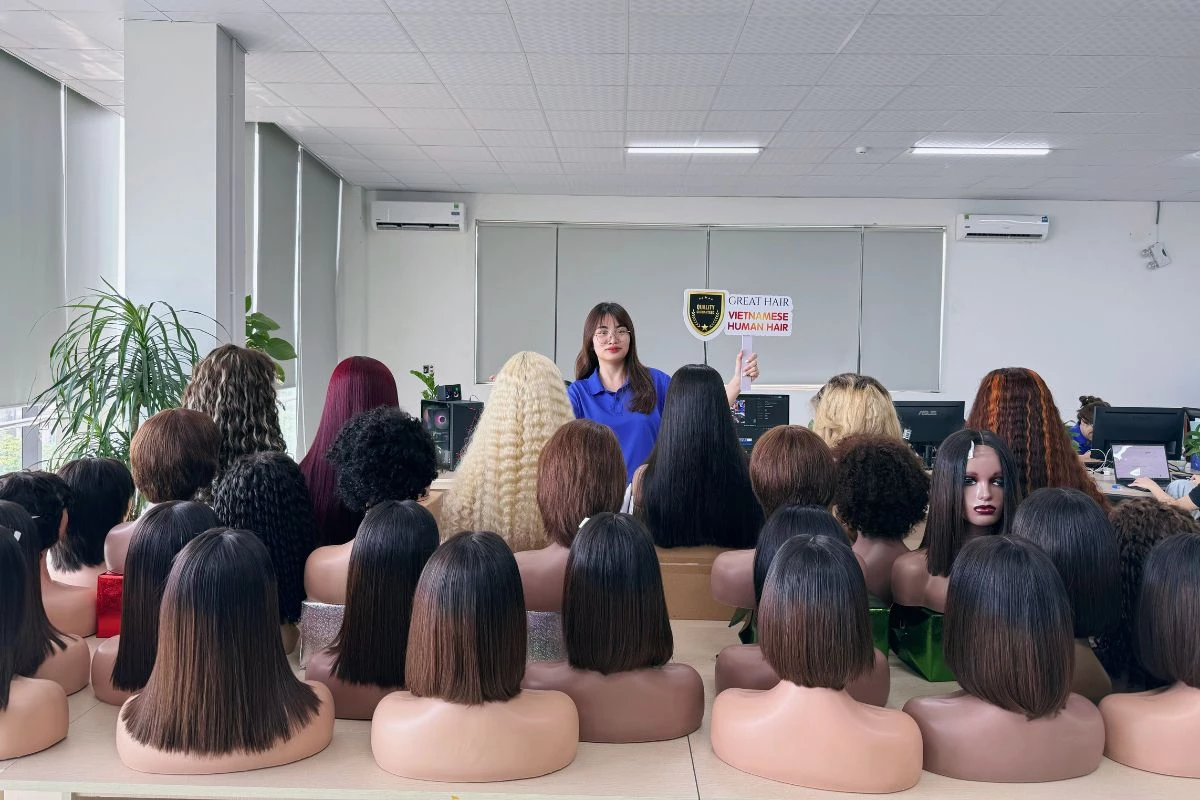
Use the checklist above, then send GreatHair your destination, customer type, preferred products, specifications, budget, and intended quantities through our wholesale inquiry page. Ask for current sample options, MOQ, pricing, and production timing before committing to your first order.