
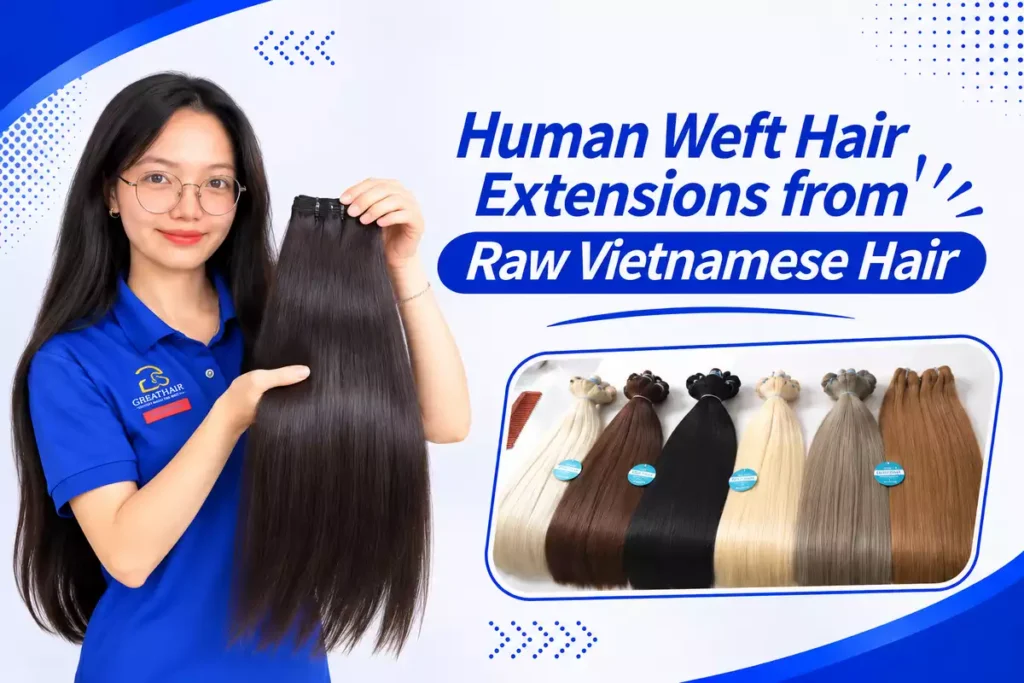
Is the hair genuinely Vietnamese? Has silicone been added? Were the cuticles preserved before the hair was sewn into a weft?
These questions matter when you’re buying hair for salon clients or a resale collection. Here are the answers, including what GreatHair supplies and what a sample can actually show you.
Is every human weft made from raw Vietnamese hair?
No. Human weft hair can come from different countries and can be sold with different processing histories.
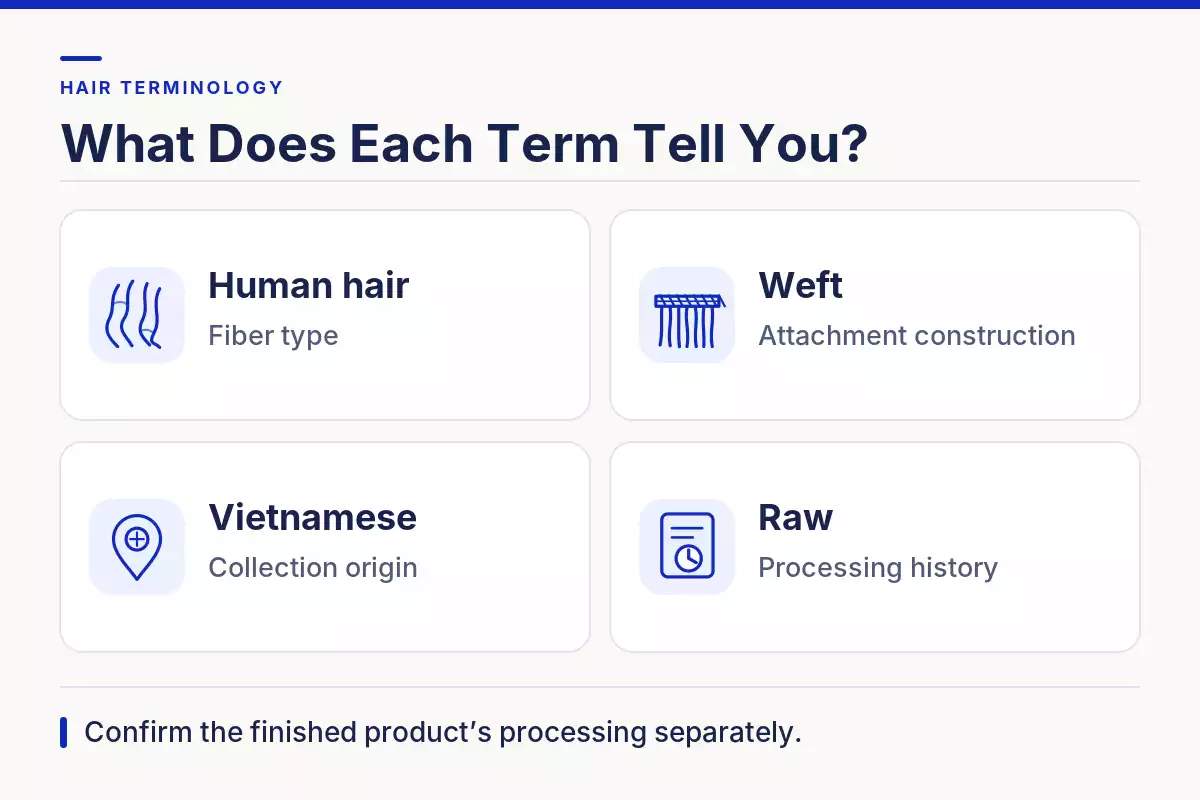
“Human hair” identifies the fiber. “Weft” means the hair is secured along an attachment track. Neither term tells you where the hair was collected or whether it has been bleached, colored, texture-set or coated.
Vietnamese origin and raw condition are also separate. Hair can originate in Vietnam and later be processed into a blonde or curled product.
At GreatHair, we use 100% Vietnamese human hair, as stated in our product FAQ. Our range includes Virgin Hair, Raw Donor Hair and Baby Thin Hair, as explained in our material guide.
Our raw Vietnamese hair guide describes raw hair as collected in Vietnam without chemical treatment or coating. That is the starting-material description. Any later coloring or texture treatment still needs to be identified for the finished weft.
How can you verify that the hair comes from Vietnam?
Confirm the collection source and its connection to the product. Appearance alone cannot establish Vietnamese origin.
Natural shade, thickness and slight variation between strands can help you inspect a sample. They aren’t unique to one country. Careful sorting can also make genuine human hair look uniform.
The useful evidence is straightforward:
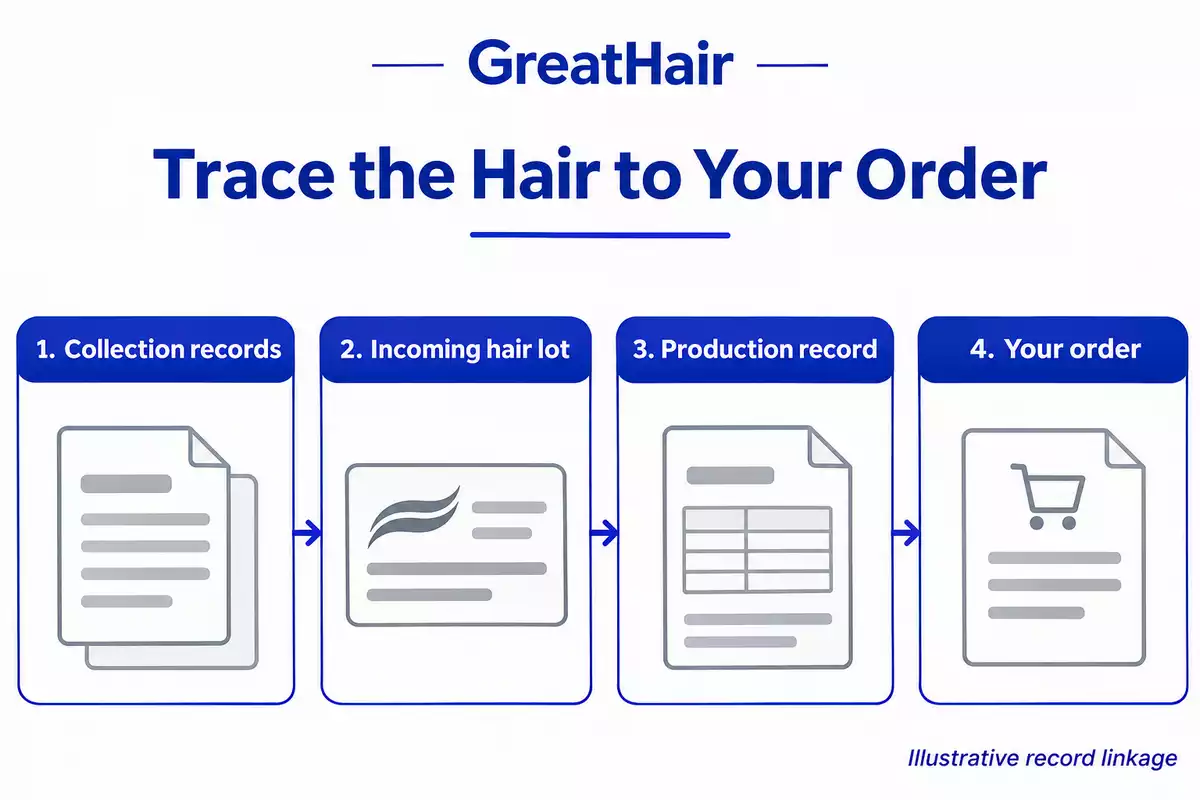
- Collection information showing where the hair was sourced, supported by purchasing or receiving records.
- Production evidence connecting that incoming hair to the weft being offered.
- A live factory review showing the relevant materials and production stages, rather than only finished display bundles.
Request the incoming hair lot reference and the production record linking it to your order. Check the dates, quantities and material descriptions, allowing for documented sorting losses. If several lots were combined, the record should identify them. An unexplained gap means the origin claim for that order still needs verification.
GreatHair’s factory tour guide explains how to view incoming hair, sorting and weft construction. A live call helps establish what the factory does; source records address where the hair came from.
Use washing and styling to judge performance. They don’t identify a donor’s country.
How does raw hair become a finished weft?
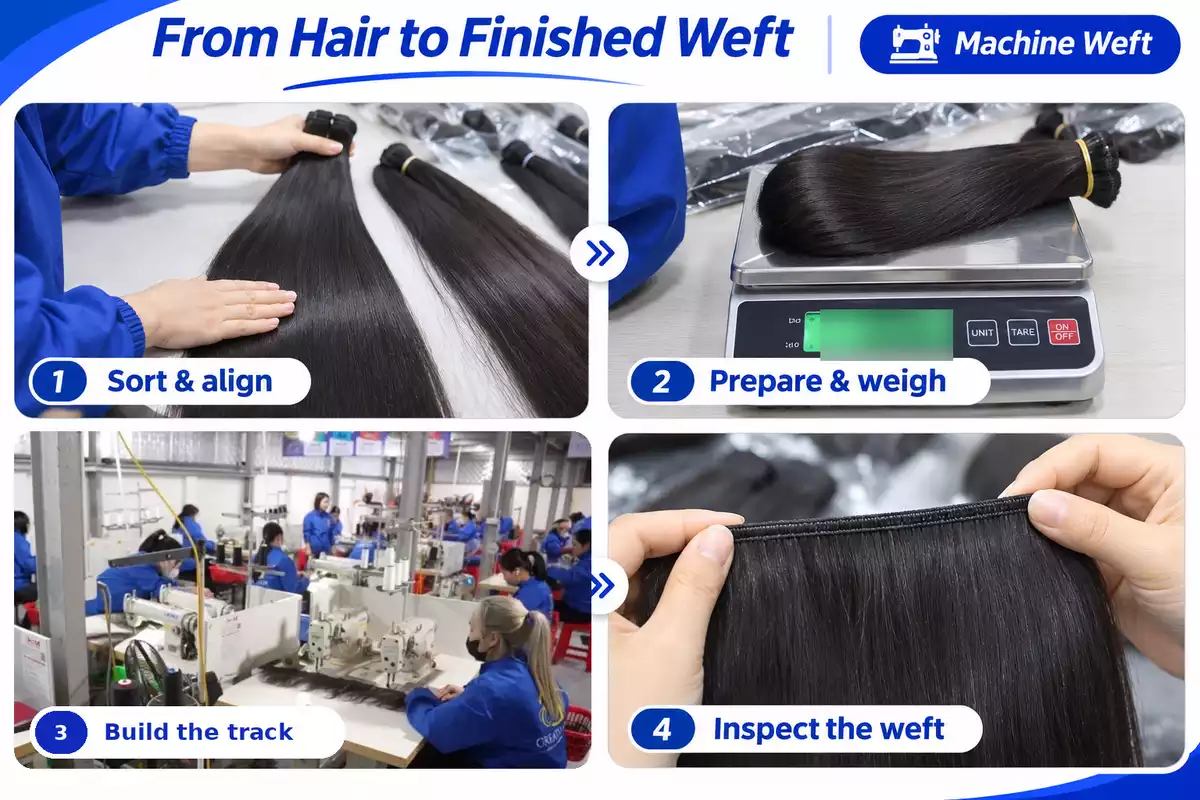
The hair is prepared, secured into a track and checked before packing. Sewing the track does not require changing the hair’s natural color or stripping its cuticles.
Preparing the hair
Workers sort the material, remove unsuitable strands and clean and detangle it. Root-to-tip direction must be preserved through handling. The hair is then divided and weighed for the required product.
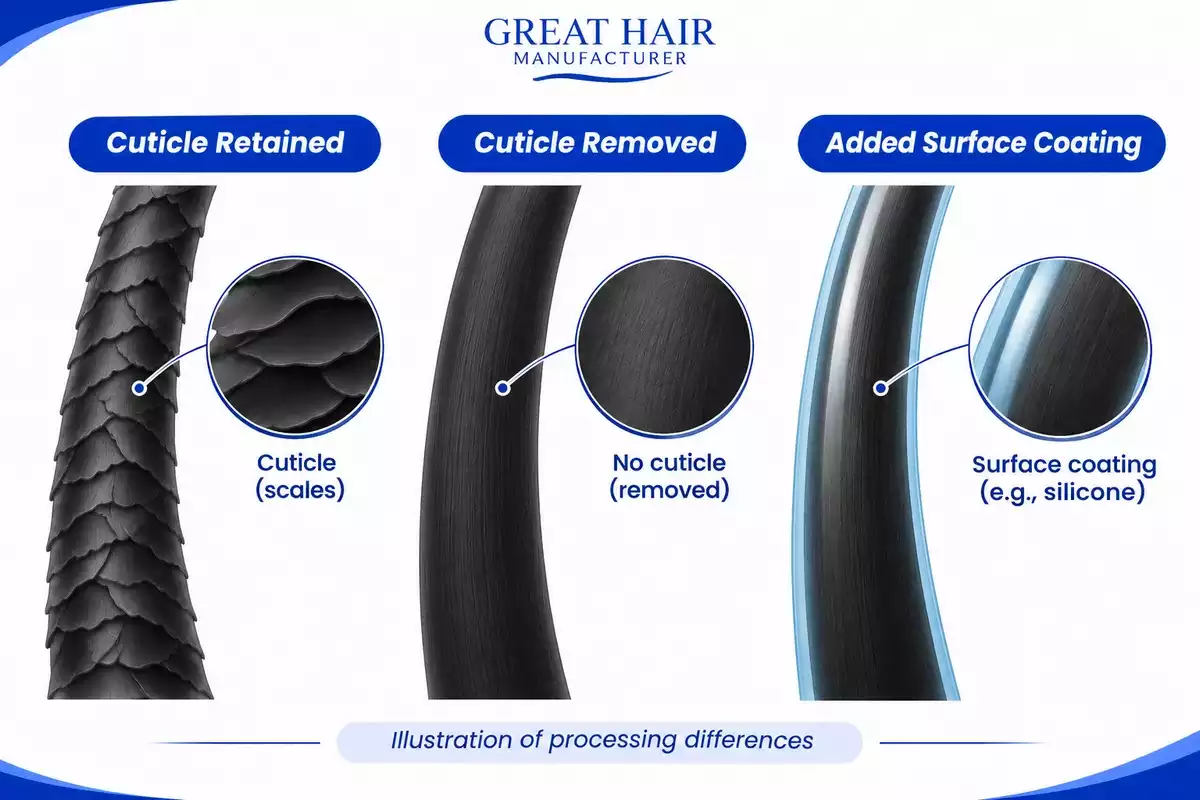
The cuticle is the outer layer of each strand. Its scales have a direction, which affects friction. This is why workers need to preserve root-to-tip alignment instead of simply gathering loose hair into a neat bundle.
Making the track
The construction depends on the weft:
- Machine weft: a sewing machine secures the hair with rows of stitching. Even seams and secure strand attachment matter more than simply counting stitch rows.
- Hand-tied weft: small sections are tied by hand to form a fine track. Cutting through it can release the knots, so follow that product’s cutting instructions.
- Flat/Genius weft: the track is designed to sit close to the scalp. Check its thickness, attachment security and permitted cutting points; these depend on the construction.
Adhesive in an attachment is a separate issue from a silicone coating along the hair strands.
Checking the finished product
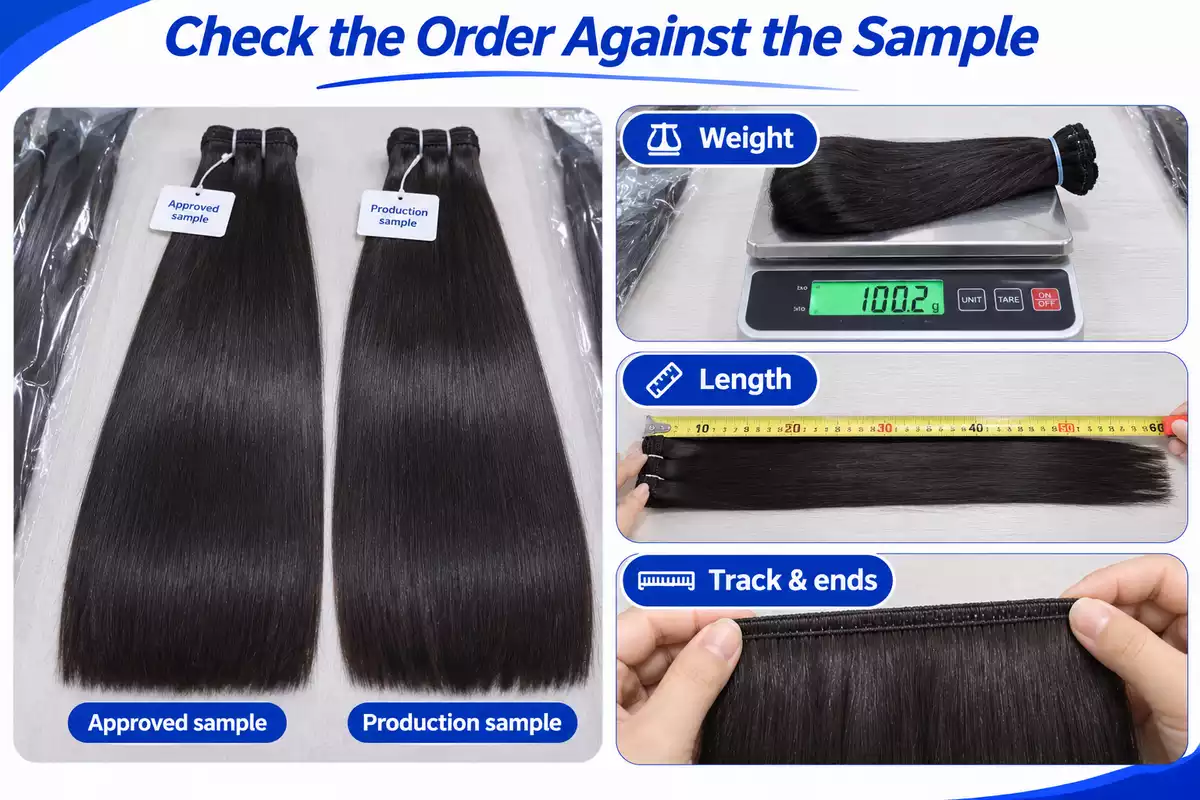
The track, weight, length, color and handling are checked against the product requirements. Loose stitching can release strands and leave a salon paying for replacement hair or extra appointment time.
GreatHair’s published quality process includes individual bundle inspection before packing. For your order, request dated QC photos or video showing the actual bundles being weighed, measured and checked.
Does raw Vietnamese hair need silicone?
No. Well-preserved raw hair can have natural shine and smoothness without a silicone coating. Silicone is not needed to make the weft.
That smoothness starts with the hair’s condition. A relatively even cuticle surface reflects light and creates less friction than a damaged, rough surface, as explained in research on hair cuticle condition and friction. A silicone finish can change how hair feels, but it cannot turn processed hair back into raw hair.
For hair sold as raw and uncoated, that untreated condition is part of the product description. If silicone is added later, the finished hair should not still be described as uncoated.
However, silicone is not used exclusively on low-quality or acid-stripped hair. It is also found in conditioning products. Experiments on silicone deposition from shampoo demonstrated deposition on virgin human hair.
The relevant question is whether silicone was used on the product you intend to sell. Advertising an unverified silicone-free claim can create complaints when the delivered hair doesn’t match it.
How can you check for silicone coating?
A wash test helps reveal changes in the hair’s feel and manageability. It cannot identify silicone by itself.
For a useful sample check:
- Inspect it dry. Note surface feel, shine and ease of combing before adding any products.
- Wash with a known routine. Use suitable care products that won’t introduce silicone during the comparison. Handle the hair gently.
- Compare when fully dry. Look for increased snagging, persistent tangling, changes in texture or a marked loss of slip.
Those changes deserve investigation. They can tell you that the sample isn’t performing as expected, but they don’t isolate the cause.
Cloudy wash water is not a silicone test. Neither is a strand that feels equally slippery in both directions. In a study of hair surface feel, silicone-treated hair could feel smooth like untreated hair.
For a silicone-free claim, combine the sample review with a clear description of the finishing products used. Where chemical confirmation is needed, a suitable laboratory test must address the specific substances in question.
Can Vietnamese weft hair be made without acid processing?
Yes. Raw hair can be made into a weft without acid treatment to remove the cuticle.
Sorting, maintaining root-to-tip direction and securing the strands are physical manufacturing steps. Removing the cuticle is not necessary to sew a track, and removing it does not realign it.
“Acid-processed” also needs a precise meaning. A cuticle-stripping treatment is different from a mildly acidic care product. The substance, concentration, exposure conditions and effect on the hair all matter.
Non-acid-processed does not automatically mean completely unprocessed. The hair may still have been colored, bleached or texture-set.
Steam can be used to create waves or curls, but that is still texture processing. Don’t assume every curly weft was made with steam alone. The production description should explain how that particular texture was created.
What should you confirm before placing a bulk weft order?
Approve a relevant sample, record the agreed specifications and check the production lot against both before shipment. A good sample alone does not approve the bulk order.
Keep these items with your order confirmation:
| Item | What to record |
|---|---|
| Origin records | Incoming hair lot references linked to your production order, with consistent source information, dates and quantities. |
| Processing statement | Material line, coloring and texture treatments, finishing products, and written confirmation of any silicone-free or no-cuticle-stripping claim. |
| Approved sample | A reference number, dated photos and a retained sample. Buyer and supplier should keep matching references for color, texture and end fullness. |
| Product specifications | Weft construction, weight and length tolerances. State whether weight includes the track and how length is measured, including whether curls are extended. |
| Sample test | Washing products, wash cycles, drying method, combing procedure and agreed limits for shedding, tangling and track defects. |
| Problem resolution | Inspection deadline, permitted tests, evidence required, agreed remedies and responsibility for return or replacement shipping costs. |
A short example for 100 bundles
These figures are illustrative, not GreatHair specifications or an industry sampling standard. Agree the actual limits and sample size before production.
For straight machine wefts, the parties might specify 100 g ±3 g, including the track but excluding packaging, and 20 inches ±0.5 inch, measured flat from the top of the track to the longest tips without stretching. End fullness must also match the approved reference.
Select 10 bundles at random across the cartons for weight, length and seam checks. From those, select three for three wash-and-dry cycles using the agreed care routine. After each cycle, make 20 gentle passes through detangled, dry hair with the same comb and technique. Record full-length shed strands separately from broken pieces. An illustrative limit might be five shed strands per bundle per 20 passes, with no opening of the track. Apply the same procedure to the approval sample first.
Record results by bundle reference. Passing this sample does not establish that every bundle is defect-free.
When to approve, hold or reject
- Approve shipment when records are complete and the selected production bundles match the approved sample within the written limits.
- Hold shipment if evidence is missing, any selected bundle fails or the bulk differs from the sample. Record the issue, isolate affected stock and expand inspection to establish its extent. Recheck corrected or replacement goods before approval.
- Reject affected goods for confirmed material substitution or unresolved failures. Reject the whole lot if the problem is widespread or affected goods cannot be reliably separated, using the remedy agreed with the supplier.
If a mismatch appears after delivery, keep affected goods unused and separate. Photograph the labels and defects, retain the sample and notify the supplier within the agreed inspection period.
For planned bleaching, test a separate sample. GreatHair’s material guide does not guarantee blonde results from regular 1B Virgin Hair or Raw Donor Hair.
Check your raw Vietnamese weft options with GreatHair
A sample lets you assess the hair before choosing stock for your customers. GreatHair is a Vietnamese human hair manufacturer founded in 2008, supplying wigs, bundles and extensions to salons, resellers and hair brands.
For your next weft order, focus on three things before buying more.
- Choose the right material. Share your weft type, length, color and texture so our team can discuss the relevant material and processing options.
- See your actual order. Request dated QC photos or videos showing its reference, track, weight and length. Discuss a live factory call for a closer view.
- Try a relevant sample. Check the hair using the care and styling routine your customers will follow. Keep the confirmed product description with your order.
Contact GreatHair with your product choice, quantity and delivery destination to request a quote and discuss samples.
WhatsApp +84 813 282 399
Which weft would you like to sample?