
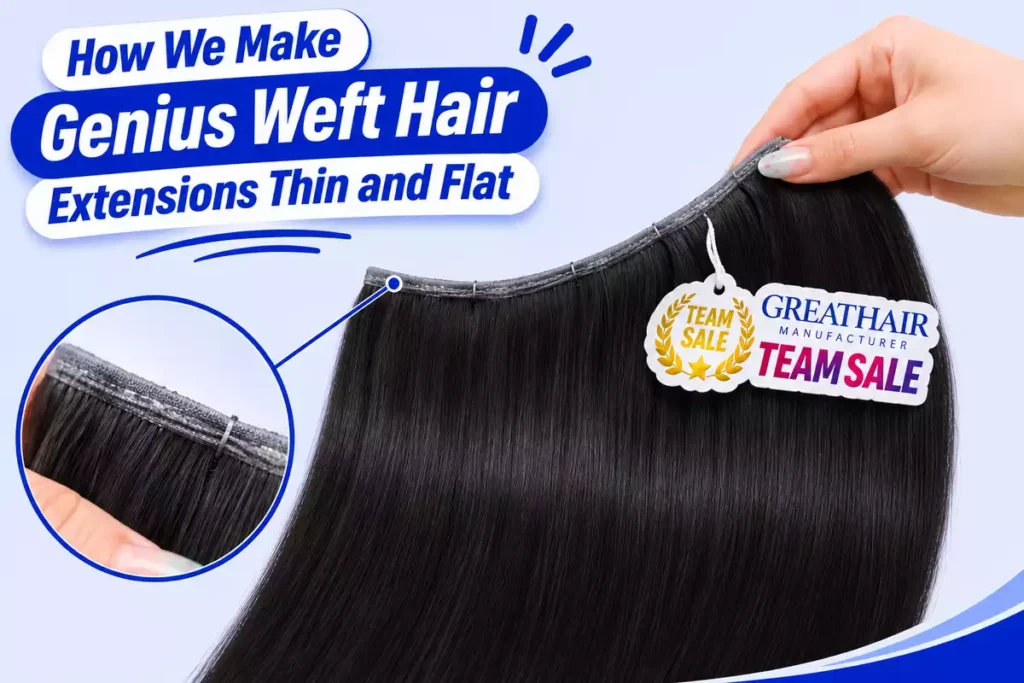
At GreatHair, we make Genius Weft hair extensions by spreading the hair evenly, securing it within a compact seam, and pressing that seam flat. We finish the edge without return hair—the short, folded-back hairs sometimes called a “mustache” or “beard.”
Each step serves the same purpose. The finished weft needs a slim attachment edge, enough flexibility to follow the row, and a structure that can be cut to fit.
For a salon, those details affect how much material sits beneath the client’s own hair. Here is how we build them into the product.
A thin seam starts with how we arrange the hair
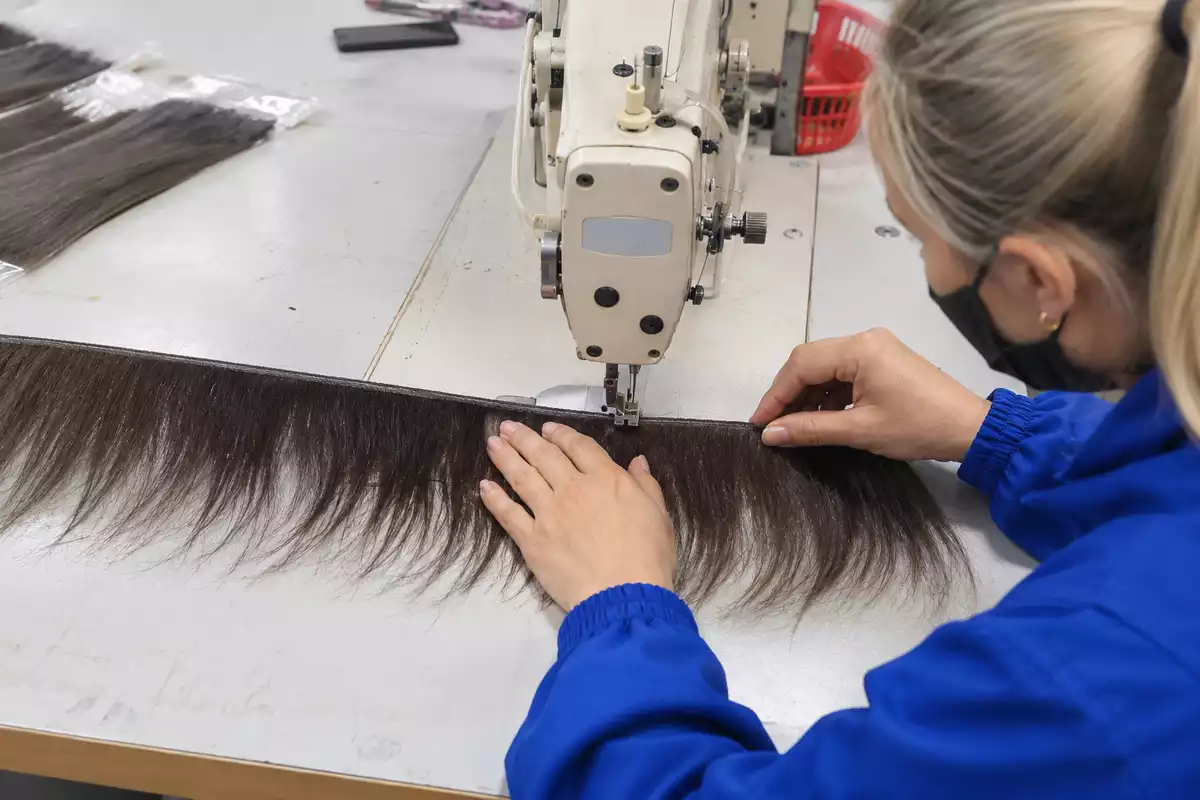
Before we form the weft, we sort and align the human hair. The roots need to sit evenly across the working width. This gives us a consistent starting point for securing the strands.
Hair distribution matters here. A cluster of roots creates extra material in one spot, which the seam then has to accommodate. Spreading the roots into an even layer helps us keep the attachment edge compact.
We also keep the strands oriented in the same direction as we prepare them. Alignment supports an orderly construction from the root area into the hanging lengths.
The aim is straightforward. We want the hair distributed along the track, with a root section that can be secured without unnecessary buildup.
How we form a compact, flexible edge
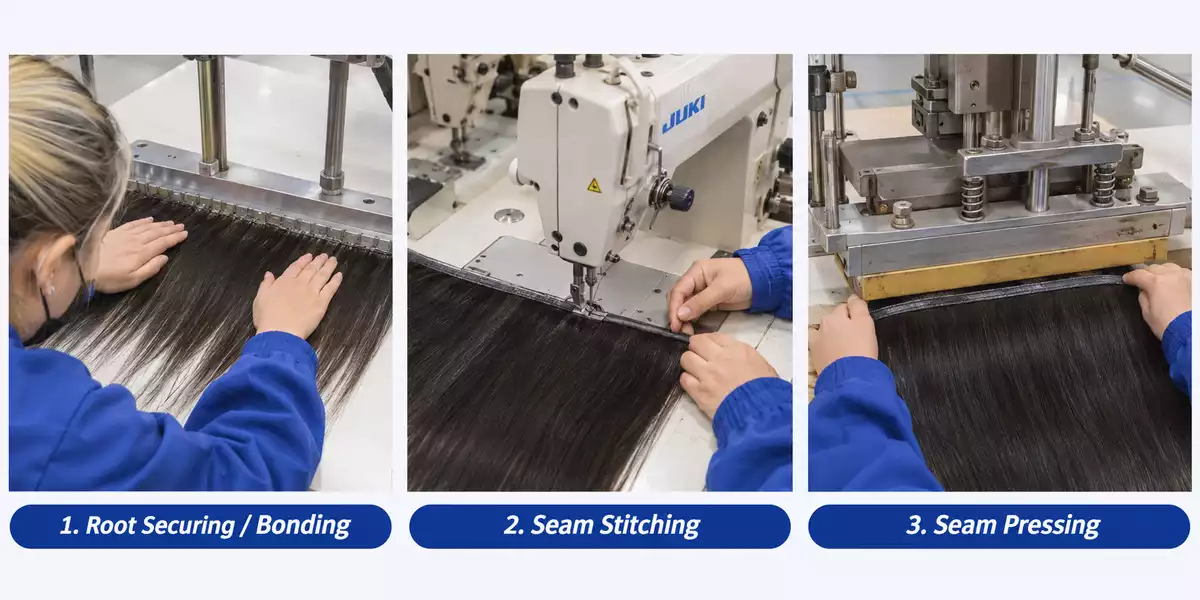
The narrow edge holding the hair together is the weft seam, also called the spine. Making it thin involves both the way we secure the roots and the way we finish that edge.
Securing the roots in a thin bonding layer
We apply the bonding layer at the root area to hold the arranged strands together. Keeping this layer controlled is part of keeping the seam slim.
More material at the root increases the amount that has to fit into the finished edge. Our focus is to secure the hair while retaining flexibility along the track.
This is a structural part of the weft. Its purpose is to hold the roots in position as we build the seam.
Keeping the stitching compact
We then use closely spaced machine stitching to form the narrow attachment line. The stitching works with the bonded root section to hold the construction together.
An orderly stitch line helps maintain an even edge across the width. For the stylist, that means a consistent seam to position along the row.
Thinness and strength have to work together. A small seam still needs to hold the hair during cutting, installation and routine handling.
Pressing the seam flat
After forming the seam, we use heat pressing to flatten and shape the attachment area.
The distinction matters. Thickness describes the depth of the edge; flatness describes its profile. A seam can be narrow yet still have a raised or uneven section.
Pressing helps us bring that profile down. Combined with the even root distribution and compact stitching, it gives the finished track its flatter shape.
Why we make Genius Weft without return hair
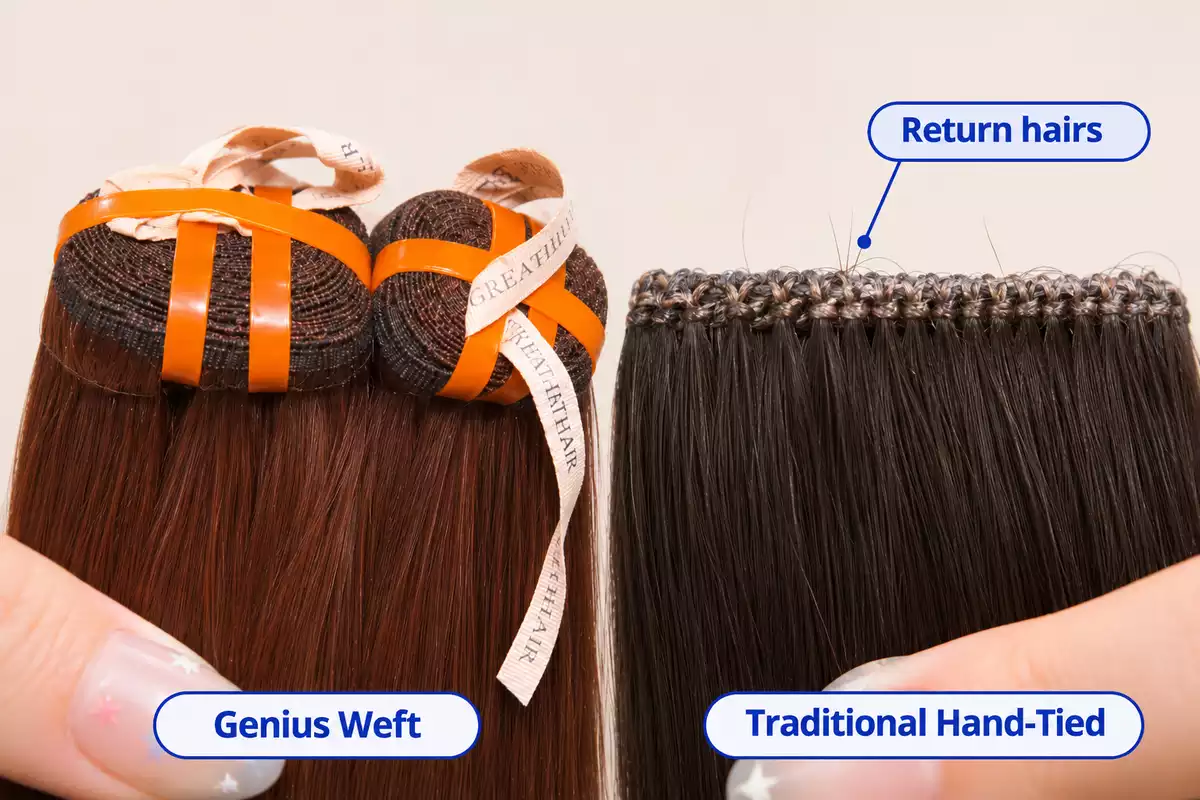
Return hair is the short section that folds back near the top of some traditional wefts. “Mustache,” “beard” and “return hair” describe this same feature.
Our Genius Weft has no exposed return-hair section along its finished edge. There is no short fringe for the stylist to tuck away when positioning the weft.
Removing that extra layer contributes to a cleaner, less bulky root area. It also removes the short ends that can feel prickly when they contact the skin.
This is one part of comfort. The amount of hair installed, row placement and tension still affect how the extensions feel.
For clients with finer hair, a compact edge gives the stylist less material to conceal. Whether an installation is suitable still depends on the client’s density and the weight their natural hair can support.
A weft that can be sized to the row
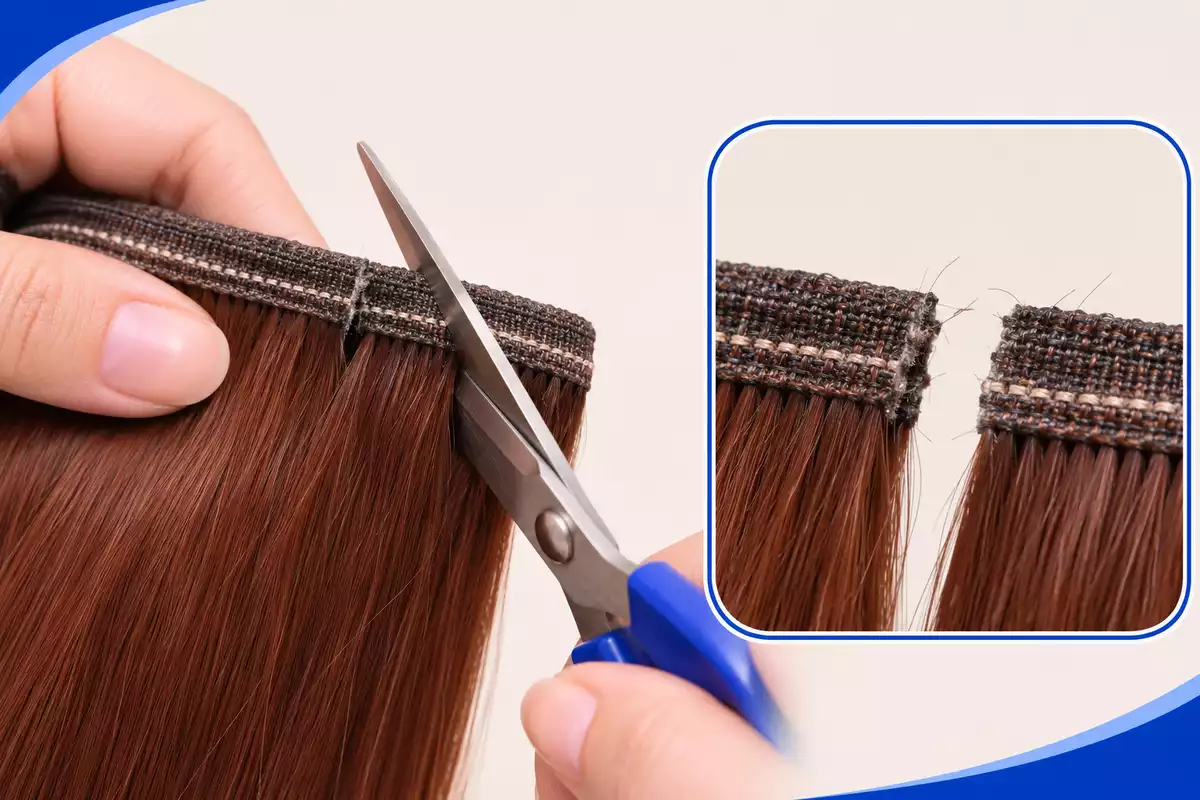
We make our Genius Weft cuttable so the stylist can divide a strip into the widths needed for an installation. The construction is designed to stay together at the cut edge.
That flexibility matters when fitting shorter sections. It lets the stylist match the piece to the row instead of folding surplus width back onto itself.
Measure before cutting. Follow the cutting instructions supplied with the product, and check the cut edge before installation.
“Cuttable” describes the construction. It does not promise that no individual strand will ever shed during the product’s life.
The main differences between these weft types are practical.
| Feature | GreatHair Genius Weft | Traditional hand-tied weft | Conventional machine weft |
|---|---|---|---|
| Attachment edge | Thin, flat and flexible | Fine, hand-knotted seam | Typically a more substantial sewn seam |
| Return hair | No exposed return hair | Often present; varies by construction | Often present; varies by construction |
| Cutting to width | Designed to be cut to fit | Cutting generally requires securing or retying the edge | Often cuttable; edge-finishing requirements vary |
| What to assess | Seam profile and integrity after cutting | Knot security and handling of surplus width | Seam bulk and treatment of cut ends |
These are construction differences, not a ranking for every client. Compare the actual samples and the installation you intend to offer.
Checking the finished weft
A slim edge should hold its shape when you handle it. Looking at the hair from the front alone will not show you that.
GreatHair’s quality inspection process includes checks on stitching, weight and length. For a Genius Weft sample review, pay particular attention to the attachment edge. greathair.com.vn
Lay one strip flat and examine it from the side. Look for raised areas, uneven sections and exposed short return hairs. Then bend the track gently to assess how it follows a curve.
If cutting is part of your intended use, review a cut sample as well. Check whether the edge remains together and whether threads or sections of hair loosen during normal handling.
Keep the approved sample. It gives your team a physical reference for the seam profile and construction you agreed to purchase.
The Genius Weft specification discussed here covers 14–28-inch lengths, packed as two strips per 100 g. Confirm the strip widths for your selected length when requesting a quotation.
For salon planning, weight and usable width belong together. A pack weight alone does not tell you how many pieces you can cut for a particular row.
FAQs About salon buyers ask
Are mustache hair and return hair different?
No. In this context, “mustache” and “beard” are informal names for the short return hairs at the top of a weft.
Is Genius Weft always thinner than hand-tied weft?
No universal measurement applies to either category. Compare the actual seam thickness, height and flexibility. Cut-to-fit construction and the absence of return hair are separate features.
Does a thin seam make the whole pack lighter?
No. A 100 g pack still weighs 100 g. The slim seam changes the attachment profile; it does not remove the need to plan the weight placed on each row.
Can stacking several wefts still create bulk?
Yes. Each additional layer adds material. A thin starting seam helps, but the finished profile also depends on how many layers the stylist uses.
Does Genius Weft describe the hair’s raw or virgin status?
No. Genius Weft describes the construction. Confirm the hair material, colour processing and texture separately when choosing your product.
Choose your Genius Weft specification with GreatHair
GreatHair manufactures human hair products for salons, resellers and hair businesses. You can explore our weft hair extensions before discussing the Genius Weft specification you need.
Before placing a larger order, focus on three things.
- Confirm the specification. Agree on length, colour, texture, pack weight and usable strip width.
- Review a sample. Examine the seam from the side, feel its flexibility and assess a cut section.
- Check the quotation and timing. Confirm what the price includes and the expected production or dispatch window.
Contact GreatHair with your preferred length, colour, quantity and delivery destination to discuss a Genius Weft sample and quotation.